Key Facts:
- RSV cases in Australia have surpassed both influenza and COVID-19 this winter, with over 83,000 cases recorded.
- Only 722,530 eligible older Australians have received the free RSV vaccine compared to 1.76 million who have had their flu shot, representing a significant immunisation gap.
- Nearly two-thirds of older Australians surveyed were unaware that the RSV and influenza vaccines can be administered simultaneously, which may be contributing to lower RSV vaccination uptake.
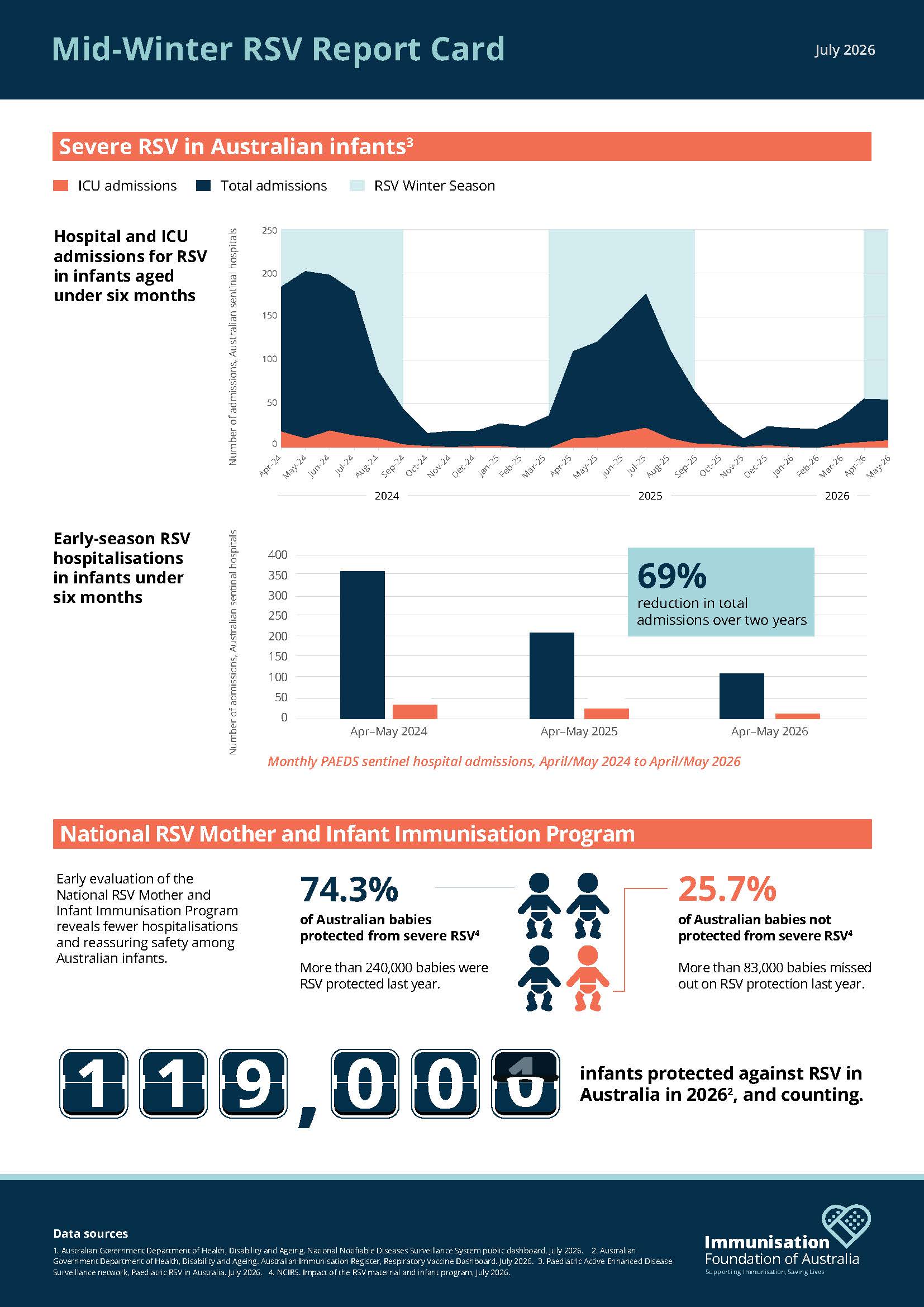
- Australia’s infant RSV immunisation programme has been hailed a success, with paediatric hospital admissions in April–May 2025 down 70 per cent compared to 2024, and more than 360,000 babies protected since the national program began.
One million older Aussies miss out on RSV protection Not too late to vaccinate as RSV cases eclipse influenza and COVID
This winter, more than one million elderly Australians have prioritised influenza vaccination, but remain exposed and unprotected against the most common respiratory virus now circulating in the community – RSV (respiratory syncytial virus).1,2
Just 722,530 older Australians (those aged 75 years or over and Aboriginal and Torres Strait Islander people 60 years or over) have received the free RSV vaccine this year, compared to 1.76 million of the same age groups who have had their flu shot, according to a Mid-Winter RSV Report Card by the Immunisation Foundation of Australia (IFA).2
This immunisation gap is particularly concerning given more than 83,000 cases of RSV have already been recorded in Australia this year, far outnumbering both influenza and COVID-19. This is the first time RSV has dominated mid-year infectious respiratory disease notifications since becoming nationally reportable in 2021.1
With around 890 confirmed notifications of RSV each day since the start of winter, Australia is on track to record more than 127,000 cases of this unpredictable virus by the end of winter.1
“The fact that more than 700,000 vulnerable older Australians received the RSV vaccine in the first two months of the vaccination program is an outstanding effort by the community and immunisation providers,” said IFA Founder and Executive Director Catherine Hughes AM.
“However, there is still a massive gap in RSV vaccination coverage and an urgent need for older adults to roll up their sleeves,” she said.
“The RSV vaccine was unfortunately not available in April and early May when many older Australians receive their flu shot, so it’s clear there is some catching up to do.”
Ms Hughes noted that an IFA poll of 1,000 older Australians found almost two-thirds (64%) of respondents did not know that RSV and flu vaccines can be given at the same time – a knowledge gap that may be leaving many unprotected.3
“The RSV and influenza vaccines can absolutely be given at the same time, providing a convenient way to maximise protection during winter.”
RSV is a highly contagious respiratory virus and a leading cause of hospitalisation in older adults and babies. While many people experience mild, cold-like symptoms, RSV can cause severe respiratory illness, including pneumonia, and can lead to a decline in physical and cognitive health in older adults.4,5
Studies show that vaccination is more than 85 per cent effective in keeping older adults out of hospital with severe RSV, and almost 80 per cent effective in reducing hospital admissions for other conditions exacerbated by RSV, including chronic lung disease and heart disease.6
Australian Medical Association President Dr Danielle McMullen said the RSV vaccine has the potential to prevent thousands of hospitalisations this winter.
“With so many Australians yet to be protected against RSV, it’s essential that people speak to a healthcare professional about RSV protection. Now is the time to act – winter is far from over,” Dr McMullen said.
“Getting protected against RSV is an incredibly simple yet effective way to help prevent serious illness and stay out of hospital.”
Infant RSV immunisation “a resounding success”
Ms Hughes said that older Australians should look to the success of the infant RSV immunisation program which has delivered high levels of uptake and reductions in hospital admissions.
Data show that despite a high number of RSV cases this year, infant admissions to paediatric hospitals during the early months (April-May) of the Australian RSV season are 70 per cent lower than in 2024, before the roll-out of the national RSV Mother and Infant Protection Program.7
“Since the nationwide program began last year, more than 360,000 Australian babies have been protected against severe RSV,” Ms Hughes said.
“Early evidence shows the program is a resounding success. Thousands of families are being spared the trauma of their baby being admitted to hospital and requiring oxygen support or intensive care due to RSV,” she said.
Infants, expectant mothers, adults aged 75 years and over, and Aboriginal and Torres Strait Islander people aged 60 years and over can now receive free RSV immunisation throughout Australia.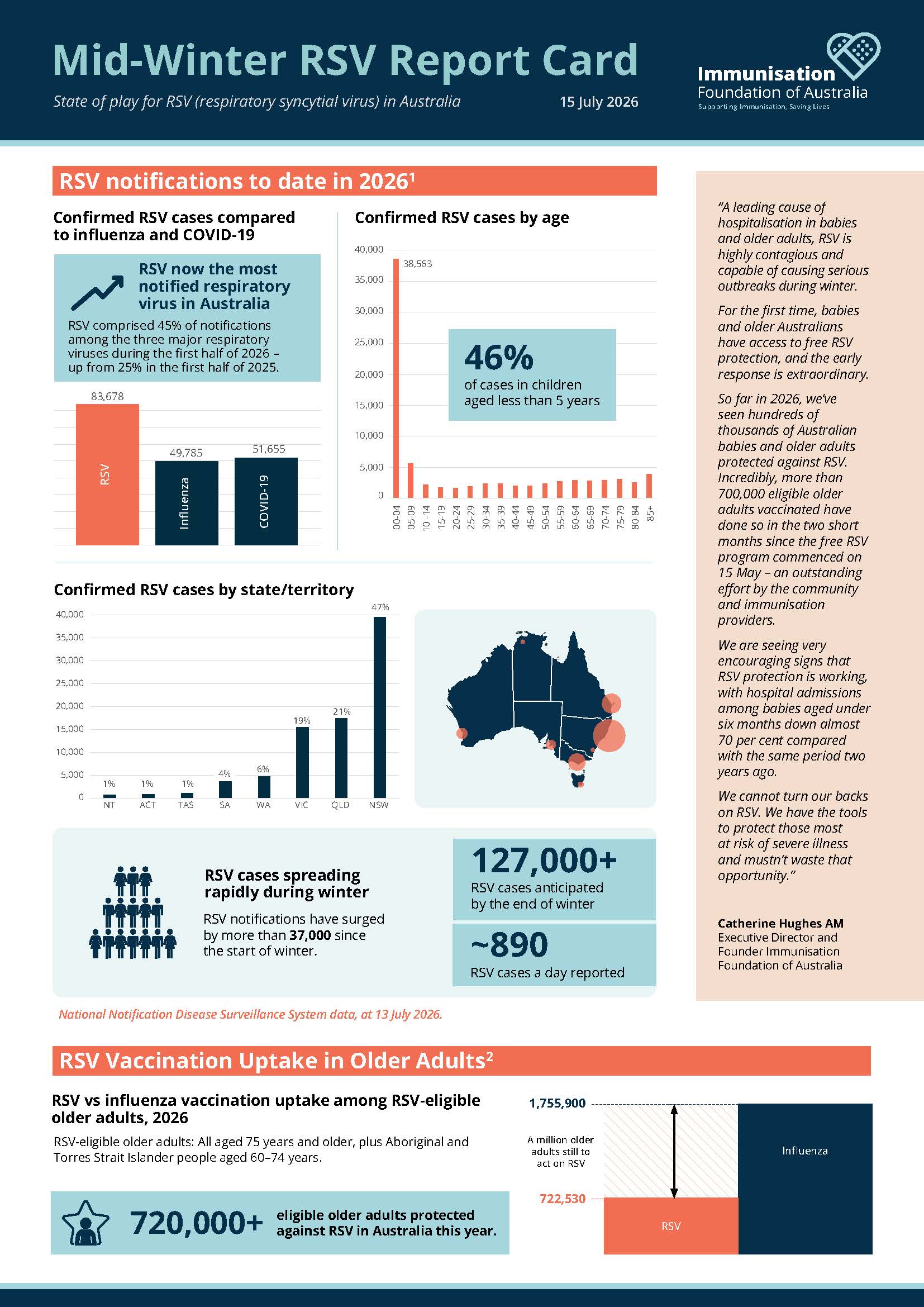
 References
1. Australian Government Department of Health, Disability and Ageing. National Notifiable Diseases Surveillance System public dashboard. May 2026 2. Australian Government Department of Health, Disability and Ageing. Australian Immunisation Register, Respiratory Vaccine Dashboard. July 2026. 3. Immunisation Foundation of Austalia. RSV in Older Adults: Awareness and Attitudes. Pure Profile, n=1,011. May 2026. Australian Government. 4. Department of Health, Disability and Ageing. Australian Immunisation Handbook. Respiratory syncytial virus (RSV). May 2026 5. Tobin EH, Nguyen AD. Respiratory Syncytial Virus in Adults. StatPearls Publishing; 2026 Jan. 6. Symes R et al. Vaccine effectiveness of a bivalent respiratory syncytial virus (RSV) pre-F vaccine against RSV-associated hospital admission among adults aged 75–79 years in England: a multicentre, test-negative, case–control study. The Lancet Infectious Diseases, 2025; 26, 229-238 7. Paediatric Active Enhanced Disease Surveillance network, Paediatric RSV in Australia. May 2026