Transforming mineral processing through innovative technologies that improve efficiency, reduce environmental impact and support a more sustainable resources sector.
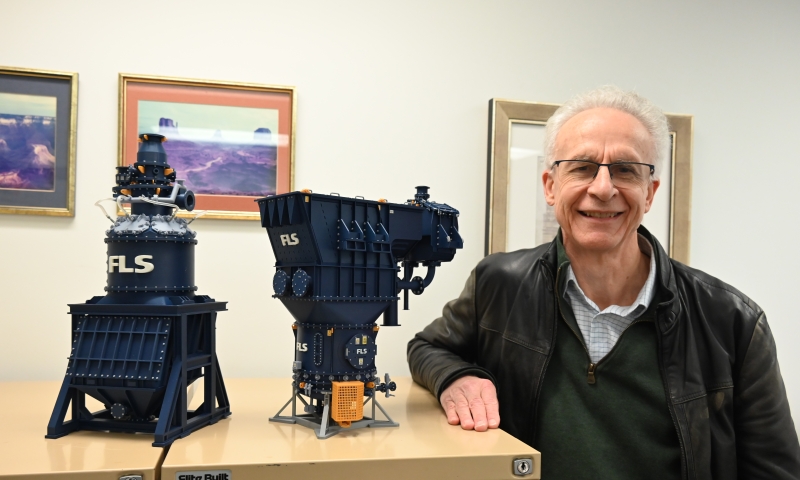
COEMinerals Director Laureate Professor Kevin Galvin. Image Credit: Supplied.
Minerals and metals are essential to modern life in Australia. They underpin the technologies we rely on every day, from smartphones to medical equipment and are critical to the transition to cleaner energy systems.
However, the processes used to extract these materials, known as beneficiation, are becoming increasingly unsustainable. Declining ore grades, more complex deposits and long-established processing methods are creating technological, economic and environmental challenges for the sector.
The ARC Centre of Excellence for Enabling Eco-Efficient Beneficiation of Minerals (COEMinerals) is addressing these challenges at scale, in close collaboration with industry partners. Led by Laureate Professor Kevin Galvin, the Centre brings together more than 100 researchers from 8 Australian universities and industry partners, including a large cohort of PhD students who will carry this expertise into the future workforce.
‘When we assembled the Centre of Excellence, we did not want it to be yet another minerals processing centre with all the usual departments,’ Professor Galvin says. ‘We wanted focus and we also wanted to introduce interdisciplinary components, which we did particularly through chemistry.’
That interdisciplinary approach is already delivering results.
The Centre’s REFLUX suite of new technologies, developed with strong industry backing, is improving mineral separation efficiency on mine sites around the world. Building on Professor Galvin’s earlier invention, the REFLUX Classifier, these new systems enable simpler and more effective recovery of copper and other minerals. They are also proving effective in extracting value from tailings dams, materials that have traditionally been treated as waste.
COEMinerals is also applying advanced beneficiation techniques to recovering valuable minerals from urban waste sources. In one world-first development the team, led by A/Professor Mahshid Firouzi, adapted flotation processes to recover silver from end-of-life solar panels. With around 4.4 million Australian homes now using rooftop solar, this presents a growing opportunity.
‘The process happens in what we call a one-minute residence time – very fast at ambient temperature with no acid,’ A/Professor Firouzi says. ‘The recovery is close to 100% while the concentration increase is better than 80-fold, which means the volume of silver comes down to something small that you could probably smelt directly.’
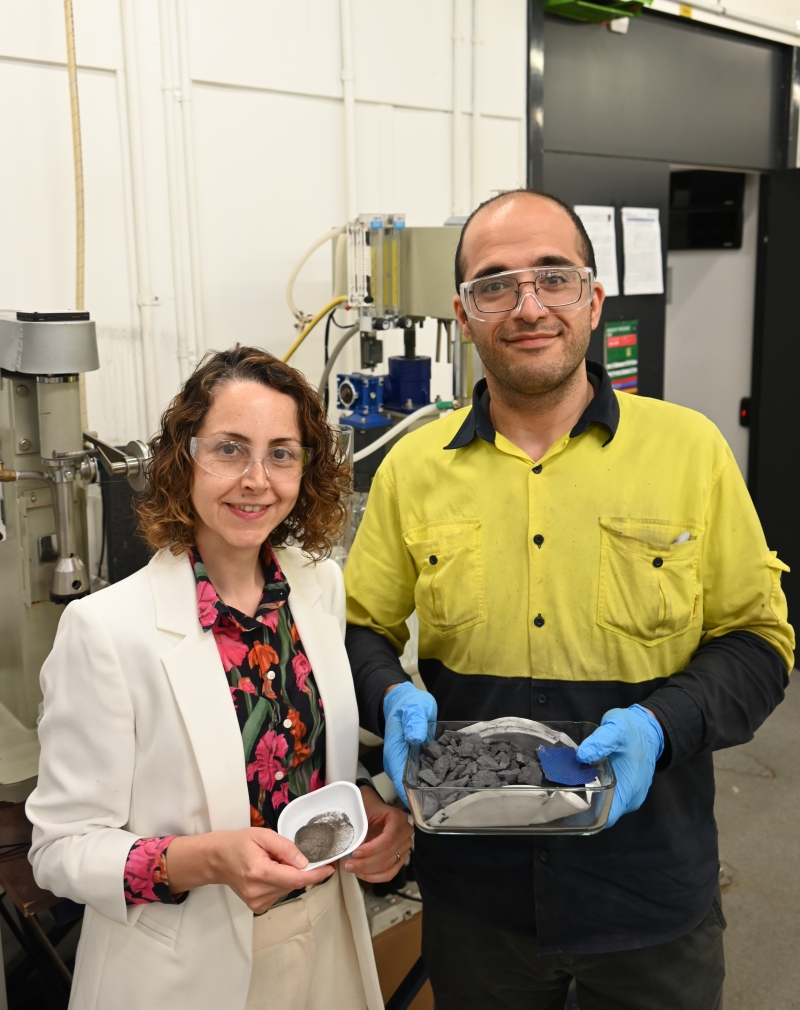
Researchers from the Centre are exploring new methods for extraction of graphite from lithium ion batteries, by-passing pyrolysis.
Alongside these breakthroughs, researchers are developing practical improvements that can be adopted within existing operations, without significant capital investment. One example is the work by Dr Candice Brill on an aerosol delivery method for flotation chemicals, which improves mineral recovery efficiency and is currently being trialled at mine sites.
Looking ahead, one of the Centre’s most transformative research streams involves the use of peptides, short chains of amino acids, instead of the ‘chemical collectors’ used in mineral processing. As they are highly selective, peptides can bind to specific mineral surfaces, mimicking how a cancer-targeting drug can target cancer cells.
Centre researcher Professor Chun-Xia Zhao is leading this work.
‘Metals and minerals don’t have DNA, but we know each has unique chemical and physical properties,’ she says. ‘By identifying the exact peptide that can bind to a particular mineral is a bit like uncovering the ‘genetic code’ for each mineral.’
Peptides are already widely used in applications ranging from cosmetics to targeted drug delivery. COEMinerals is adapting these principles to mineral processing, with the potential to transform how rare earth elements are recovered.
Current methods for separating rare earths require complex, multi-stage processes involving large volumes of toxic solvents and significant capital investment. The peptide-based approach could offer a more efficient and environmentally sustainable alternative.
‘Our goal is to achieve separation in one or two steps, without toxic solvents, and still deliver high efficiency and purity,’ Professor Zhao says.
In parallel, the Centre is rethinking the design of minerals processing circuits, to prevent overgrinding of the mined ore to reduce energy and water consumption and maximise mineral recovery. Many existing systems have evolved incrementally over decades, resulting in long, complex processing steps that perform poorly.
‘We are asking what happens if you redesign the circuit from the ground up using these new technologies,’ Professor Galvin says. ‘You may be able to reduce a complex plant to just 3 or 4 simplified steps.’
With several years remaining, COEMinerals is well positioned to deliver on its goal of transforming mineral processing. Its close collaboration with industry partners, combined with a strong and diverse pipeline of skilled researchers, highlights both the importance of the sector to Australia’s economy and its central role in the transition to net zero.
This work reflects the role of the ARC in supporting research that contributes to Australia’s long-term capability and resilience, particularly in sectors critical to economic and environmental sustainability.