Satellite tracking of green sea turtles is revealing habitat hotspots and remarkable long-distance movements around New Zealand’s coastline.
DOC Marine Senior Science Advisor and project lead Dr Karen Middlemiss says these results come from ongoing research as part of the most comprehensive sea turtle tracking study to be undertaken in New Zealand waters.
“They don’t breed here, but juvenile and sub-adult green sea turtles are regularly seen in warmer North Island waters – we are sort of like a baby-sitting service for teenagers before they leave New Zealand and return to their nesting beaches in the wider Pacific region. We’ve known very little about whether individual turtles stay around for long periods or frequently move on to other places in New Zealand. This fine-scale information is starting to reveal hidden secrets of our underwater friends.”
The study is a ‘Team Turtle’ project, a collaboration between the Department of Conservation (DOC), Auckland Zoo, SEA LIFE Kelly Tarlton’s Aquarium and iwi.
Since 2025, 11 rehabilitated honu/turtles, fitted with the latest satellite tag technology have been tracked daily for 6-12 months. They are producing highly accurate location data with the benefit of the new Kinéis constellation of 25 satellites.
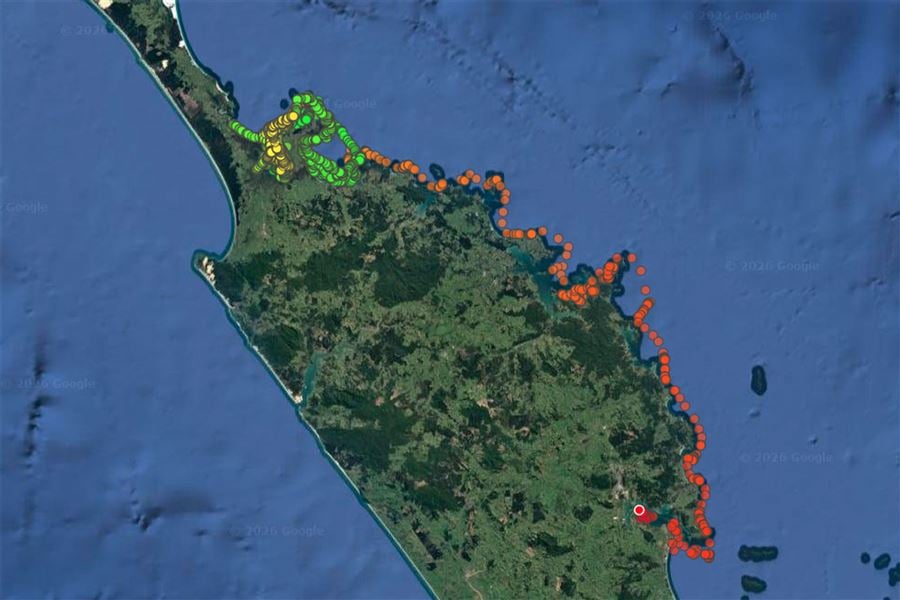
The research has identified several turtle hotspots to focus future work on, including Rangaunu Bay and Harbour, Pārengarenga Harbour, Murimotu, Whangārei Harbour and the Bay of Islands in Northland, and Manukau Harbour in Auckland.
One turtle, nicknamed 3K, clocked up nearly 3,000 kms over four months, journeying along the west coast between Rangaunu Harbour and Wellington and back again – with a month-long pitstop in Manukau Harbour on the way home.
Another turtle released at Northland’s Taupō Bay travelled along the east coast to the Coromandel before returning north to settle in Rangaunu Harbour. Turtles which spent most of their time in this harbour were most often located over seagrass and harbour channel areas.
Nina Raharuhi, Hapū Cultural Monitor for Ngāti Kahu with Ngāti Whātua affiliation, urges locals to support turtle conservation.
“The release of these 11 honu into Rangaunu Harbour over the past two years represents hope, healing, and our shared responsibility as kaitiaki. These taonga of the moana remind us of our deep connection to the natural world and the importance of protecting our marine environment for future generations. As tangata whenua, we support every effort that honours the mauri of our moana and ensures our honu can thrive within their natural habitat.
“To our boaties and fisherman enjoying the harbour of Rangaunu: ‘Ata haere, kia tūpato’, take it easy and be careful.”
SEA LIFE Kelly Tarlton’s General Manager Dan Henderson says, “As an organisation dedicated to marine conservation, it’s incredibly rewarding to gain a clearer picture of how green sea turtles are using New Zealand waters. These findings highlight just how connected our marine environments are and reinforce the importance of protecting critical habitats along our coastline.
“SEA LIFE Kelly Tarlton’s is proud to work alongside DOC, Auckland Zoo and iwi to advance the science that will support the long-term conservation of these remarkable animals. By bringing these discoveries from the field into the aquarium, we can help guests better understand the challenges marine species face and inspire more people, especially young New Zealanders, to become passionate advocates for ocean conservation.”
Auckland Zoo Veterinary Services Manager Dr James Chatterton says August to December is the peak season for unwell turtles with eight individuals already admitted to the Zoo since June.
“We see a range of illnesses including trauma (fishhooks, line entanglement and boat strike), as well as diseases secondary to immune suppression such as pneumonia and intestinal infections. We suspect the immunosuppression is impacted by reduced access to food and/or degradation of their marine environment.”
“The good news is more than two-thirds of the green sea turtles we admit go on to make a full recovery. However, the long-term goal is to improve their marine environment to allow more of them to thrive in the wild. It is exciting to be part of the Team Turtle project, and we hope the increasing support of the community and the information from this study means conservation action can be taken to improve the protection of these taonga in the wild.”
Team Turtle is continuing its partnership with iwi and hapū, aiming to tag additional turtles and bring the total number of individuals monitored through the project to 20.
The findings will support national and international conservation initiatives for migratory sea turtles to protect the species and important habitats.
“The study will help build a more detailed understanding of which habitats are most important to the wider population. The next step is to turn this information into conservation action and we’re keen to engage with regional councils about how we can get turtles recognised in relevant coastal management plans,” says Karen.
Background information
Media release 12 March 2025: Rehabbed turtles satellite tagged for groundbreaking research
Tips to reduce boat collisions with sea turtles:
- slow down for vessels travelling in known turtle habitat and ‘keep it off the plane’
- wear polarised sunglasses to help spot turtles under the sea surface
- nominate a spotter to look for marine animals and alert the skipper
- Fit a propellor guard to reduce the risk of fatal injury from propellor blades