Ms Luzviminda Giangan, a smallholder dairy farmer and chairwoman of a dairy cooperative from Southern Luzon in the Philippines, begins her mornings tending to her dairy herd.
She makes the forage, composed of freshly cut grasses and legumes abundant in the area. She hopes her care will result in them producing high-quality, abundant milk that she can sell.
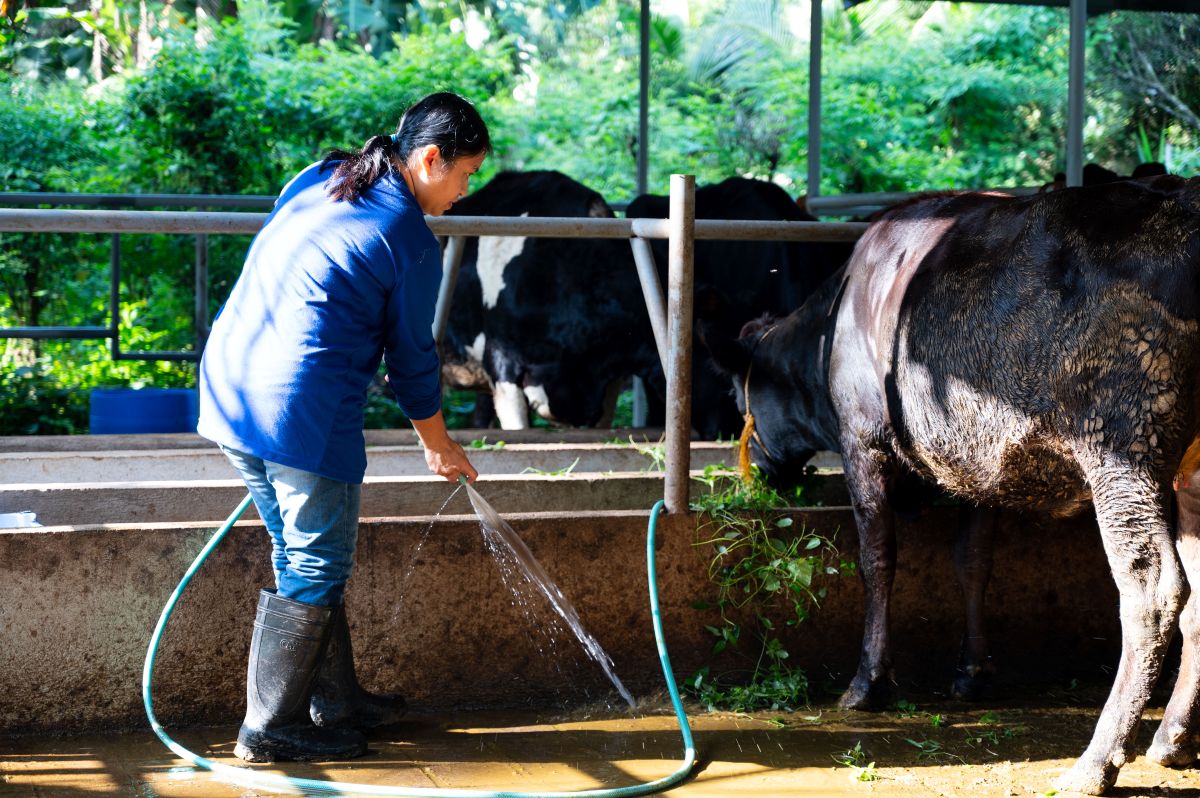
She, and many smallholder farmers in their province (tending between 1-5 cows), often resort to guesswork to know if their feeding regime is sufficient for proper nutrition.
‘Many smallholder dairy farmers are not aware that inconsistent feeding and herd practices can lead to variability in milk yields, poor reproductive performance, bacterial contamination and unhealthy cows,’ said Dr Todd Sanderson, Research Program Manager for Social Systems, Policy and Economics at the Australian Centre for International Agricultural Research (ACIAR).
Evaluating opportunities and constraints for smallholder dairy value chains
In 2024, ACIAR and Department of Science and Technology – Philippine Council for Agriculture, Aquatic and Natural Resources Research and Development (DOST-PCAARRD) co-designed and co-funded a small research activity to evaluate opportunities and constraints for the growth of smallholder dairy value chains in the Philippines.
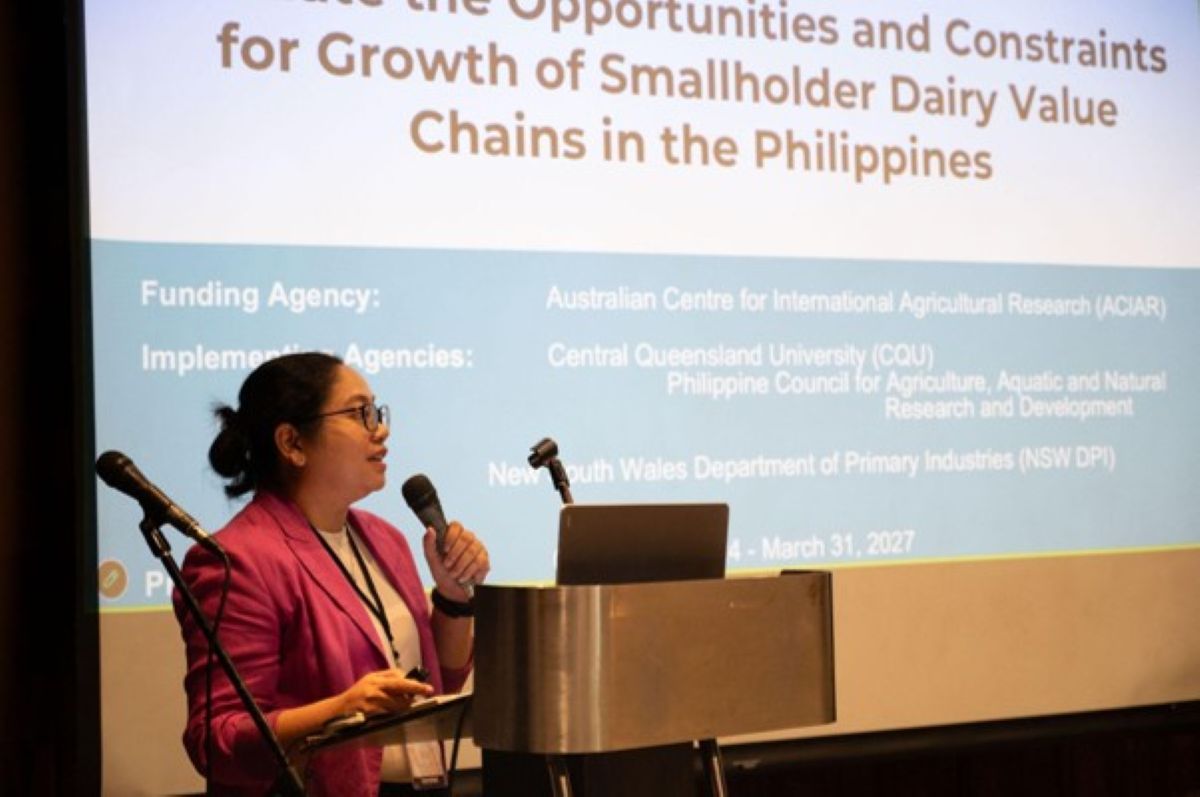
The project was implemented by Central Queensland University, DOST-PCAARRD Socio Economics Research Division, and the New South Wales Department of Primary Industries.
It analysed the smallholder dairy value chain system in the Philippines. It aimed to understand the linkages among value chain actors, including farmers, cooperative groups, the government and the private sector. The project team conducted field trials in southern Luzon and northern Mindanao, two major milk-producing regions in the Philippines.
Through a value chain analysis, the project developed a clear picture of the linkages and dynamics among farmers, cooperatives, the government and the market, adding value to the limited research into dairy farming systems in the Philippines.
Understanding the smallholder dairy industry in the Philippines
The project found that dairy cooperatives play a significant role in supporting smallholder dairy farmers. Primarily, they serve as central points for collecting raw milk and managing the farmer-to-market linkage. Some cooperatives support the provision of farming inputs and herd management services.
‘The dairy cooperatives are primarily responsible for collecting the milk. Then the milk is brought to a processing facility, before it is distributed and sold to restaurants, hotels and multinational chains,’ said Ms Meliza Abeleda, Officer-in-Charge of the Socio-Economics Research Division at DOST-PCAARRD and local project leader.
‘Although cooperatives serve as a linkage to the guaranteed buyers of raw milk collected by farmers, this does not often translate into improved milk yield, income or profitability.’
Although smallholder dairy farmers can sell their raw milk to cooperatives, they cannot sell it at high prices. The cooperative’s board of directors decides the milk price, and there’s little to no room to negotiate.
‘Usually, the expenses of the cooperatives and the smallholder farmers outpace their income or profit. This can be traced to rising feed costs, low milk yield and lack of farm business management skills,’ added Ms Abeleda.
Many dairy cooperatives recognise the need to enhance farmers’ knowledge and practical skills, particularly in farm business and feeding management, both of which are essential to improving their production and profits.
Field trials for smallholder dairy farmers
To help increase smallholder dairy farms’ milk productivity and profitability, the project trained the farmers in feed and nutrition, and farm business management. This six-month training series focused on cattle requirements and nutrition principles, ration formulation, homegrown feeds and forage production, and feed conservation. It also addressed calf rearing and business management skills such as record-keeping and cost control.
‘At first, I thought it was okay to just feed my cows as much as I could. But I learned in the training series that there are proper ways of feeding and keeping your cows healthy so you can have more milk,’ said Ms Giangan, who is the chairwoman of Ruminant Raisers of San Antonio Quezon Agricultural Cooperative (RRSAQ).
The farmers learned how to make silage (a fermented, longer-lasting feed) and to use corn as forage for consistent feeding.
They also learned to use the Productivity and Profitability (P&P) Calculator, a decision-support tool that guides farmers in planning their feed to maximise milk productivity and profits, developed and pilot-tested by DOST-PCAARRD. Although still being further refined by the project, the P&P calculator will be distributed to cooperatives and provided to national and local governments for use in programs that support dairy farmers.
‘Many farms would wait more than two years just to realise the gains from their cows. But through the training, the farmers learned that when a calf is cared for with better feed plans, a clean environment and ad libitum clean water, it can reach its ideal weight for breeding in approximately 15 months,’ said Australian project lead Dr David McGill, Associate Professor of Livestock Systems at Central Queensland University.
Reshaping smallholder dairy farming through an evidence-based approach
In just a few months, the cooperatives that the project engaged with put their learnings into practice.
‘All three cooperatives that were trained demonstrated significant improvements in productivity and income,’ said Ms Abeleda.
While the data collection for the third cooperative is still ongoing, initial data showed from the two cooperatives that the number of lactating cows rose by 63.89%, income growth of 41.19% and profitability improvement of 224.03% for those who adopted the three practice changes on water provision, feeding decision and protein source incorporation.
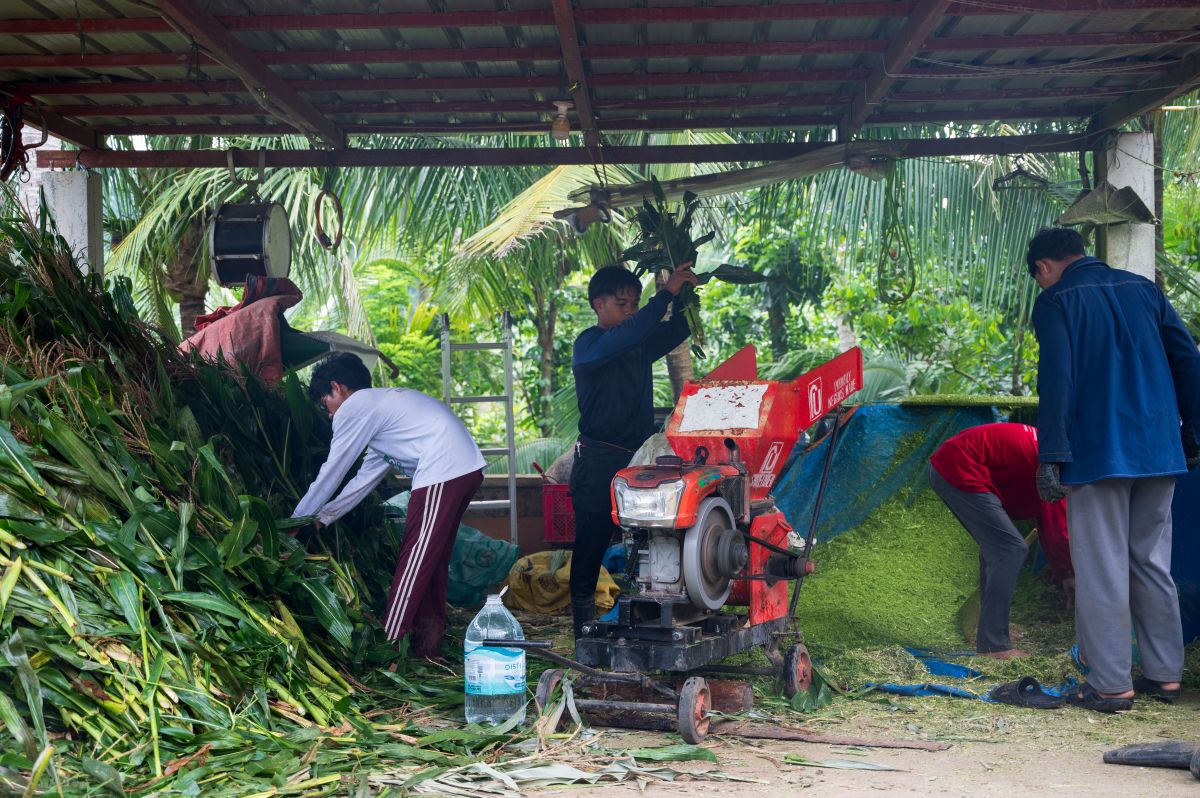
These improvements aren’t just associated with managing the cows’ feed and nutrition, but also farmers learning to keep their total expenses and feed costs low through proper recordkeeping and feed cost control.
Ms Giangan now prepares the feed for her cows more confidently. Her guesswork has been replaced by a more evidence-based approach to caring for and feeding her cows.
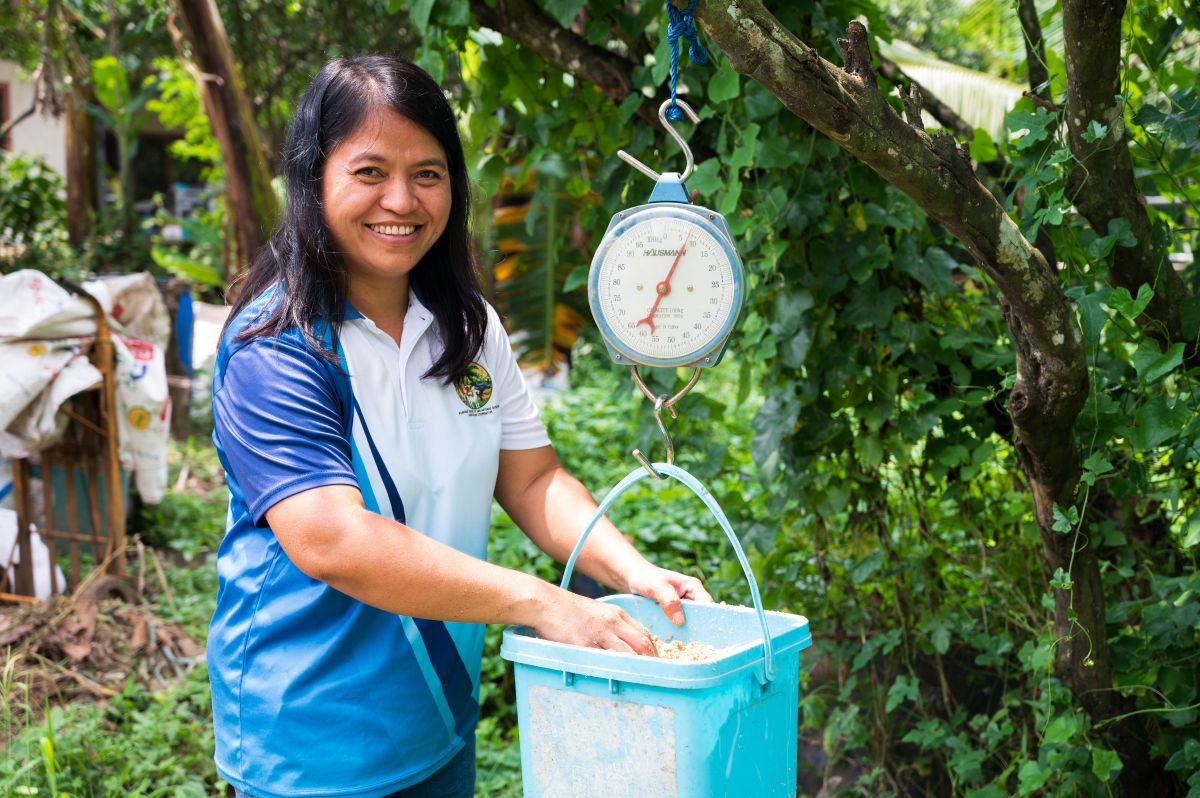
‘My hard work and diligence are finally paying off. After the training, I applied what I learned and now, one of my cows that had not been pregnant for almost three years had a successful insemination,’ said Ms Giangan.
Over the next few months, based on the project’s findings, recommendations will be made to the Philippines National Dairy Authority to support its long-term strategies for dairy sector development.
‘By developing the knowledge-base for improved market linkages, policy support, farm practices and business management, this research project helps support the foundations of a more sustainable dairy industry with improved livelihood for our smallholder farmers in the Philippines,’ said Dr Sanderson.
Learn more about the project: ‘Opportunities and constraints for growth of smallholder dairy value chains in the Philippines’ (AGB/2023/192)