At the beginning of July, Maja Fjaestad took part as a representative of the Centre for Health Crises at KI in the European Commission’s Implementation Dialogue on health crisis preparedness. It was a high-level meeting led by Commissioner Hadja Lahbib, who is responsible for crisis preparedness. The meeting focused on how the EU can better prepare for future health crises and aims to compile recommendations for the European Commission.
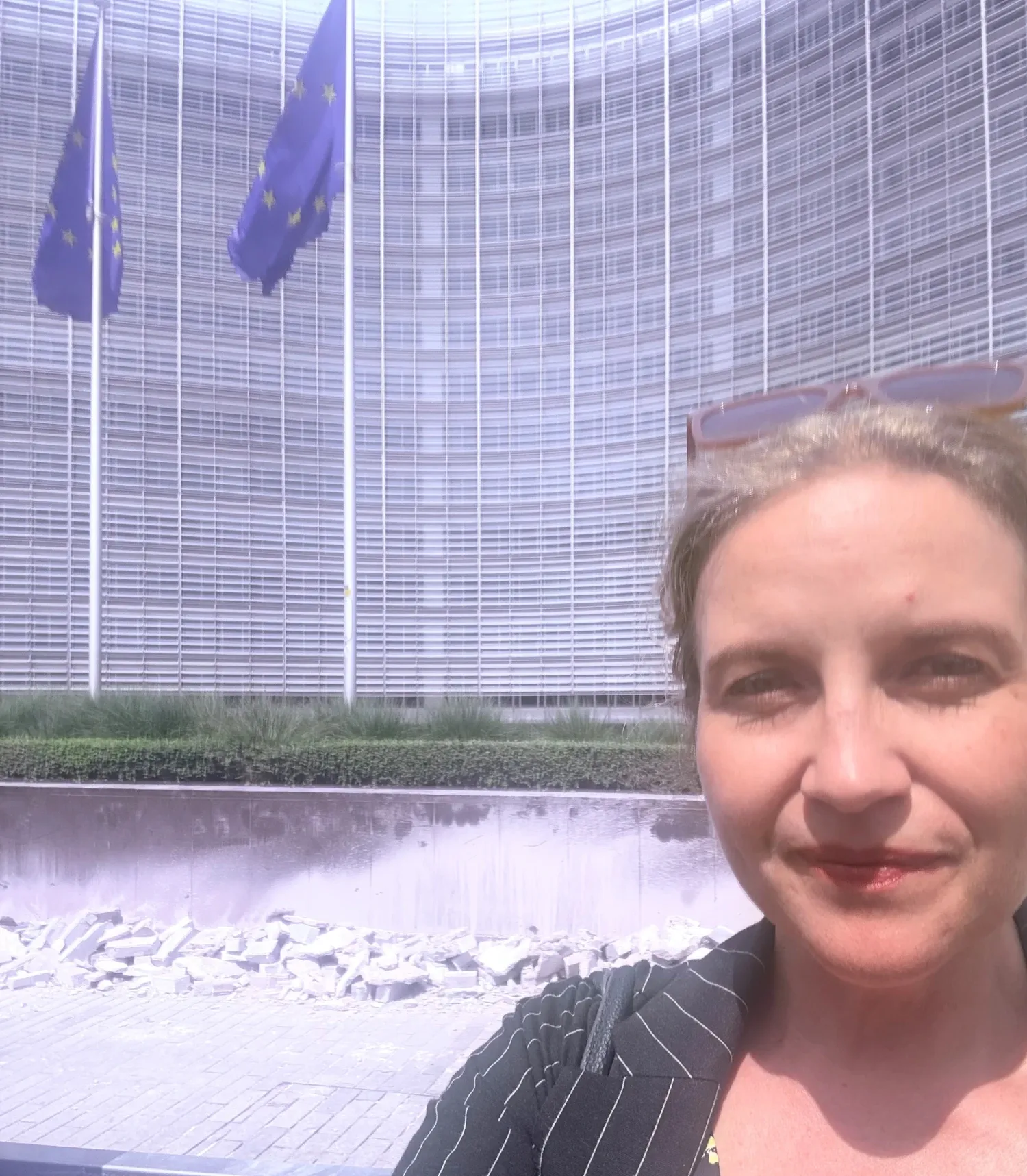
Photo: Maja Fjaestad
At the meeting, some 20 European stakeholders from academia, civil society, industry and the public sector gathered. Through the Centre for Health Crises , Karolinska Institutet took part as the only Swedish actor and the only university. The Centre for Health Crises was invited through HERA – Health Emergency Preparedness and Response Authority , with which it had previously been in contact.
The discussion centered around the EU’s strategy for medical countermeasures – that is, vaccines, medicines, diagnostics, protective equipment and other products needed to prevent, detect and manage serious health threats. Discussions covered, among other things, how Europe can strengthen its ability to detect new threats earlier, accelerate the development of vaccines and treatments, secure production capacity within the EU, and improve stockpiling and joint procurement.
The importance of collaboration and a scientific foundation
At the meeting, Maja Fjaestad , expert coordinator at the Centre for Health Crises and strategic management adviser for community relations at KI, highlighted perspectives from research, preparedness and policy development. Europe’s work on medical countermeasures must be based in science, and collaboration between research, healthcare and public authorities should be strengthened. A health crisis always occurs in relation to society’s vulnerabilities and must be understood in a social context.
According to Maja Fjaestad, the dialogue shows that preparedness is no longer seen solely as an issue for crisis situations. The EU’s strategy emphasises that investments in medical countermeasures strengthen both health security and Europe’s long-term competitiveness. She is pleased that the Centre for Health Crises and Karolinska Institutet are able to contribute to the discussion, which will form the basis for a series of recommendations to the European Commission.