Are we really living through a “kissing recession”?
In a recent YouGov survey, commissioned by oral care brand Waken, more than a third of British adults reported kissing romantically less often than they did five years ago. Almost one in five has not shared a romantic kiss with anyone in over a year , while 27 per cent believe that kissing has generally become less common.
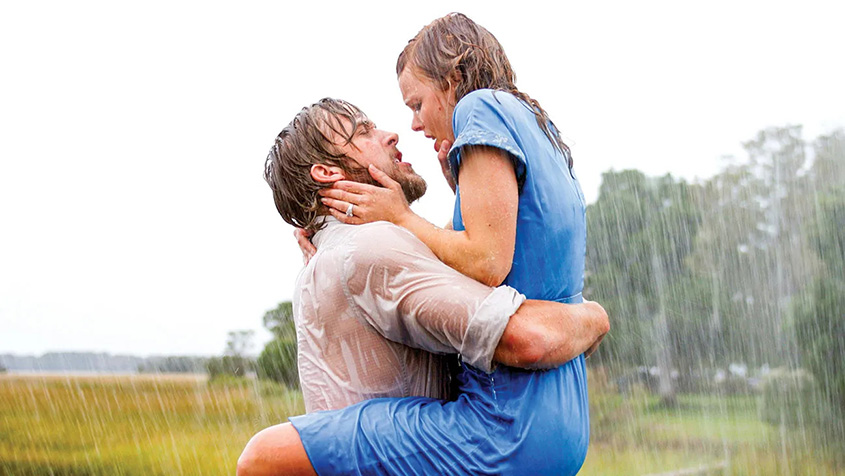 Sparks didn’t initially fly between actors Ryan Gosling and Rachel McAdams on The Notebook set, but the two started after the film’s release in 2004. Photo: In Line/Courtesy of Everett Collection.
Among Gen Z, self-consciousness was the main factor. The survey found those aged 18 to 24 were fretting about “the right moment” for a pash, and whether they might be bad at it. A third admitted to abandoning a kiss because they lacked confidence.
Shocked by the news, two Millennial reporters inquired whether the so-called “kissing recession” had reached Australia. Gen Z audience members said “kissing randoms” is “gross” and also “a risk” in the post Me Too era.
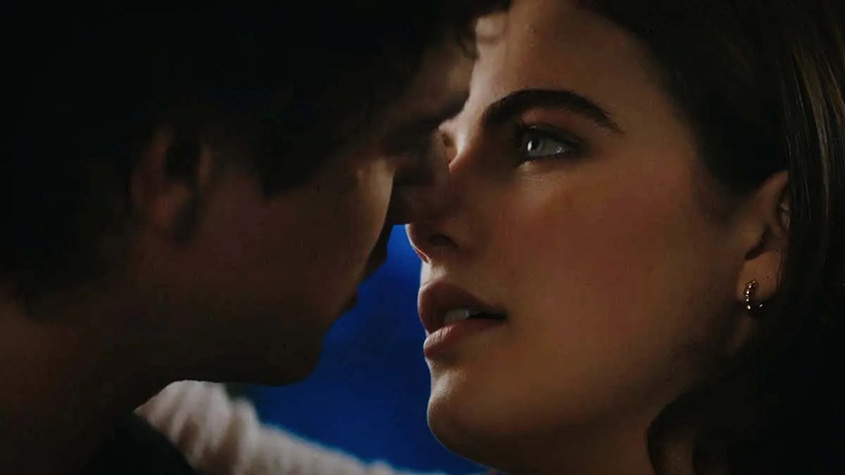 Off Campus was an instant global hit, with 36million people watching the Gen Z romance series within its first 12 days of steaming. Photo: Prime Video.
Kissing has always mirrored its times, says Macquarie University professor Katie Barclay. In her new book ‘ The History of the Kiss’ , the historian of emotions traces the origins of the kiss from medieval Europe to present day.
“The first thing I’d tell Gen Z is, this absolutely isn’t their fault,” she says. “Kissing is a very cultural act. It seems so natural and normal because of its prevalence, and when that declines, so does kissing itself. Kissing is a social script that we’re taught. And so when it dries up, you suddenly don’t have the impetus to do it in the same kind of way.”
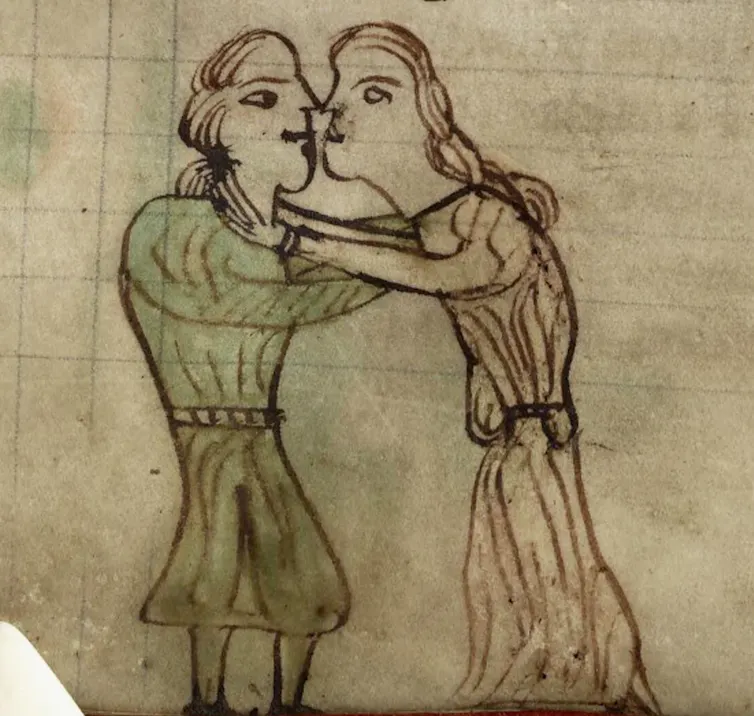
A kiss of homage, marginalia in a 13th century manuscript copy of the laws of the 9th century King Hywel Dda. Photo: National Library of Wales.
Kissing has actually been in recession for centuries, with its last true resurgence in the 1960s. “Today when we think about mouth kisses, we immediately think of sex,” Prof. Barclay says. “The kiss has always been a symbol of love, and not just of romantic love, but of community love. In medieval Europe, their first association is the holy kiss in church. It’s a community gesture, like a hug or handshake.”
The osculum pacis or kiss of peace, usually shared between two powerful men, marked the conclusion of any legal or diplomatic negotiation. People believed breath carried the spirit and a kiss on the lips caused two souls to mingle and equalise. Vassals kissed their lords to show fealty and worshippers kissed in church. Churches introduced the pax, a ritual object that people could symbolically kiss, in the 1600s because the wealthy weren’t fond of kissing their servants.
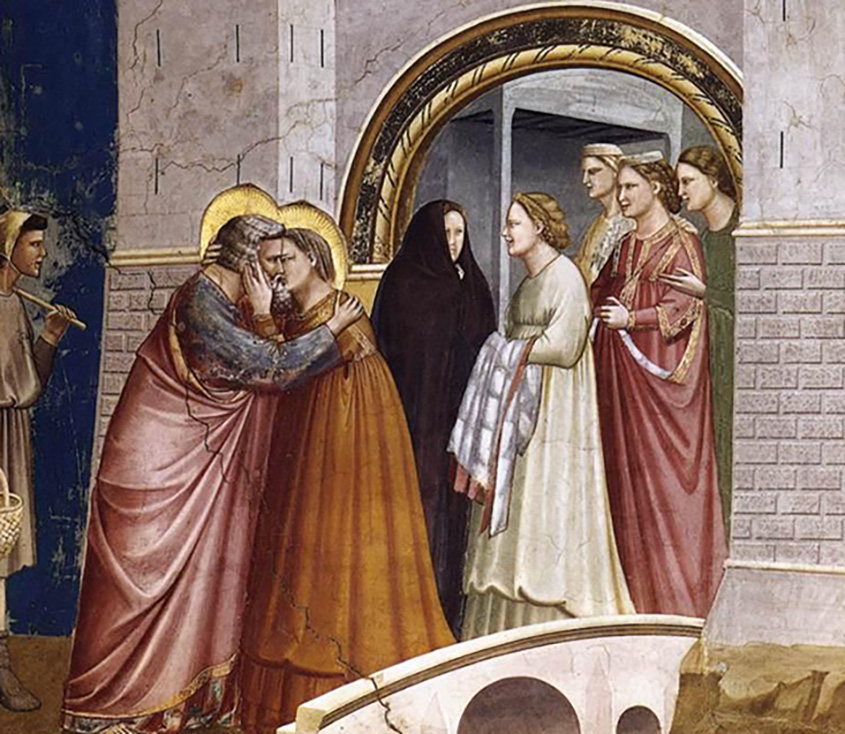 An artist’s depiction of two noblemen kissing in 1302. Photo: Wikimedia.
“The 19th Century is when that starts to flip and the romantic kiss becomes more important in the cultural imagination,” Prof. Barclay says. “We think of consent as a very modern problem, but 19th Century feminists were worrying and writing about it.” Although for most of human history, fathers and husbands were the main people to give consent for kissing, with the lips of daughters and wives “considered property, basically.”
In 1908, the London County council banned kissing games in schools during an outbreak of diphtheria. By the 1920s, parents were arguing about whether it was right to indiscriminately kiss other peoples’ children. The behaviour was so common that by 1930, health-conscious mums would embroider ‘do not kiss me’ onto their babies’ bibs.
“Health movements and consent movements are always closely tied,” she says. “In times where one or both are at the forefront of public debate, kissing can be quite a fraught action.”
The professor points to Covid-19 and the MeToo movement as more recent examples. “Kissing is already a contested thing and suddenly, you’ve got a very good reason that you shouldn’t be kissing. We came out of the pandemic and people just don’t kiss as much anymore,” she reasons. “But changing sexual cultures are also to blame.”
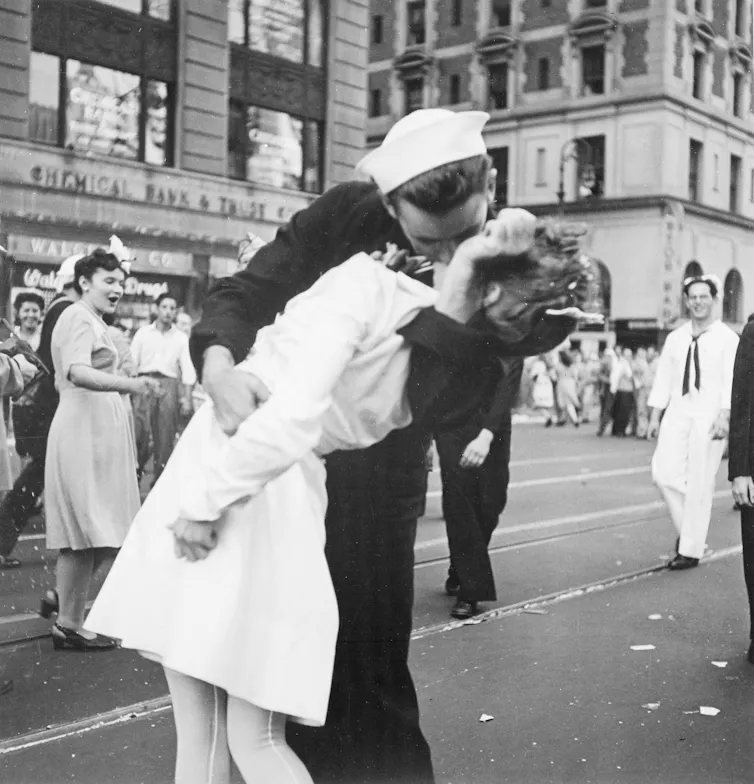
“We no longer see this kiss as romantic, but as an assault,” Professor Barclay says. Alfred Eisenstaed’s famous V-J Day photo was taken in New York’s Time Square in 1945. “It’s interesting how the cultural frame changes over time.” Photo: Wikimedia .
‘Everyone is hot but nothing is erotic,’ has become a popular internet shorthand for the devastating impact of social media algorithms on intimacy, both on-screen and In-Real-Life. Being attractive isn’t about attracting a partner anymore, cultural reporters argue , but an online audience. And therein lies the problem.
Statistical trends show younger generations are actually having less casual sex and forming fewer spontaneous romantic connections , even as digital spaces become saturated with hyper-processed aesthetic perfection and simulated arousal.
When real kisses do go viral online, they become cautionary tales of moral policing. In July, a TikToker posted a video of a pair kissing on a bench in New York City’s Central Park. “Get a room,” he tells them as he approaches, clearly filming. “There’s kids around.” The clip amassed 9.6million views, with internet sleuths gleefully identifying one of the couple as married.
“We kiss less now for all of these reasons,” Prof. Barclay says. “But humans have been kissing less for 500 years because all those formal kisses disappeared from public life. The romantic kiss became predominant in the 19th Century, and who you can kiss romantically is much more limited.”
Not even the steamy reality TV shores of Love Island have been marked safe from this global decline in PDA. This year, both male and female contestants on Love Island USA frequently used the term “lustful” to critique their fellow contestants —who happened to be dating multiple people—on a show about dating multiple people. Prof. Barclay says it echoes the Hollywood Hays Code, which banned “excessive and lustful” kisses on the big screen until 1968, as well as same-sex and interracial kisses.
But according to her, not all hope is lost for the humble snog: “The true story of the kiss is that it keeps coming back.”
At the turn of the 20th Century, kissing was in a full-blown recession. But post-World War II, there was a sudden resurgence in social kissing on the cheeks. European youth movements in the 60’s adopted this cheek kissing as a form of self-liberation from their “boring and repressed parents,” Prof. Barclay says, “and like their medieval ancestors, they saw it as a sign of equality.”
So if you’re looking for a remedy to the kissing recession, the historian suggests kissing friends and family on the cheek (with consent, of course) is an excellent place to start.