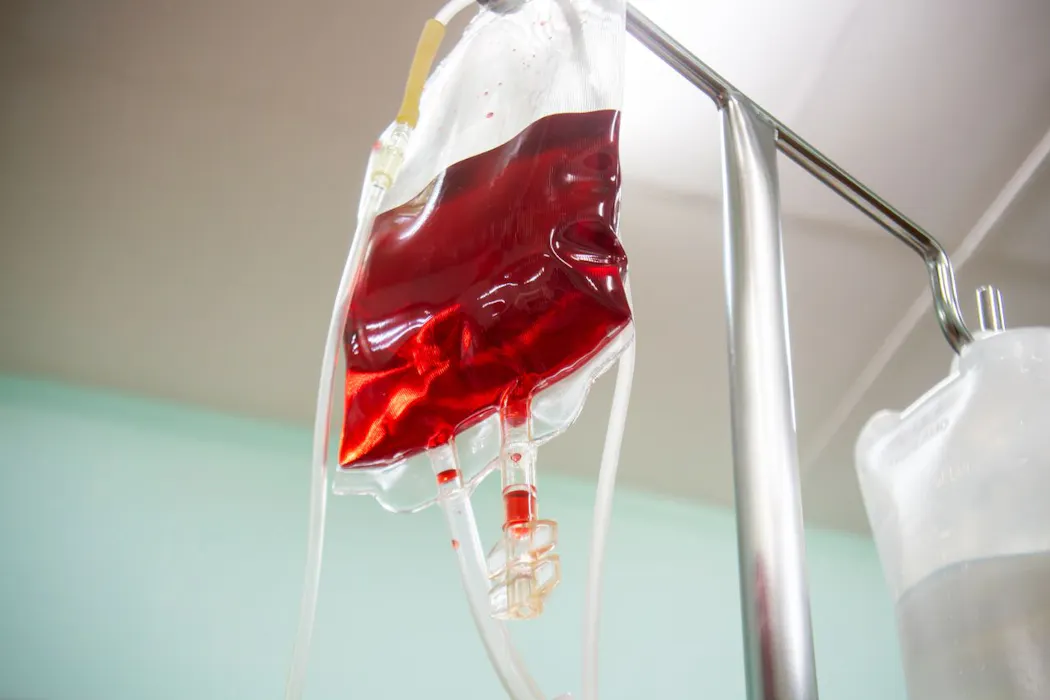
From the 1970s to the 1990s, an estimated 3,500-8,500 Australians acquired HIV or hepatitis C through infected blood or blood products. The exact number isn’t known and it may be substantially higher. Many people likely died without knowing they had been infected.
Authors
- Bridget Haire
Associate Professor, Public Health Ethics, School of Population Health, UNSW
- John Kaldor
Professor of Epidemiology, UNSW
Some people who acquired HIV through blood or blood products received financial settlements. However many, particularly those who acquired hepatitis C virus through blood products, have not.
Those affected have therefore welcomed the newly announced Senate inquiry into the circumstances that led to infected blood entering the blood supply.
They, their partners, children, parents and carers will be able to give evidence. Compensation will also be discussed.
Here’s what happened to Australia’s blood supply decades ago.
Before HIV and hepatitis C had names
Today, Australia’s blood supply is nationally regulated . Donors who are at higher risk of having infections that can be passed on to others during a transfusion are delayed from donating blood until it is deemed safe. All donations are tested for blood-borne infections. And blood products are treated before use to safeguard against any remaining, or as yet unidentified, disease-causing microorganisms.
But this was not always the case.
In the early 1980s, neither HIV nor the hepatitis C virus had been identified, even though they were circulating.
Both infections have long asymptomatic periods. This meant people would not know they had an infection until they developed symptoms years later.
Many people with these infections unknowingly donated blood. These donations were used for whole-blood transfusions. They were also used to make blood products, such as factor VIII, to treat the blood clotting disorder haemophilia.
First, testing for HIV
HIV was first isolated in 1983 and shown to be the cause of AIDS . This was the name given to a group of illnesses related to suppression of the immune system that appeared a few years earlier in gay men, injecting drug users, and subsequently in people who received blood or blood products in the United States, Europe and Australia. It was a feared and stigmatised disease, with high mortality.
From 1984 potential donors in Australia were required to sign a statement to say they were not part of a population at increased risk of HIV.
By 1985, an accurate HIV test was developed and was used in Australia to test all blood donations.
An estimated 520 people acquired HIV through the blood supply in Australia.
Then, testing for hepatitis C
The illness first described in the 1970s as “non-A non-B hepatitis” turned up in people who received blood donations .
What would later be called hepatitis C was initially not considered a particularly serious disease.
This is likely because it takes a long time (20 years or more) after being infected to cause illness. And only a fraction of infected people develop serious liver disease. In comparison, untreated HIV causes serious illness in virtually all who acquire it.
The hepatitis C virus was identified in 1989 . A screening test was developed and deployed in Australian blood services from 1990 .
By this time, the risk of acquiring HIV from blood donations had been virtually eliminated. So the vast majority of Australians infected by receiving infected blood or blood products acquired hepatitis C virus, not HIV.
Could Australia have done more?
A key debate is whether Australian blood services could have done more to minimise the impact of hepatitis C virus before the specific test was developed.
Tests for “surrogate markers” could have been used. These are tests that pick up an indicator of an infection in donated blood. But these tests had serious limits.
One candidate measures liver function by testing for the key enzyme known as ALT or alanine aminotransferase.
However, elevated levels are also associated with factors such as alcohol use and taking common drugs, such as paracetamol and statins. So this test may have led to many people being excluded from giving blood unnecessarily.
Surrogate marker tests also miss a lot of infections. So, at best, they could reduce but not remove the risk, and may have led to a reduced blood supply.
Implementation of ALT-based testing was initially rejected in both the US and Canada.
Then another surrogate marker, anti-HBc , a marker of prior exposure to hepatitis B, was proposed in 1984.
Within two years, the US had recommended all blood donations and plasma products be screened for both ALT and anti-HBc.
The Canadian Red Cross Blood Transfusion Service did not. The then state-based Red Cross Blood Transfusion Services in Australia also did not recommend the surrogate screening in 1987, apart from the Queensland branch .
State-based services managed risk differently
A key issue that led to the newly announced Senate inquiry is the question of fairness. There were various financial settlements for people who acquired hepatitis C through blood or blood products.
Before the national unification of the Red Cross Blood Transfusion Services in the mid-90s, each state and territory had its own policy about managing risk. This is why Queensland was able to introduce surrogate marker tests that other states did not. There is no way of knowing whether this had any impact on hepatitis C virus infection rates in this period.
Financial settlements were made for people who had acquired hepatitis C virus through a blood transfusion between 1986 and 1990 , as long as the transfusion could be traced to a specific facility and donor.
However, people who acquired the virus via a blood product such as factor VIII, a product derived from thousands of donations, were not eligible for financial settlements as it was not possible to trace the source of infection.
Good manufacturing practice?
New evidence aired on the ABC’s Australian Story has suggested poor manufacturing practices may have also contributed to infections. During the 1980s, Australian blood clotting products were made at the Commonwealth Serum Laboratories (CSL) in Victoria.
The ABC has published federal cabinet minutes from 1985 that allege practices at CSL did not meet good manufacturing standards and that batches of blood products “failed to reach the appropriate sterility standards”.
This charge was repeated in cabinet minutes in 1988. Failure to adhere to regulatory standards would provide further evidence to support claims that the lack of compensation for blood product recipients has been unfair.
Why a new inquiry matters
In 2004, a previous Senate inquiry into contaminated blood found that improving access to health services, education of health professionals and supporting research to develop better hepatitis C treatments was preferable to further financial settlements for those with hepatitis C acquired through blood or blood products.
In contrast, Canada and the United Kingdom have started broad-brush compensation schemes after their national enquiries.
Australia’s 2004 Senate inquiry also recommended a formal national apology to those affected, but to date, there has not been one.
This new Senate inquiry may help to address a lingering sense of injustice.