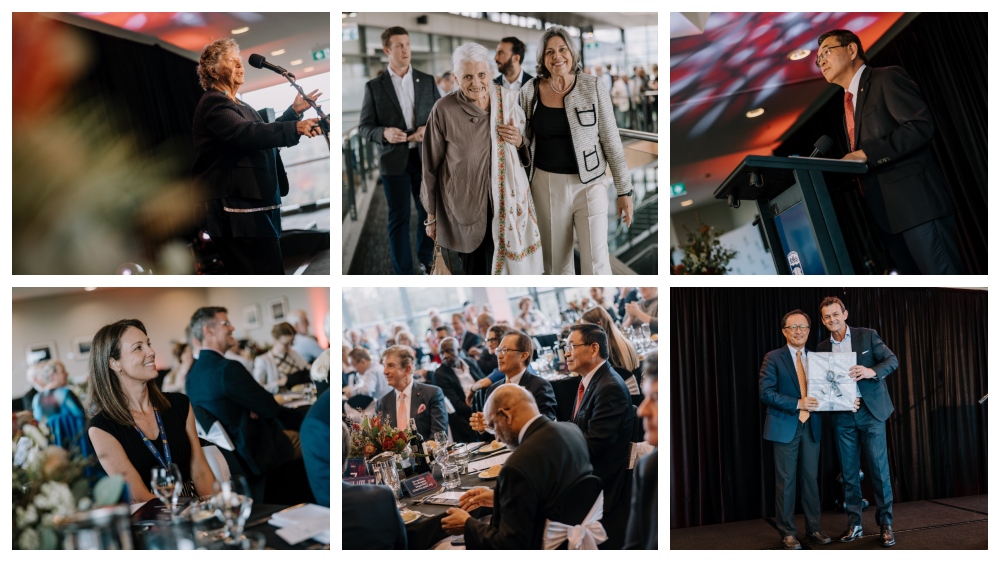
Two UNSW Sydney researchers were celebrated for their work using artificial intelligence to solve complex challenges related to climate change and the law.
UNSW researchers Dr Mandana Ghanavati and Professor Mimi Zou were honoured at the 2026 Women in AI (WAI) Asia-Pacific Awards for using AI to deliver meaningful impact in their fields.
The awards recognise women contributing to the development, application and governance of AI technologies that benefit society and to shape a more inclusive AI future for Australia and the APAC region. The initiative focuses on both technical excellence and the broader social, legal and commercial impact of AI.
Director of the UNSW AI Institute Dr Sue Keay said the recognition of Dr Ghanavati and Prof. Zou was well deserved and helped pave the way for the next generation of women in AI.
“These awards highlight the vital contribution that these women are making in the development of trustworthy AI to help solve complex problems for the public good.”
Using AI to protect environments
Dr Ghanavati from UNSW’s School of Civil and Environmental Engineering won the AI in climate and environment category for her work in developing responsible AI systems that address climate challenges, coastal hazards and public safety.
By combining AI with climate, ocean and geospatial data, her work is strengthening preparedness for coastal and climate-related hazards, supporting earlier warnings and helping protect communities and environments. Dr Ghanavati’s AI research is also contributing to the development of a rip-current detection tool to help reduce drownings and a model to forecast when bluebottles would reach coastlines.
Dr Ghanavati said she was deeply honoured to receive the award and to share the recognition with her colleagues and collaborators.
“This recognition reinforces my commitment to developing responsible AI systems that communities can trust,” said Dr Ghanavati.
“Women continue to face challenges in building careers in AI, which is why the work of WAI organisation to recognise and celebrate women’s contributions to the field is so important.
“Women should have equal opportunities to lead in AI and an equal voice in shaping its future. I feel a responsibility to help make that possible by sharing my experience and opening doors for others.
“I value the opportunity to share my experience and knowledge to the younger generation and help them follow their own paths. Through mentoring UNSW postgraduate students and women in the geospatial community, I hope to support them in pursuing their passions.”

Confronting the legal impacts of AI
Prof. Zou from UNSW’s School of Private & Commercial Law won the AI in law category, recognising the significant need for legal and ethical frameworks that can keep pace with rapidly developing technologies.
Prof. Zou’s research focuses on AI governance, regulation and responsible innovation, including work with governments, international organisations and industry. She is also developing a practice that draws on this expertise in relation to AI-related legal disputes and complex matters involving emerging technologies, data, automated decision-making and platform governance.
Prof. Zou said it was an honour to be recognised alongside an outstanding group of women working at the forefront of AI.
“Winning this award is particularly meaningful because it recognises my work on AI in the legal sector as well as AI regulation and governance. These areas have been at the heart of my research, industry and public engagement at a global level for many years,” Prof. Zou said.
“I see an important opportunity to bridge research, policy and advocacy as courts and practitioners increasingly confront novel questions created by AI.
“I’m especially pleased that this recognition comes at a time when UNSW is investing strongly in interdisciplinary AI research and engagement. Some of the most important questions raised by AI cannot be solved by technologists, lawyers, businesses or policymakers working separately. They require genuine collaboration across disciplines and sectors.
“I hope this award also helps encourage more women to see themselves not simply as participants in the AI revolution, but as leaders who can shape the rules, institutions and values that will determine its future.”