Latest
  • UN expert urges States to address hidden tragedy of unlawful deaths of older persons globally
  • Clear rules for fair access to ship lift ahead of commissioning
  • From Evidence To Influence: Science Meets Parliament WA
  • New recording studio and performance space at Walyalup Fremantle Arts Centre
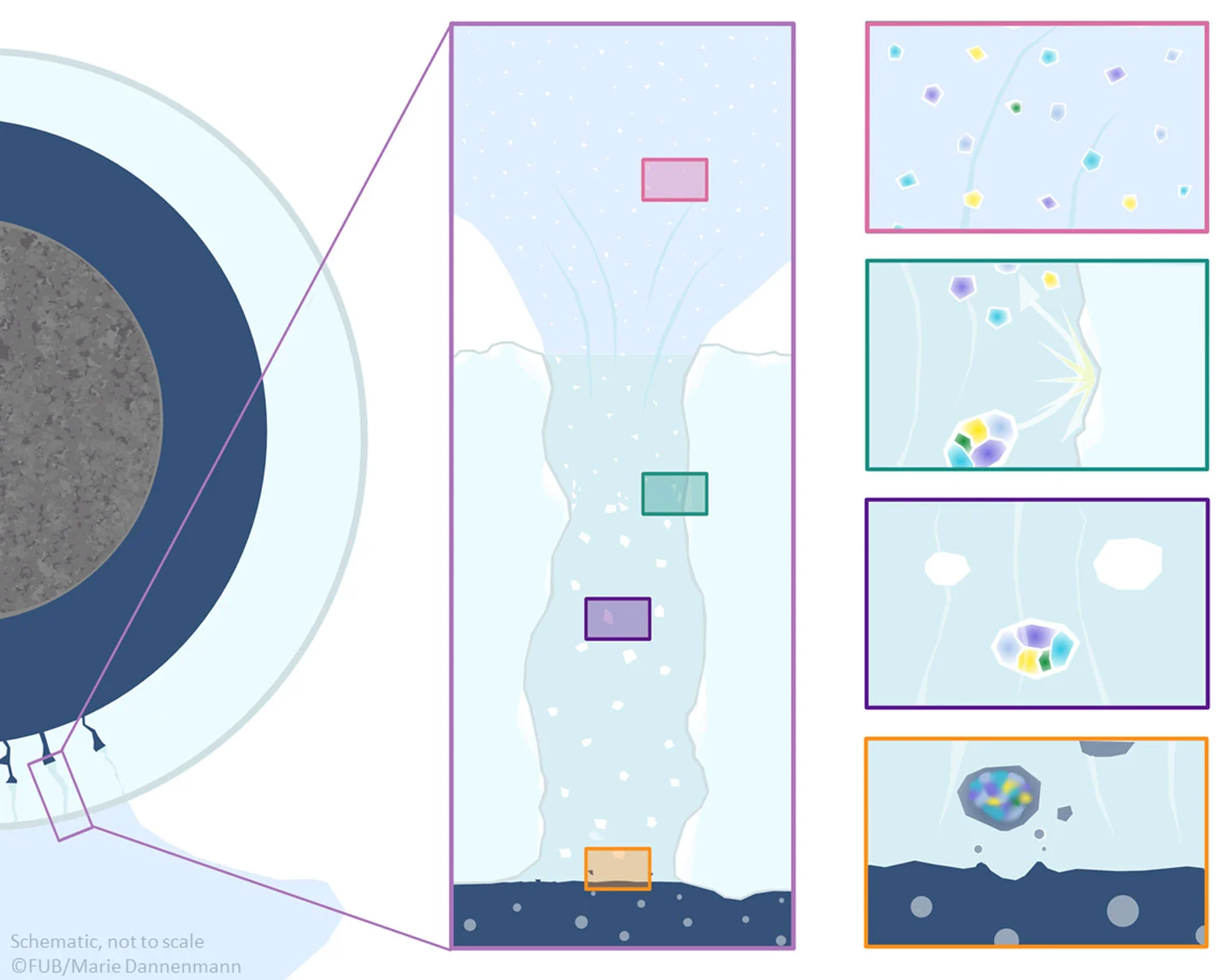
  • How Enceladus’ ocean spray becomes chemically diverse ice grains
  • IATA Partners with OneVasco to Streamline Visa Applications
  • Buckland Park Fire Deemed Non-suspicious
  • Major Study Sheds Light On Fatty Liver Disease Genetics
  • Ultomiris received accelerated approval in the US as first and only C5 complement inhibitor to reduce proteinuria in adults with primary immunoglobulin A nephropathy
  • Safe Air Bill passed to enable air quality transparency and certainty
  • Home
  • National
  • Local
    • ACT
    • QLD
    • NSW
    • NT
    • SA
    • TAS
    • VIC
    • WA
  • Politics
  • Business
  • Science
  • Technology
  • Health
  • Life
    • Sport
    • Travel
    • Education
    • Environment
  • World
SEARCH

Using technology to preserve voice, dignity and connection in palliative care

The National Tribune
  • Health
  • 5 Feb 2026 12:12 pm AEST Date Time
  • Share
Courtesy of Cancer Council WA

As digital health technologies rapidly move from concept to practice, questions about what the future of healthcare will look like, and what it will mean for people living with life-limiting illness, are at the centre of many conversations.

For Timothy Ryan, Palliative and Supportive Care Education (PaSCE) Manager at Cancer Council WA, those questions came into sharp focus last year at the Oceanic Palliative Care Conference. Across presentations and conversations, a shared theme emerged: tools once considered theoretical are no longer on the horizon, they are already here.

Technologies such as digital twins, AI-enabled wearables and advanced communication systems are beginning to reshape care. In fact, one large national home-care provider is already equipping clinicians with smart glasses, enabling a live video feed to a central command centre so specialists can provide real-time guidance during in-home care.

Digital twins take this innovation a step further. By synchronising physical health data, emotional wellbeing and biomarkers, clinicians can test interventions on a virtual version of a person before applying them in real life – a development with profound implications for personalised and palliative care.

It was in this context that Timothy met Lok, an Occupational Therapist whose work has continued to resonate long after the conference ended. Wanting to explore how these emerging technologies are being used in real-world palliative care, Timothy later sat down with Lok to record an episode of Keeping up with the PaSCE podcast.

In Keeping up with the PaSCE – Episode 19: AI, MND and Creating What Matters Most, Lok explains how he uses emerging technologies to support autonomy, dignity and connection for people who may otherwise lose their ability to communicate.

Lok’s work begins not with technology, but with conversation. He meets with individuals and families to understand what truly matters to them – their core values, meaningful memories and sense of identity. Through a short series of structured interviews, he can generate a voice database large enough to allow a person to continue communicating once speech is lost. Remarkably, this process can take as little as 20 minutes to create an exact copy of a person’s voice, with enough data to generate words that were never even recorded.

Beyond voice banking and synthesis, Lok also works with immersive technologies to recreate personal memories from individual descriptions. These experiences can then be revisited using eye-gaze and wearable devices.

The conversation explores tools such as wearables, voice technologies and digital twins, and what they can offer people living with life-limiting illness. Importantly, these technologies are not about replacing care. they are about providing access.

For Lok’s patients, this means communication can extend beyond the physical limitations of the body, and self-autonomy can still be upheld.

As technology continues to advance, the challenge lies in ensuring innovation remains human-centred and grounded in what matters most. What Lok describes is not science fiction, but a future where technology supports need rather than distracting from it.

Palliative care is about helping people live with purpose, even in the face of life-limiting illness. When used thoughtfully, these emerging technologies can help make that possible.


/Public Release. View in full here.
Tags:AI, autonomy, biomarkers, cancer council, Cancer Council WA, clinicians, conference, digital health, Education, Healthcare, identity, innovation, palliative care, Ryan, technology, WA

You might also like

Clear rules for fair access to ship lift ahead of commissioning

New recording studio and performance space at Walyalup Fremantle Arts Centre

How Enceladus’ ocean spray becomes chemically diverse ice grains

IATA Partners with OneVasco to Streamline Visa Applications

Buckland Park Fire Deemed Non-suspicious

Major Study Sheds Light On Fatty Liver Disease Genetics

Ultomiris received accelerated approval in the US as first and only C5 complement inhibitor to reduce proteinuria in adults with primary immunoglobulin A nephropathy

Safe Air Bill passed to enable air quality transparency and certainty

Just In

22 Oct 2026 7:15 pm AEST

UN expert urges States to address hidden tragedy of unlawful deaths of older persons globally

22 Oct 2026 6:52 pm AEST

Clear rules for fair access to ship lift ahead of commissioning

22 Oct 2026 6:51 pm AEST

From Evidence To Influence: Science Meets Parliament WA

22 Oct 2026 6:51 pm AEST

New recording studio and performance space at Walyalup Fremantle Arts Centre

22 Oct 2026 6:27 pm AEST

How Enceladus’ ocean spray becomes chemically diverse ice grains

22 Oct 2026 6:18 pm AEST

IATA Partners with OneVasco to Streamline Visa Applications

22 Oct 2026 6:00 pm AEST

Buckland Park Fire Deemed Non-suspicious

22 Oct 2026 5:57 pm AEST

Major Study Sheds Light On Fatty Liver Disease Genetics

22 Oct 2026 5:54 pm AEST

Ultomiris received accelerated approval in the US as first and only C5 complement inhibitor to reduce proteinuria in adults with primary immunoglobulin A nephropathy

22 Oct 2026 5:48 pm AEST

Safe Air Bill passed to enable air quality transparency and certainty

22 Oct 2026 5:45 pm AEST

Shoalhaven women recognised among NSW’s best in local government

22 Oct 2026 5:42 pm AEST

Helping Petrels Lay ‘Goulden’ Eggs

22 Oct 2026 5:36 pm AEST

Mike Newman Outlines One Nation’s Vision for Small Businesses in NSW

22 Oct 2026 5:34 pm AEST

Lotterywest grant to strengthen outcomes for Aboriginal children, young people and families

22 Oct 2026 5:33 pm AEST

Tender open for early years facilities at Cowaramup Primary School

22 Oct 2026 5:33 pm AEST

Grattan on Friday: Politics reflects society, and our society is in poor shape on many fronts

22 Oct 2026 5:30 pm AEST

Business excellence celebrated at 2026 Campaspe Murray Business Awards

22 Oct 2026 5:27 pm AEST

The science and truth of Australia’s long-term temperature record

22 Oct 2026 4:57 pm AEST

Methane Expert Panel Interim Report Webinar

22 Oct 2026 4:24 pm AEST

Black Spot funding supports road safety improvements in Concord

22 Oct 2026 4:21 pm AEST

“Pick a side”: Greens’ Vassarotti says pokies are not nightlife as Labor stands in the way of progress

22 Oct 2026 4:06 pm AEST

Council renews partnership to drive growth, tourism and events

22 Oct 2026 4:03 pm AEST

Independent Costings Extended To One Nation

22 Oct 2026 4:00 pm AEST

Papua New Guinea-Australia Telecommunications Partnership – Memorandum of Understanding and Telecommunications Blueprint

22 Oct 2026 4:00 pm AEST

Children who are not growing need a dietitian in Thriving kids, NSW inquiry told

22 Oct 2026 3:54 pm AEST

Eighth person charged following 2025 Wyndham Vale fatal stabbing

22 Oct 2026 3:48 pm AEST

APVMA consideration of phosphine product labels following introduction of a reduced workplace exposure limit

22 Oct 2026 3:45 pm AEST

Partnerships critical for Australia, India and South Korea to strengthen regional stability
More News
ABOUT US

Based in Toowoomba QLD, The National Tribune provides 24/7 free live coverage of important events and developments in Australia and the Pacific region leveraging real-time open-source intelligence. We endeavor to give the Australian community greater transparency and access to government information and other developments free from encroaching corporate, ideological or any other interests/influences. More

We acknowledge the Traditional Custodians of Country throughout Australia and their continuing connection to land, culture and community.

POPULAR TOPICS

AustraliaGovernmentAustraliancommunityPoliceNSWVictorialocal councilQueenslandUniversitycouncilAusPolministerNew South WalesEnvironmentHealthinfrastructureNew Zealandbusinessinvestigationinvestmentcrime
QUICK LINKS
  • Latest Australia News
  • Latest Toowoomba News
  • Latest Queensland News
  • Latest New Zealand News
  • Latest Police News
  • Latest University News
  • Latest AusPol News
FOLLOW
  • Facebook

© 2026 - The National Tribune Australia

  • About Us
  • Contact Us
  • Terms of Use
  • Privacy Policy
  • Disclaimer