Early career researcher Dr Dzung Do-Ha awarded inaugural fellowship for bridging divide between quantum biotechnology and neuroscience
It is a stone known for its strength and precision, but the most valuable part of a diamond, for scientists, may turn out to be its flaws.
Dr Dzung Do-Ha, a cellular neuroscientist turned “quantum explorer” from the University of Wollongong’s (UOW) Molecular Horizons, has spent three years developing the world’s second only Diamond Voltage Imaging Microscope, allowing her to observe how Motor Neurone Disease (MND) affects electrical signals in the brain.
“There is so much we don’t understand about MND, and we need new tools to see what we’ve been missing,” Dr Do-Ha said. “I want to bring quantum techniques into MND research.”
This week Dr Do-Ha was announced as the inaugural recipient of the Cathy Foley Early Career Research Fellowship from the Australian Research Council Centre of Excellence in Quantum Biotechnology (QUBIC), of which UOW is a partner. The two-year fellowship, named after physicist and former Australian Chief Scientist Dr Cathy Foley AO PSM, recognises emerging researchers and champions diversity in STEM.
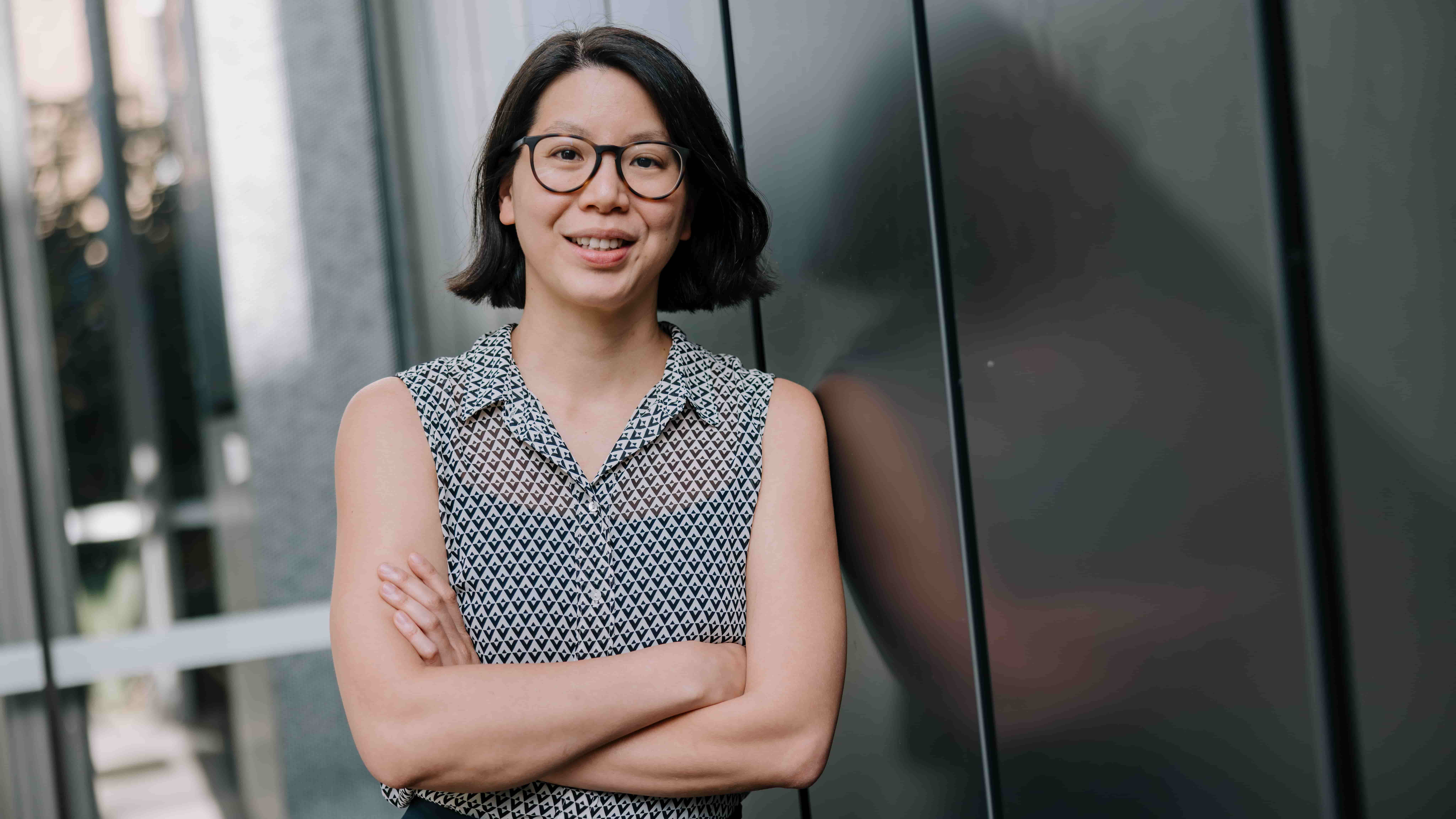
“It’s a real honour, particularly as a biologist working in quantum biotechnology. In a field this new there is no obvious template for what a neuroscientist’s place in it looks like,” Dr Do-Ha said.
“Having the Cathy Foley award go to a biologist says something about where quantum biotechnology is heading.”
The fellowship allows Dr Do-Ha to continue her work in Professor Lezanne Ooi‘s Neurodevelopment and Neurodegeneration Lab at UOW. Dr Do-Ha joined the lab for an undergraduate honours student project and was introduced to MND research. She has never left the field.
“Neurons communicate through electrical signals, but we understand very little about what those signals look like when they start to go wrong. Watching them directly in living human neurons gets at something fundamental about how the brain works and how that breaks down in disease,” she said.
“I want to use quantum sensing to find out when motor neurons first start to misfire in MND, and whether we can see it in single cells and across small networks before the cells are lost. This fellowship will allow me to use this microscope to track how the electrical signals of motor neurons change in the earliest stages of MND, long before the cells die, something I have been studying since my PhD.”
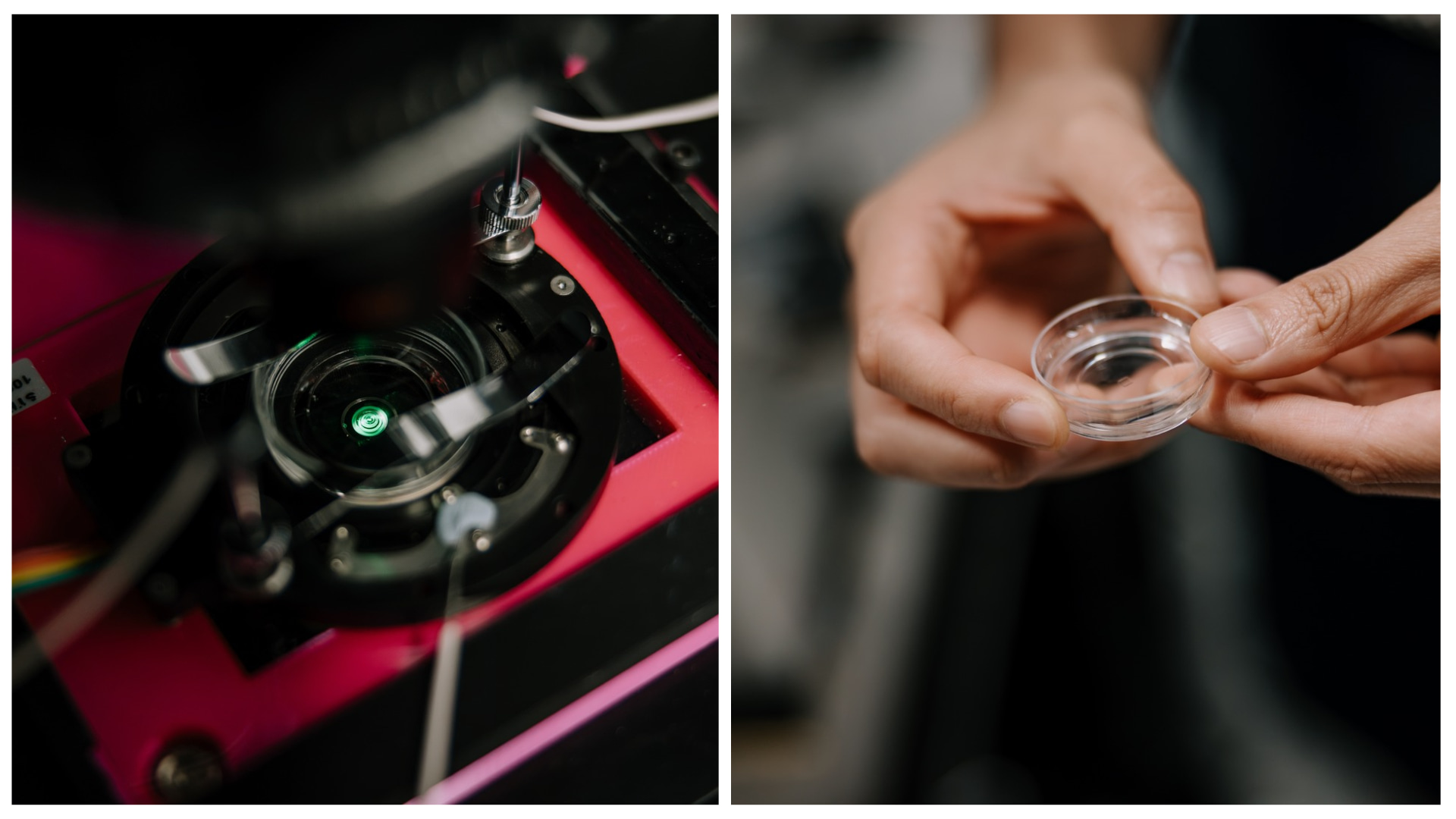
Dr Do-Ha has spent three years working with University of Melbourne diamond quantum sensing experts Dr Dan McCloskey and Professor David Simpson to bring the technology into MND research. The technique involves introducing tiny atomic flaws into lab-grown diamond chips. These defects glow when a laser is shined on them. If a nearby neuron fires, the glow gets slightly brighter or dimmer, allowing researchers to see electrical activity in living motor neurons.
“We can translate invisible neuronal activity into a live-action movie,” Dr Do-Ha said. “It’s like seeing a city’s lights flicker on and off as people move about their lives.”
Associate Professor Allison Fish, Chair of QUBIC’s Inclusivity, Diversity, Ethics and Access Committee, was one of the architects of the award and congratulated Dr Do-Ha receiving the prestigious fellowship.
“Dzung’s research exemplifies QUBIC’s cross-disciplinary research bridging the fields of neuroscience and quantum technology to provide actionable insights,” said Associate Professor Fish.
“We are proud to have the inaugural fellowship support her work. Dzung has been a key researcher, collaborator and mentor since QUBIC’s early days, creating a supportive and collaborative environment and accelerating the emergence of the field of quantum biotechnology.”