- UNITAR invites women and others, aged 18 and above, living in or from Pacific Island countries and territories or Asia to apply for the Japan-funded 2026 Women’s Leadership in Disaster Risk Reduction Training Programme.
- The programme aims to equip 500 participants with lifelong skills in disaster risk reduction and leadership.
- Participants will develop an inclusive disaster risk reduction plan contextualized to the needs of their communities and countries.
- Application deadline is 21 August 2026 (11:59 p.m. JST [UTC+9]).
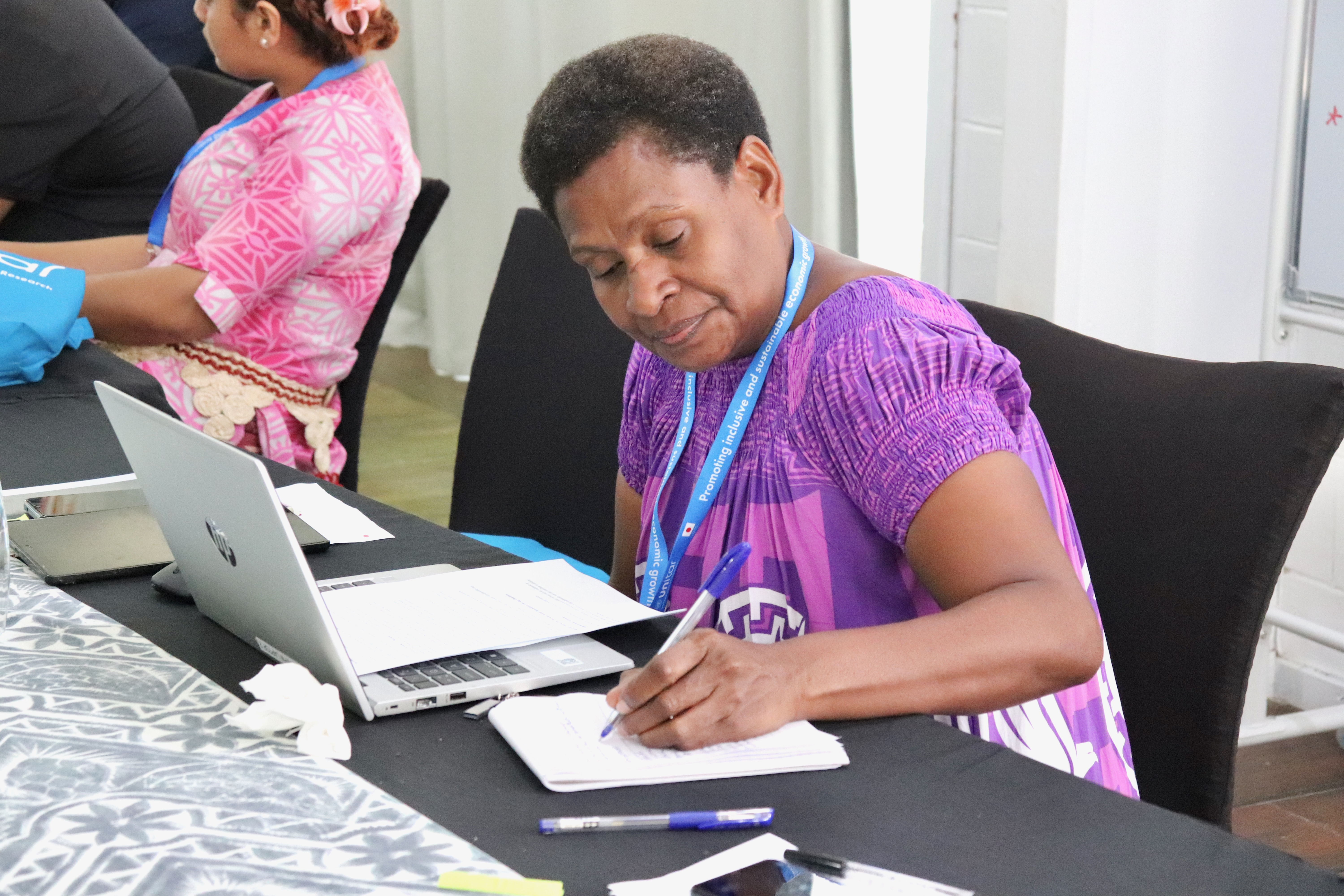
21 July 2026, Hiroshima, Japan – UNITAR invites 500 motivated learners of all genders, aged 18 and above, living in or from Pacific Island countries and territories or the Asia-Pacific to apply for the Japan-funded “UNITAR Women’s Leadership in Disaster Risk Reduction Training Programme for World Tsunami Awareness Day 2026- Building Economies and Livelihood Resilient to the Global Shocks”. The programme will equip the participants with lifelong skills in disaster risk reduction and inclusive leadership. The deadline for applications is 21 August 2026 (11:59 p.m. JST [UTC+9]).
The programme will be in English and run in two phases, starting with an online phase from August to November 2026. The top performers will be invited to continue to the second phase, which will be held online in February 2027 for participants from non-Pacific countries and in person in March 2027 for Pacific participants.
Through the training, participants will draw from the Asia-Pacific context and the Japanese perspective to develop inclusive disaster risk reduction plans tailored to their communities’ needs. Participants who complete all requirements will receive a UNITAR certificate.
By strengthening women’s leadership in disaster preparedness and response, UNITAR aims to promote equity and foster resilient communities. Learners from other parts of the world are also welcome to participate, with the understanding that the material is contextualized towards the Pacific islands and Asia.
The training programme is offered free of charge, thanks to the financial support of the Government and People of Japan.
Programme Phases
The programme consists of two phases:
Phase I Online Learning (August to November 2026)
Approximately 500 participants will engage in online training to learn about inclusive disaster risk planning. Participants will complete self-paced online modules, join webinars with experts in the field, and complete assignments.
Phase II Specialized Training with Experts
Top-performing participants from Phase I will be invited to one of the following workshops:
- Online workshop for participants from Asia and non-Pacific countries (February 2027): Training with experts, consisting of specialized lectures and discussions with regional and international institutions, academics and humanitarian experts.
- In-person workshop for participants from the Pacific (March 2026): Training with experts, consisting of study tours, specialized lectures and discussions with regional and international institutions, academics and humanitarian experts.
Learning Objectives
By the end of each phase, participants should be able to do the following:
Phase I
- Develop basic knowledge and understanding of disaster risk reduction concepts
- Discuss key principles of disaster risk reduction, with a focus on the Sendai Framework for Action and Sustainable Development Goals (SDGs)
- Understand ecosystem-based disaster risk reduction
- Outline community-based disaster risk reduction
- Develop an inclusive country disaster risk reduction plan
- Illustrate key lessons learned from Japan’s experience with natural hazards, including the 2011 Great East Japan Earthquake and Tsunami and the 2018 West Japan Floods
- Illustrate the importance of gender-inclusive leadership in disaster risk reduction
- Describe lessons learned and best practices, and report on norms and challenges in women’s leadership in the Pacific and Japan
Phase II
- Describe characteristics necessary for leadership and management
- Develop a technical understanding of hazards and assessment tools
- Demonstrate effective communication skills in disaster risk reduction and for the media
- Discuss the needs of vulnerable groups
- Develop a deeper understanding and appreciation for nature-based solutions, Indigenous and traditional knowledge, and local resilience
- Understand other risks, including stress and mental health risks
Assignments
Participants will have the following assignments:
- Phase I: Prepare and submit an individual disaster risk reduction plan
- Phase II: Prepare and present individual projects
Eligibility and How to Apply
The programme is open to motivated people of any gender living in or from Pacific Island countries and territories or the Asia-Pacific, who are:
- An adult of 18 years or older
- Eager to learn about the leadership skills required for disaster risk reduction
- Passionate about climate change and disaster risk reduction, including its impact on communities
- Keen to succeed and make a positive impact on their communities
- Proficient in English
- Computer-literate, with access to the internet
- Committed to completing the programme
Nationals from the following countries are encouraged to participate:
Pacific Island countries: Cook Islands, Federated States of Micronesia, Fiji, Kiribati, Marshall Islands, Nauru, Niue, Palau, Papua New Guinea, Samoa, Solomon Islands, Tonga, Tuvalu, and Vanuatu
Asia: Bangladesh, Brunei, Cambodia, India, Indonesia, Iran, Malaysia, Maldives, Myanmar, Pakistan, Philippines, Sri Lanka, Thailand, Timor-Leste, and Viet Nam
Applicants from other countries are also welcome.
Learn more and apply to the programme .
Application deadline is 21 August 2026 (11:59 p.m. JST [UTC+9]).