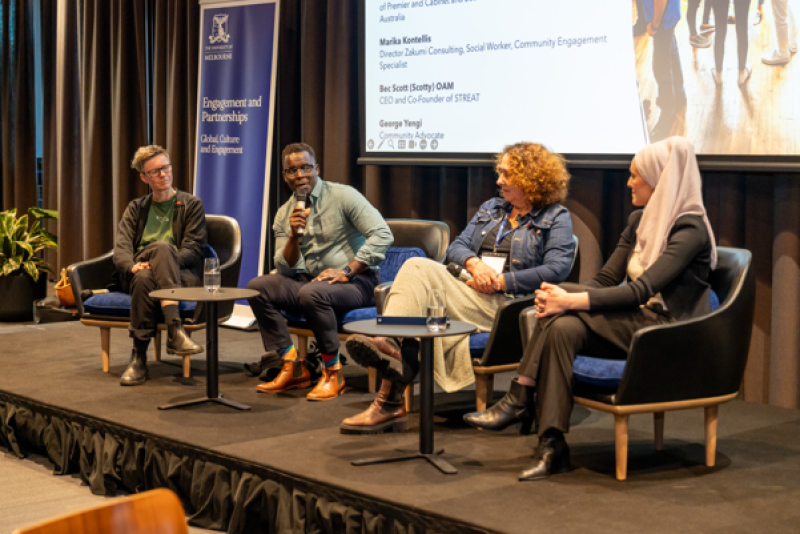
More than 250 leaders and representatives from universities, community organisations, government, industry and the student sector have met for the 2026 Engagement Australia Conference, exploring how universities can work with communities to address shared social and economic challenges.
Titled Universities Engaging All of Us: Committing to Trust, Purpose and Impact, the conference examined issues including social cohesion, democratic participation, community partnerships and the role of universities in building trust and creating public value.
University of Melbourne Pro Vice-Chancellor (Culture and Engagement) Professor Sara Wills said the conference reinforced the importance of working with communities to create meaningful and lasting impact.
“Engagement creates better outcomes when communities are genuine partners from the outset,” Professor Wills said. “It’s about improving access to healthcare, bringing community expertise into teaching and learning, or creating research impact with community organisations.
“Those partnerships are most effective when universities create space for community perspectives, lived experience and new ways of thinking to shape our work.
“To fulfil our potential as civic and community anchor institutions, we need more of these ‘outside-in’ exchanges. The Engagement Australia Conference provides an important opportunity to listen, learn and build the relationships that make meaningful impact possible.”
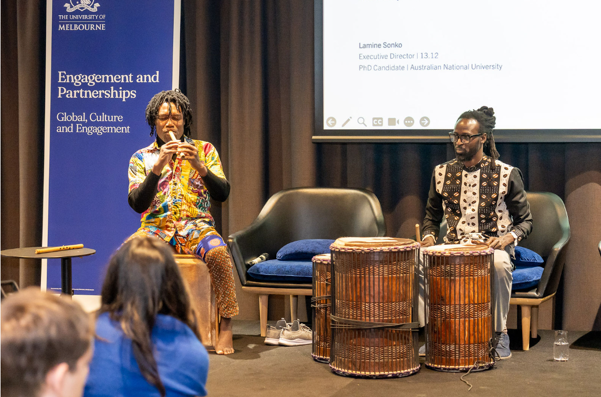
In a listening and learning session with artist Lamine Sonko, attendees explored how traditional cultural practices of music and movement can be used for communication and meaningful engagement. Picture: David Darlington
Reflecting a focus on hearing directly from communities and students, conference sessions explored what meaningful partnership looks like in practice and how community engagement can enrich learning, strengthen relationships and help solve real-world challenges.
Dr Berhan Ahmed, CEO and Founder of Africause Youth and Community Service, said Melbourne’s diverse communities and wealth of knowledge presented significant opportunities for partnership and collaboration.
“We live in a city where there is so much knowledge and so many challenges, but they’re not always connected,” Dr Ahmed said. “This kind of engagement helps connect knowledge with the communities and challenges that need it most.”
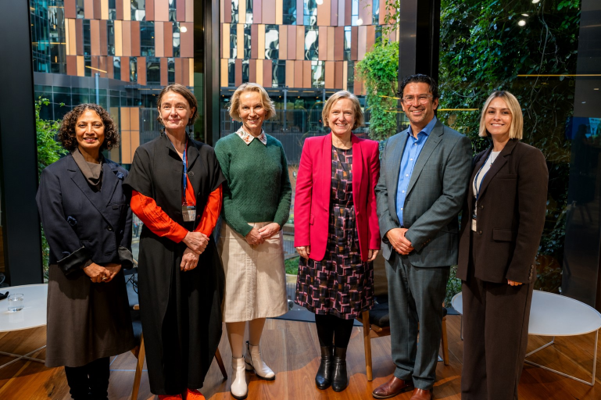 L-R: Padmini Sebastian, Director of Engagement and Partnerships, University of Melbourne; Professor Sara Wills, Pro Vice-Chancellor (Culture and Engagement), University of Melbourne; Jane Hansen AO, Chancellor, University of Melbourne; Professor Verity Firth AM, Chair of Engagement Australia and Vice-President (Societal Impact, Equity and Engagement), UNSW ; Professor Michael Wesley, Deputy Vice-Chancellor (Global, Culture and Engagement), University of Melbourne; and Lisa Aitken, Executive Manager, Community Engagement and Impact, University of Technology Sydney. Picture: David Darlington
The conference was attended by University of Melbourne Chancellor Ms Jane Hansen AO.
Speakers included Professor Carolyn Evans, Vice-Chancellor designate of the University of Melbourne and current Vice-Chancellor and President of Griffith University; Professor Verity Firth AM, Chair of Engagement Australia; Professor Barney Glover AO, Chief Commissioner of the Australian Tertiary Education Commission; Professor Bill Shorten, Vice-Chancellor of the University of Canberra; Nick Reece, Lord Mayor of Melbourne and Sally Capp AO, former Lord Mayor of Melbourne.
University of Melbourne Student Union President Lushy Chinganya said the conference highlighted the value of bringing students and community partners together.
“Being able to exchange ideas with community partners and hear more about how we as students can make an impact was inspiring and gives hope that more students will be involved in these conversations going forward,” Ms Chinganya said.
The conference highlighted the role universities can play in bringing together knowledge, lived experience and diverse perspectives to strengthen communities and contribute to the public good.