
The important role ships play gathering scientific data in Antarctica and the Southern Ocean have has been outlined at a leading Antarctic science conference in Hobart. The biennial Australian Antarctic Research Conference was held at the University of Tasmania and this year attracted 400 researchers from around the globe.
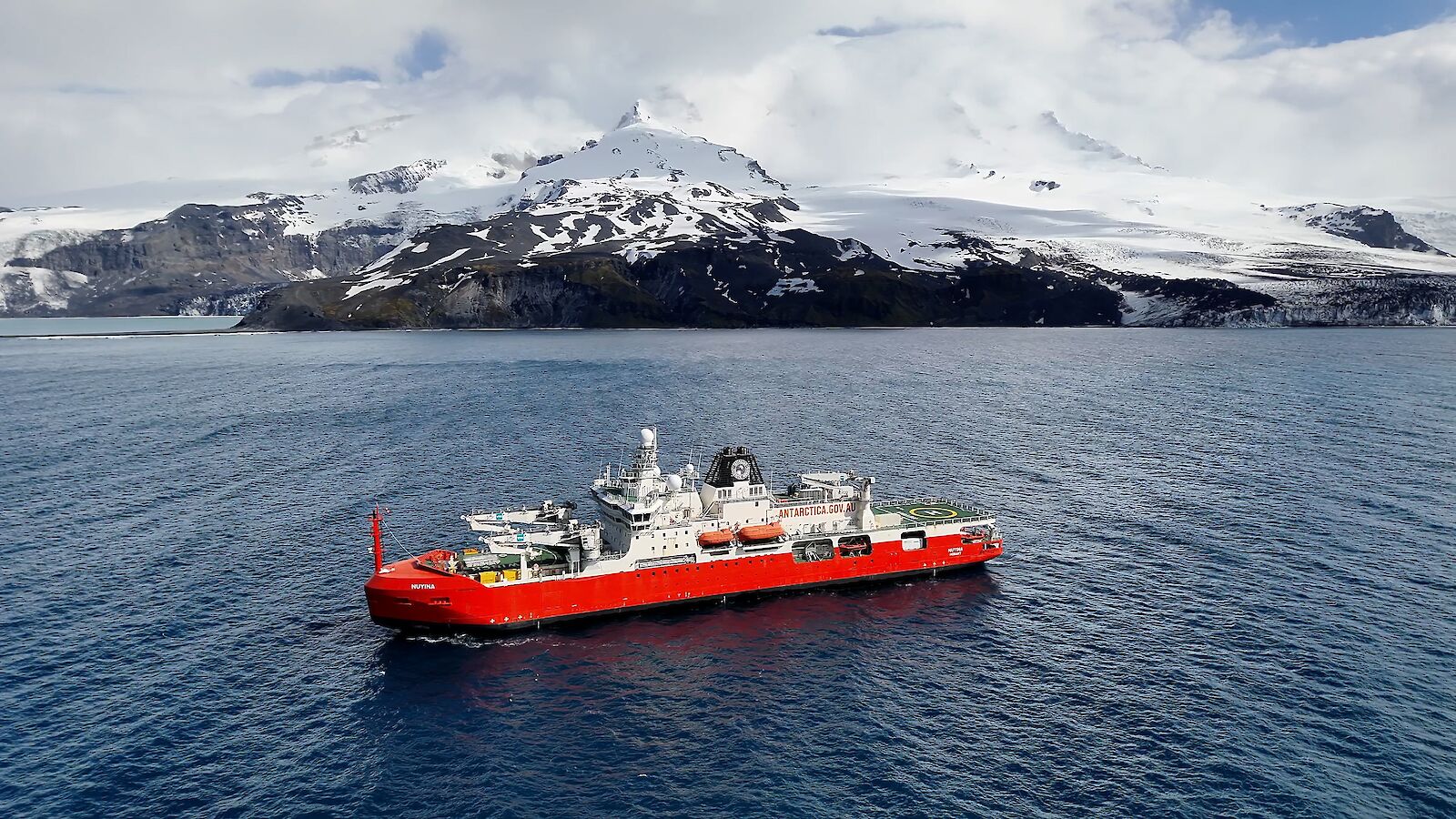
Photo: Simon Payne
Dr Patricia Miloslavich – who leads the Australian Antarctic Division’s Antarctic Monitoring Program – told the conference between 1990 and 2026, the Australian Antarctic Program’s Aurora Australis and RSV Nuyina, the French Program’s l’Astrolabe and the CSIRO’s RV Investigator made 379 voyages, travelled nearly 2.5 million kilometres and collected 137 million measurements.
Sea surface and air temperature data collected by the Aurora Australis alone from 1991 to 2020 showed close correlation with global climate data from the UN’s World Meteorological Organisation and increasing ‘warm’ anomalies over that time.
“With the Aurora’s data alone, we can tell the story we all know by now, which is that both the ocean and the air are getting warmer,” Dr Miloslavich said.
“For the specific Southern Ocean section covered by the Aurora Australis over 30 years, we can see that air temperatures have increased both north and south of 50°S, which is approximately the boundary between Antarctic climates to the south and mid-latitude climates to the north.
“In contrast, sea surface temperatures over that time only increased significantly to the north 50°S, reflecting the initial delay in human-caused climate change signals appearing in the ocean around Antarctica.”
Long-term monitoring, improved ship design aid data gathering
Another long-term, ship-based data collection method – the Continuous Plankton Recorder (CPR) – is towed behind ships sampling plankton on a silk ribbon.
The CPR Survey is the world’s oldest and most geographically extensive marine biological monitoring program. It was initiated in 1931 and implemented in the Southern Ocean by the AAD in 1991.
“With the CPR data we can tell that in the Southern Ocean, there’s been a shift towards smaller zooplankton, that some species are moving further south and that there’s been a decline in pteropods in some locations,” Dr Miloslavich said.
Improvements in ship design are contributing to better data collection. Where the Aurora Australis used nets to bring marine creatures on board – destroying many delicate specimens in the process – RSV Nuyina uses a wet well.
On the Denman Marine Voyage in 2025, the wet well ingested an intriguing pteropod known as a sea butterfly – or clio pyramidata – allowing scientists to study the creature intact in the laboratory.
Data is collected along the way, even when RSV Nuyina is on a resupply voyage.
“The atmospheric and oceanographic underway data collected by RSV Nuyina is key for the Bureau of Meteorology, feeding into the national weather model ACCESS and global climate models,” Dr Miloslavich said.
Four science campaigns underpin ten-year strategy
Dr Miloslavich’s presentation outlined how Australian Antarctic Program campaigns and voyages planned for the next three seasons will contribute to the international collaborative program, Antarctica InSync.
The Antarctica InSync program is endorsed by the UN Decade of Ocean Science for Sustainable Development, the Scientific Committee on Antarctic Research (SCAR), and the Council of Managers of National Antarctic Programs (COMNAP).
Antarctica InSync will coordinate synchronized observations of ice, ocean, atmosphere, climate and ecosystems across the continent over two seasons (2027/28 and 2028/29) and aims to deliver the comprehensive evidence needed to inform global responses to climate change, biodiversity loss and human impact.
“We have four strategic campaigns coming up in the next three years to support the delivery of the Science Decadal Strategy,” Dr Miloslavich said.
“On the continent, we will continue with the Million Year Ice Core (MYIC) project and the scientific activities carried out during the East Antarctic traverse from Casey to the MYIC project site high on the East Antarctic ice sheet.
“In the ocean, we will have the KaKE (krill and krill ecosystems) campaign in the 2027/28 season to assess the status of the krill-based ecosystem in the Mawson region.
“The Marginal Ice Zone (MIZ) voyage in 2028/29 will study changing sea ice conditions at the time of the annual maximum in sea ice extent in September – a time when very few expeditions have gathered scientific information in Antarctica and the Southern Ocean.”
The ECCO voyage – the East Antarctic Ecosystems-CCAMLR, Climate and Ocean voyage – is scheduled for 2029/30 and will build on the work of the KaKE project and add scientific data to the guide design of Marine Protected Areas (MPAs) in East Antarctica.
The interdisciplinary science program will support krill biomass assessments for the Commission for the Conservation of Marine Living Resources (CCAMLR), biodiversity and environmental monitoring to underpin the establishment of MPAs.
It is anticipated that the Australian Antarctic Research Conference will be held again in 2028.
“The research presented at this year’s conference really showed the range and depth of Australia’s expertise in Antarctic and Southern Ocean science,” Dr Miloslavich said.


