When Snow Australia approached Alina McMaster about guiding a legendary Summer Paralympian to the Winter Paralympics, she had no idea what she was about to sign up for.
A former Australian cross-country skiing and rogaining champion, McMaster was no stranger to success on the slopes. But the decision to embark on a Para skiing coaching odyssey was, by her own admission, “venturing into the unknown”.
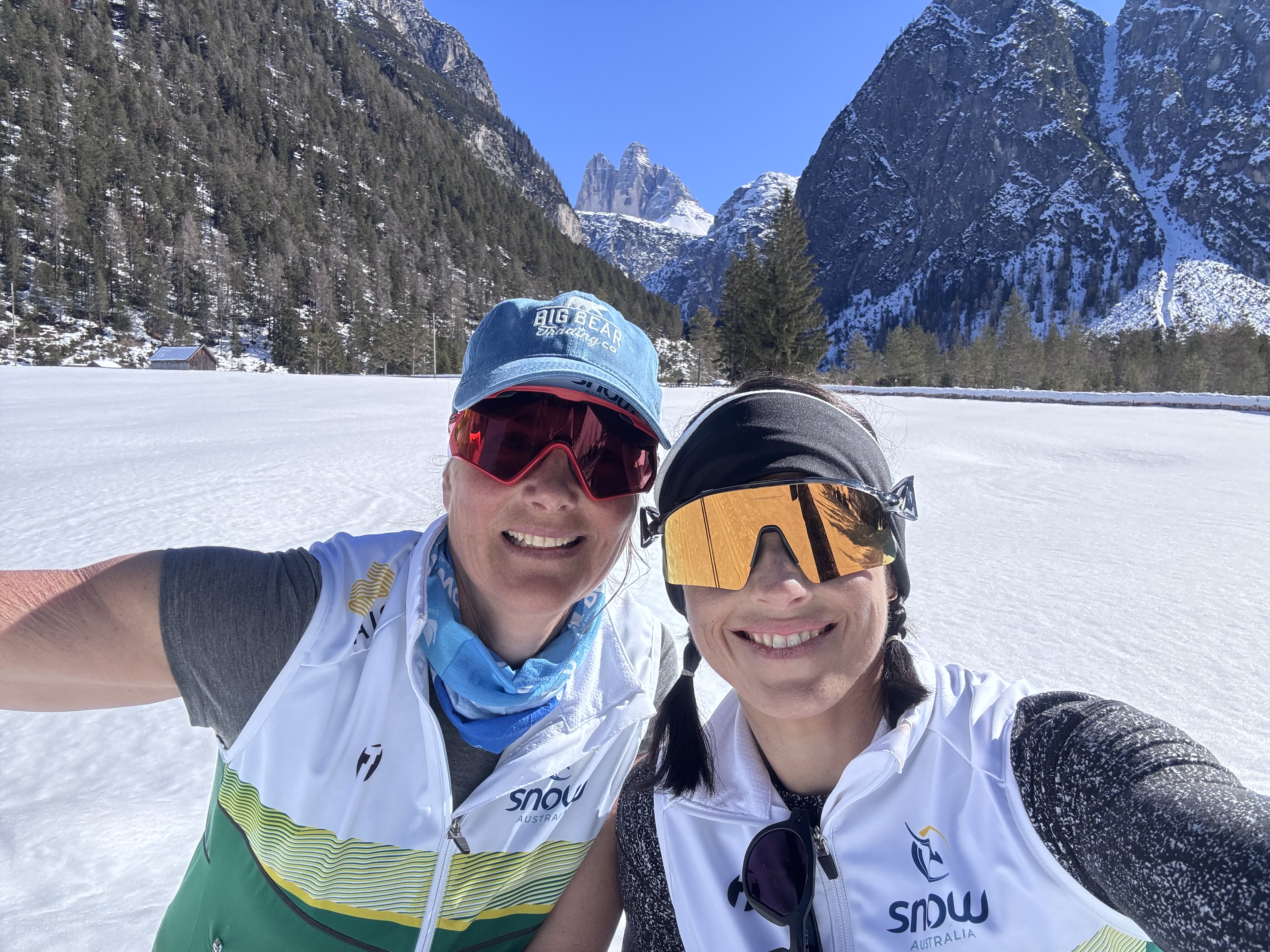
That bold step launched an extraordinary and unexpected journey, one that would take her from learning the basics of Para Nordic skiing to helping dual Summer Paralympic gold medallist Lauren Parker qualify for the 2026 Winter Paralympic Games in Milano Cortina.
Sharing her experiences at the AIS Para Coach Experiential Learning Program (ELP) gathering in Melbourne in June, McMaster said the scale of the challenge was unlike anything she had encountered.
“It started a year ago when Snow Australia contacted me and said, ‘Would you mind taking out a sit‑skier and teaching them how to cross‑country ski?'” McMaster said.
“Now, I am an instructor, with no Para experience: in skiing or life generally. When I said that, they replied: ‘We think you’d be the best person to have a go’.”
“Little did I know, I didn’t just have any Para athlete. The person who turned up was a dual gold medallist and a silver medallist in triathlon and cycling from the Paris Paralympics.”
At the 2024 Summer Paralympics in Paris, Parker won gold in both the PTWC triathlon and the cycling road race H1-4. She also claimed silver in the cycling time trial H1-3.
But just as McMaster had never coached a Para athlete before, Parker had never skied before.
Despite the lack of experience, after just two weeks on snow, both coach and athlete began to see the potential in the partnership. The possibility of qualifying for the Winter Paralympics soon emerged.
Once that goal transformed from a fantasy into a reality, the work became even more demanding.
The pair joined the Australian team for a six-week training camp in Canada, where McMaster had to quickly adapt to the realities of coaching an athlete with disability in a complex winter environment.
Cold exposure limited sessions to about 90 minutes at a time, and every detail – from heated gloves and hand warmers to equipment changes and race preparation – needed careful planning.
The veteran mentor said the experience changed the way she thought about coaching.
“I had to start by asking questions and really understanding what Lauren needed, not just as an athlete but in her day-to-day routine,” she said.
“That helped me see that leadership starts with curiosity.”
One of the biggest lessons in evolving her coaching style was understanding when to step back.
“Sometimes people want to help straight away but help and intervention are not always the same thing,” McMaster said. “I learned that independence matters, and that part of my role was to give Lauren the space to do things her way.”
McMaster admitted that whilst she was used to giving quick feedback and seeing immediate change, Para sport required a different approach, as well as a deeper understanding of Parker’s own learning style.
“There were times when we could spend hours on one movement or one part of a skill,” she said. “That taught me that coaching is not always about giving the answer quickly. Sometimes it is about creating the conditions for the athlete to find it themselves.”
The patient approach paid off: Parker competed in her first Para Alpine Skiing World Cup race in December 2025 and went on to qualify for the Winter Paralympics, all less than a year after first seeing snow.
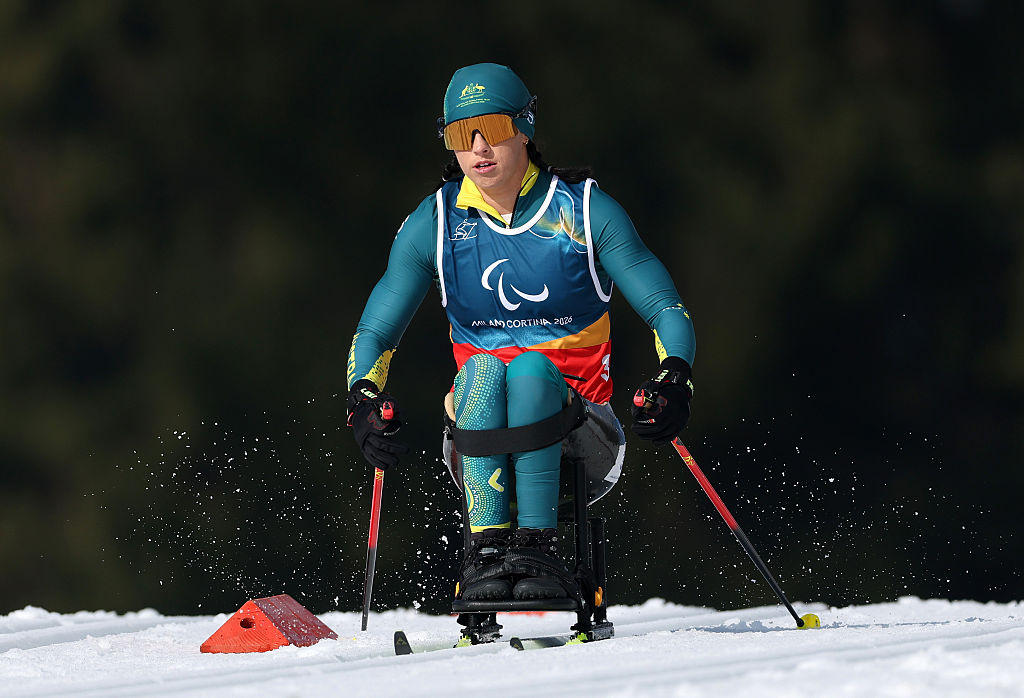
At Milano-Cortina, Parker competed in Para biathlon and cross-country skiing (sitting), achieving 9th place overall in the events held at the Tesero Cross-Country Skiing Stadium.
This included top 10 finishes in the women’s sprint pursuit (9th), women’s 10km classical (8th) and women’s 20km interval start (10th).
For McMaster – one of the recipients of the AIS 2026 High Performance Coach Development Grants – the result was historic from a coaching perspective but also personally satisfying. Australia had previously sent only one Nordic Para athlete, James Miller, to the Torino Winter Paralympics, way back in 2006.
The experience also reinforced the value of breaking a big goal into manageable steps.
“When the goal feels huge, you have to keep bringing it back to the next thing,” McMaster said. “One training session. One skill. One race. One step forward. In the end, that’s how we got there.”
“Along the way, what stood out most was that extraordinary outcomes do not come from having all the answers at the start. They come from being willing to say yes, stay curious and keep adapting.”