A working prototype that can see, remember and interact with the world like the human brain could one day underpin smart bionic eyes, while using far less energy than today’s technologies.
The invention from RMIT University combines sensing, memory and information processing within the same system, reducing the need to constantly move data between separate sensors, memory banks and processors.
While still an early-stage research demonstration, the neuromorphic vision innovation could dramatically reduce the amount of data and energy required to perform complex visual tasks.
RMIT has an international patent application filed under the Patent Cooperation Treaty (PCT) for the invention.
Led by Professor Sumeet Walia at RMIT’s Centre for Opto-electronic Materials and Sensors (COMAS), the work builds on breakthroughs involving super thin semiconductor materials that could underpin advanced robotics and low-energy AI systems.
“Nature has already solved many of the challenges we’re trying to address in electronics,” Walia said.
“The human eye and brain work together incredibly efficiently, processing vast amounts of information using remarkably little energy. Our research is helping lay the foundations for technologies that work in a more similar way.”
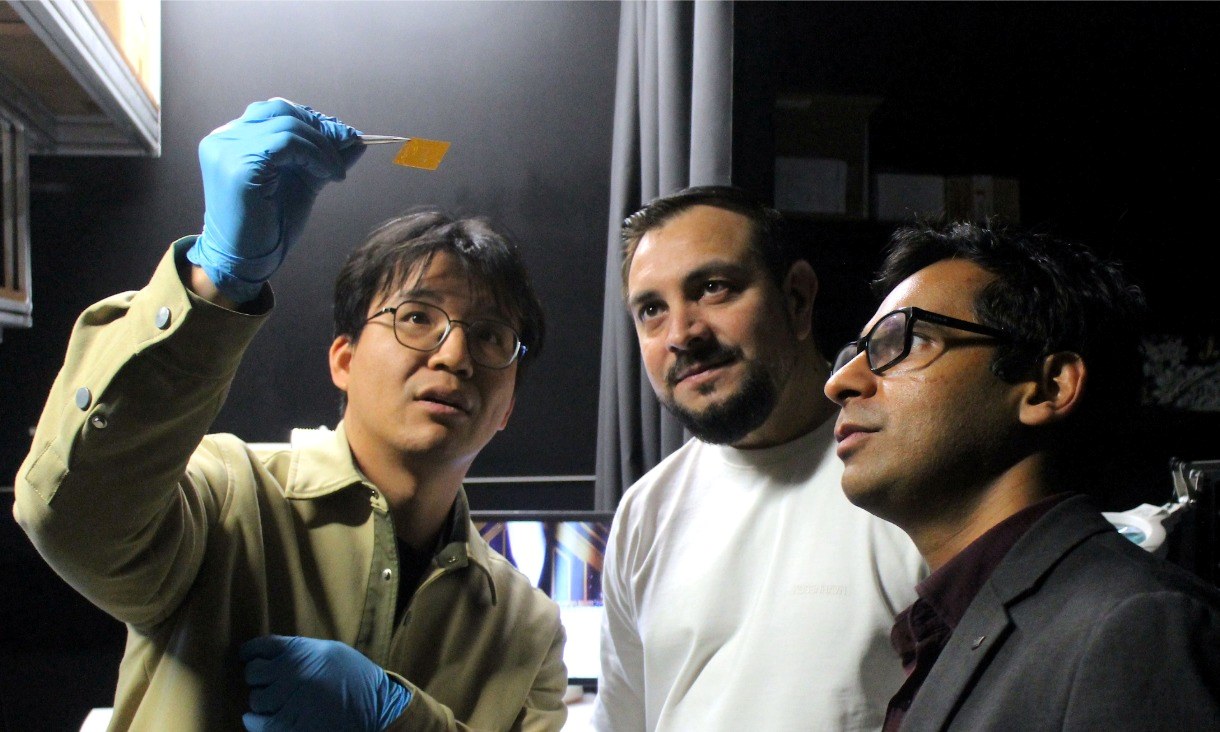 RMIT researchers Professor Sumeet Walia (right), Dr Taimur Ahmed (centre) and a colleague inspect the neuromorphic vision prototype during testing. Credit: RMIT University
 A prototype that sees, remembers and engages with its environment
Unlike a conventional camera, which captures every frame and sends large amounts of information elsewhere for processing, the RMIT prototype is designed to perform much of that work where the information is collected.
The prototype is built on a series of advances using the atom-thin semiconductor molybdenum disulfide (MoS₂). The sensing, processing and storage of information all takes place in a 2cm by 2cm chip, which is housed within a 15cm by 14cm by 3cm prototype containing the electronics needed to read, process and communicate information.
Researchers have trained the system to recognise patterns including numbers, shapes and movement. In lab tests, it can detect changes in what it sees, store that information as memory and process it locally.
Dr Taimur Ahmed, co-researcher and expert in neuromorphic vision devices at RMIT, said the result was a system that more closely mimics the way biological vision works.
“This is not just a sensor that captures information, it’s a sensor that can also process information,” Ahmed said.
“Rather than constantly moving data between separate memory and processing units, much of that work happens much closer to where the information is generated.”
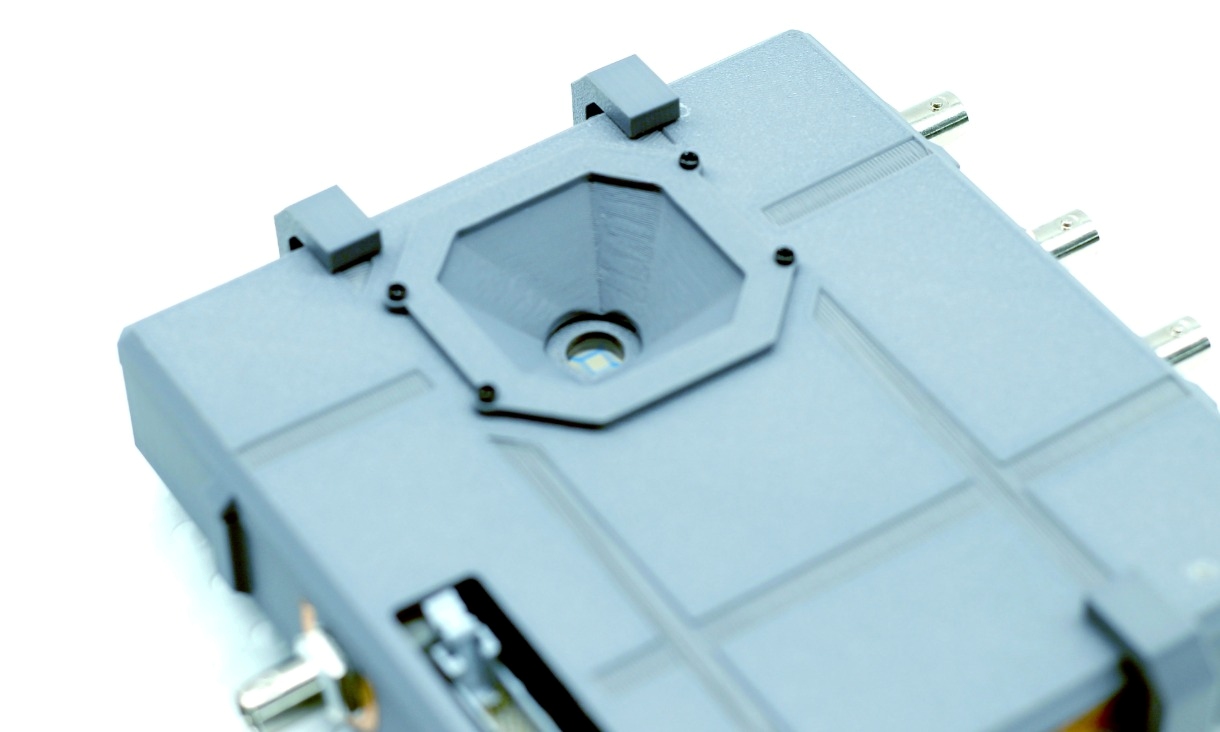 RMIT University’s neuromorphic vision prototype combines sensing, memory and processing within a single system, helping reduce the need to continuously transfer data between separate computing components. Credit: RMIT University
 A smart bionic eye would need to do more than simply capture images. It would need to identify important changes in a scene, store relevant information and process visual signals rapidly while using very little energy.
The RMIT technology could address these challenges by allowing visual information to be filtered and interpreted at the point of sensing, reducing the amount of data that needs to be transmitted and processed elsewhere.
The team’s latest breakthrough also tackled another critical challenge: manufacturing.
They developed a cleaner, water-based fabrication process that transfers atom-thin semiconductors and electrodes with significantly fewer defects than conventional methods, producing devices with substantially improved electrical and light-sensing performance.
“Each breakthrough brings us closer to technologies such as a smart bionic eye,” Walia said.
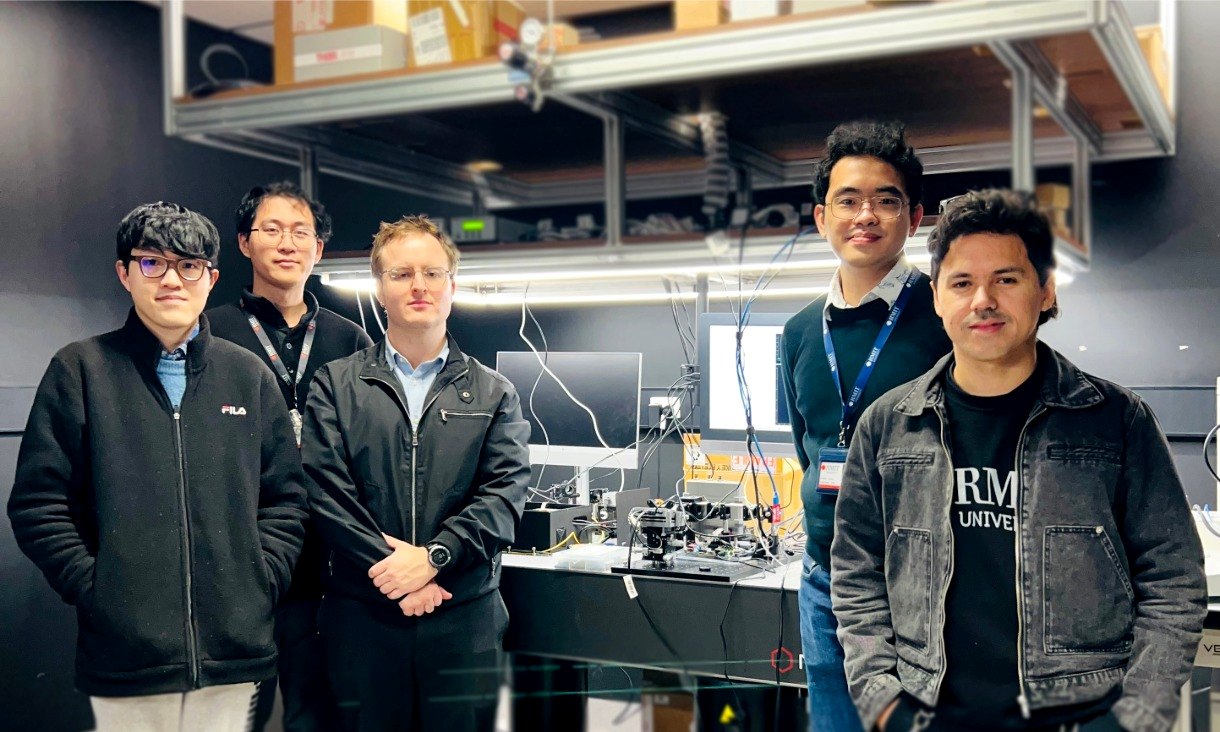 Members of the RMIT research team behind the neuromorphic vision prototype. Credit: RMIT University
 A vision for the future
While practical applications remain years away, researchers believe the technology could also eventually support advanced machine vision systems, autonomous vehicles, robotics and intelligent sensors.
The work may also point towards a more sustainable future for artificial intelligence.
As AI drives demand for increasingly large and energy-intensive data centres, neuromorphic systems offer a different approach by processing information closer to where it is collected and reducing the amount of data that needs to be transmitted, stored and analysed.
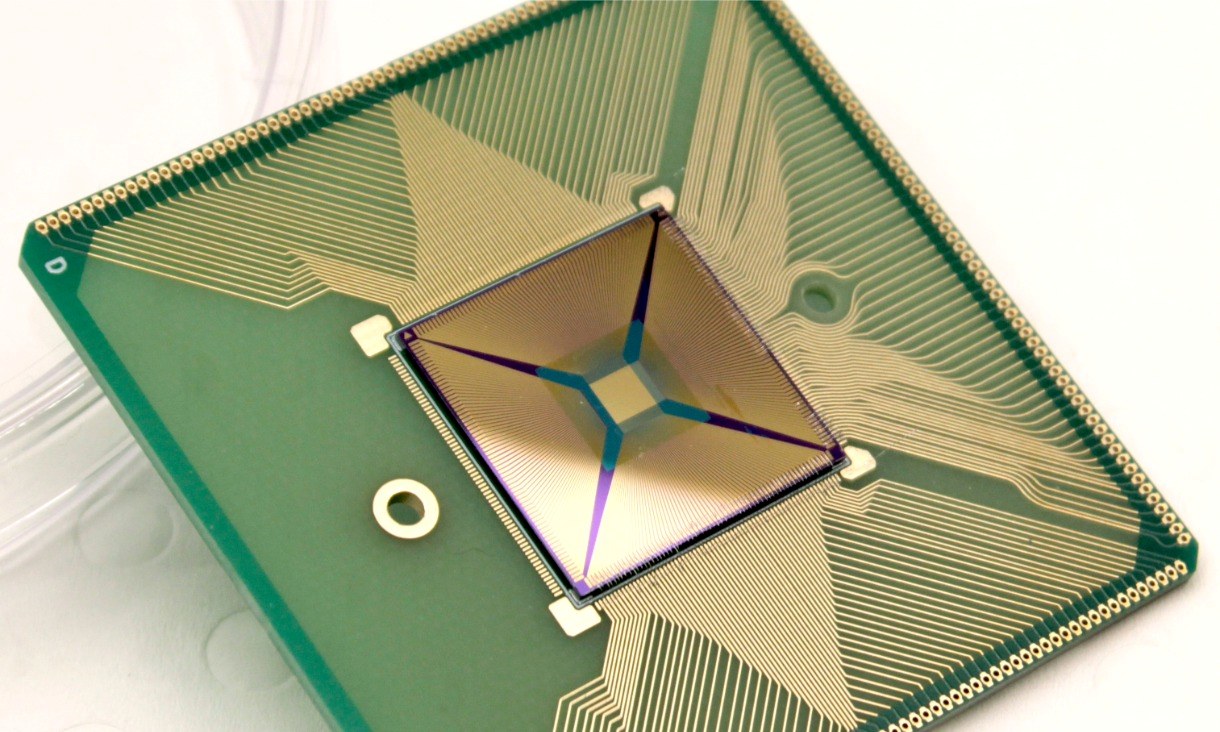 The sensing element at the heart of RMIT’s neuromorphic vision technology. Credit: RMIT University
 “This work combines advanced materials, engineering and artificial intelligence to address one of the defining challenges of our time: creating intelligent systems that are both powerful and sustainable,” Walia said.
“If this RMIT technology can be scaled up, it could help reduce the amount of data that needs to be moved, stored and processed, making future AI systems more energy efficient.”
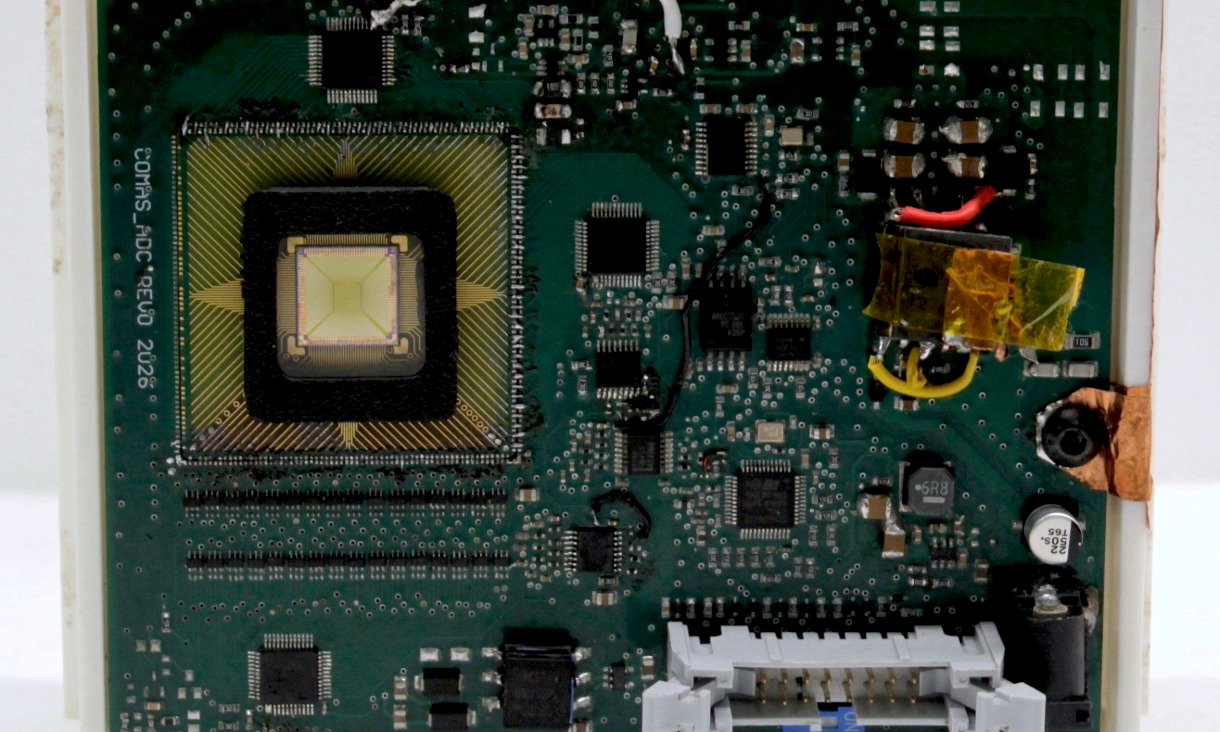 The neuromorphic sensor mounted on a circuit board used for testing and system integration. Credit: RMIT University
 The study, ‘PVA-mediated transfer of MoS₂ and Au electrodes: a lithography-free route to ultraclean van der Waals interfaces for high-performance electronics and optoelectronics’, is published in ACS Applied Materials and Interfaces (DOI: 10.1021/acsami.6c05536).
The study, ‘Photoactive monolayer MoS₂ for spiking neural networks enabled machine vision applications’, is published in Advanced Materials Technologies (DOI: 10.1002/admt.202401677).