Ljubica Matic, Associate Professor at the Department of Molecular Medicine and Surgery, Karolinska Institutet, has been awarded a grant from the Leducq Foundation, one of the largest international grants in the field of cardiovascular research. The grant, 9 million USD for totally 5 years, will be used within the international network ATHENA, which brings together researchers from the USA and Europe, and is coordinated by Prof Thomas Quertermous, Stanford and Helle Jørgensen, Cambridge.
Ljubica Matic leads KI partnership in the ATHENA network (1.7 mUSD share), which aims to advance the field through identifying causal atherosclerosis genes related to smooth muscle cells and their mechanisms associated with the vessel wall pathologies. The ATHENA consortium will bridge gaps in atherosclerosis research by assembling expertise in population and cohort genetics, functional genomics and vascular biology, to identify and validate novel genetic variants and map their regulatory programs and pathways shared between coronary and carotid diseases using in vivo and in vitro models. The ultimate goal is to improve risk prediction and provide validated therapeutic targets for cardiovascular patients.
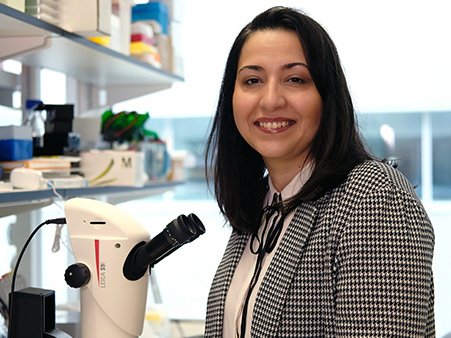
“Current therapies for atherosclerotic cardiovascular patients primarily aim at blood pressure, cholesterol lowering, and inflammation control. However, these interventions leave 30-40 per cent of residual risk unexplained by the known modifiable factors and untreated. This highlights the critical need for approaches that address disease mechanisms not fully encompassed by current therapies and the rationale of ATHENA is that they should be primarily targetted to the vascular wall resident cells of which smooth muscle cells are the major portion,” says Associate Professor Ljubica Matic , who leads Translational Vascular Medicine , within the Vascular Surgery unit at the Department of Molecular Medicine and Surgery , and Center for Molecular Medicine .
“Moreover, atherosclerotic cardiovascular disease is highly heritable, with high percentage of risk attributed to genetic factors. Recent pharmacogenomic studies show that 63 per cent of FDA-approved drugs in the past decade had supporting evidence from human genetic studies, underscoring the potential of translating genetic discoveries into therapies, another rationale of ATHENA. This network will open possibilities for us to study the connection among these factors in depth and how they can be harnessed for precision medicine strategies to protect long-term cardiovascular health”, she continues.
About ATHENA Leducq network
Atherosclerosis Targets from Human gEnetics and functional genomic Approaches
Coordinators
- Prof Thomas Quertermous, Stanford (USA)
- Assoc Prof Helle F. Jørgensen, Cambridge (UK)
Partners:
- Assoc Prof Ljubica Matic, Karolinska Institutet (Sweden)
- Prof Samuli Ripatti, Helsinki University (Finland)
- Prof Nathan Stitziel, Washington University (USA)