A Sydney-based researcher who uses tiny lab-grown retinas to help identify inherited blindness treatments is one of three recipients sharing in a $600,000 NSW Government grant scheme to fund medical research without the use of animals.
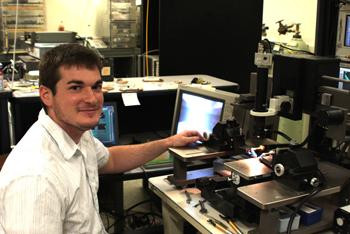
Professor Robyn Jamieson and her team have received $200,000 to run a two-year research project at Children’s Medical Research Institute, in collaboration with Sydney Children’s Hospitals Network, University of Sydney, and the Sydney Eye Hospital.
Professor Jamieson’s work shows which patients with inherited blindness are most likely to respond to gene therapy using lab-grown tissue, paving the way for emerging treatments for people with inherited blindness who currently have no options for sight.
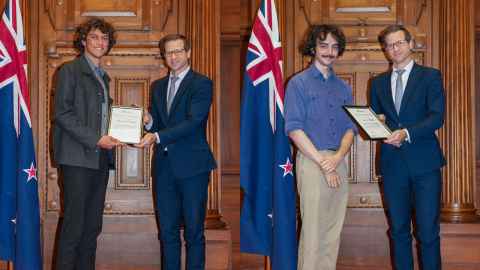
The grants have been funded through the Non-Animal Technologies Network (NAT-Net) Research Pillar Competitive Grant Scheme and were announced at the inaugural NAT-Net VANGUARD Symposium in Sydney on 29 June.
Non-animal technologies give researchers human-relevant data without using animals in testing, helping speed up the discovery of new treatments and improve patient outcomes.
Two additional recipients have also been awarded $200,000 funding under the scheme including:
- Dr Alexander Mason at the University of Wollongong, in partnership with the Imperial College London, UK, to develop programmable microbeads that deliver precisely the right chemical signals to grow functional human tissue in the lab, giving researchers a reliable, human-relevant way to test new therapies without using animals.
- Associate Professor Antoine de Weck at the Children’s Cancer Institute, in collaboration with Monash University, is building CrypTox: a world-first computer model that predicts the side effects of a new class of medicines targeting conditions like spinal muscular atrophy and Huntington’s disease.
The projects were selected for the quality of their science, commitment to collaboration, and potential to transform medical research in NSW.
Each project includes an early-career researcher, building the next generation of non-animal technology experts in NSW.
The grants expand the membership of NAT-Net established in 2024 through a $4.5 million NSW Government investment aimed at reducing and replacing the use of animals in medical research. This funding forms part of that initial investment.
NAT-Net brings together researchers and institutions to develop innovative alternatives to using animals and advise on the required medical research infrastructure and regulations to support these as alternatives.
Minister for Medical Research David Harris said:
“The Non-Animal Technologies Network was established to ensure NSW researchers have what they need to deliver world-class science by making research more relevant to human biology. These grants put that promise into action.
“We are supporting NSW researchers to develop and use cutting-edge non-animal technologies that deliver more accurate insights into human health, transforming how we understand and treat disease and accelerating the path from discovery to real‑world impact.”
NSW Health Deputy Secretary, Clinical Innovation and Research, Professor Jean-Frédéric Levesque said:
“Non‑animal technologies will help NSW develop and use new, effective and sustainable research methods, ensuring we remain at the forefront of scientific progress.
“By investing in these collaborations, we’re building the evidence needed to turn breakthrough research into meaningful, measurable improvements in care for patients across NSW.”
Grant recipient, Children’s Medical Research Institute Professor Robyn Jamieson said:
“For our research team, this grant provides a great opportunity to develop and apply the latest cutting edge and non-animal technologies to resolve genetic variants, fast-tracking diagnosis and access to therapies for people with blinding conditions of the eye.
“For the people affected with these conditions, the aim is for this to make a difference to be able to reach a genetic diagnosis for people where this has not previously been possible, and opening pathways to clinical trials and therapies that were not previously available.
“Our research team and consumers contributing to our research plans are very grateful to NAT-Net for this research funding to make a real difference for affected individuals and families.”
CSIRO Executive Chair, NAT-Net, and Research Director for Human Health, Erica Bremner Kneipp said:
“This is a landmark moment for NAT-Net and for medical research in NSW. These grants will drive genuine collaboration between our best institutions. We are building something that will last: a research ecosystem that is both scientifically rigorous and ethically responsible.
“The work funded here will one day lead to better medicines and better outcomes for patients.”
NAT-Net Research Pillar Lead, University of New South Wales Associate Professor Shafagh Waters said:
“Non-animal technologies give us the opportunity to generate more human-relevant evidence earlier in the research pipeline. These grants will support NSW researchers to develop and apply advanced models, systems and computational approaches to better understand disease, test therapies and accelerate translation.
“NAT-Net is about bringing this expertise together so that promising discoveries can move toward patients with greater confidence, stronger evidence and reduced reliance on animal models.”