Myelodysplastic syndromes (MDS) are a group of serious blood cancers predominantly affecting older adults, with incidence rates rising sharply after the age of 65. For the thousands of people living with MDS, the disease is an exhausting journey. The bone marrow fails to produce healthy, functional blood cells, leaving patients vulnerable to severe infections, spontaneous bleeding, and profound fatigue driven by chronic anaemia.
Even more concerning is the looming threat of progression: up to 30 per cent of patients with MDS will see their condition transform into acute myeloid leukaemia (AML), an aggressive and difficult-to-treat form of blood cancer.
For years, the medical community has viewed the treatment of early-stage MDS through a supportive lens. Clinicians have focused on managing symptoms, primarily through regular blood transfusions to counter anaemia. However, these life-sustaining transfusions come with a devastating catch: they trigger a secondary buildup of iron in the body, which damages tissues and further complicates the patient’s health.
Now, a groundbreaking study led by Hudson Institute of Medical Research has uncovered a “world-first” biological link that could completely transform how we treat this cancer. Published in the American Journal of Hematology, the research proves that iron accumulation isn’t just a side effect of MDS treatment, it actively drives the disease forward.
Uncovering a hidden culprit: iron and inflammation
While scientists have long known that chronic inflammation and iron overload are features of MDS, it remained a mystery whether iron was a bystander or an active culprit in bone marrow failure.
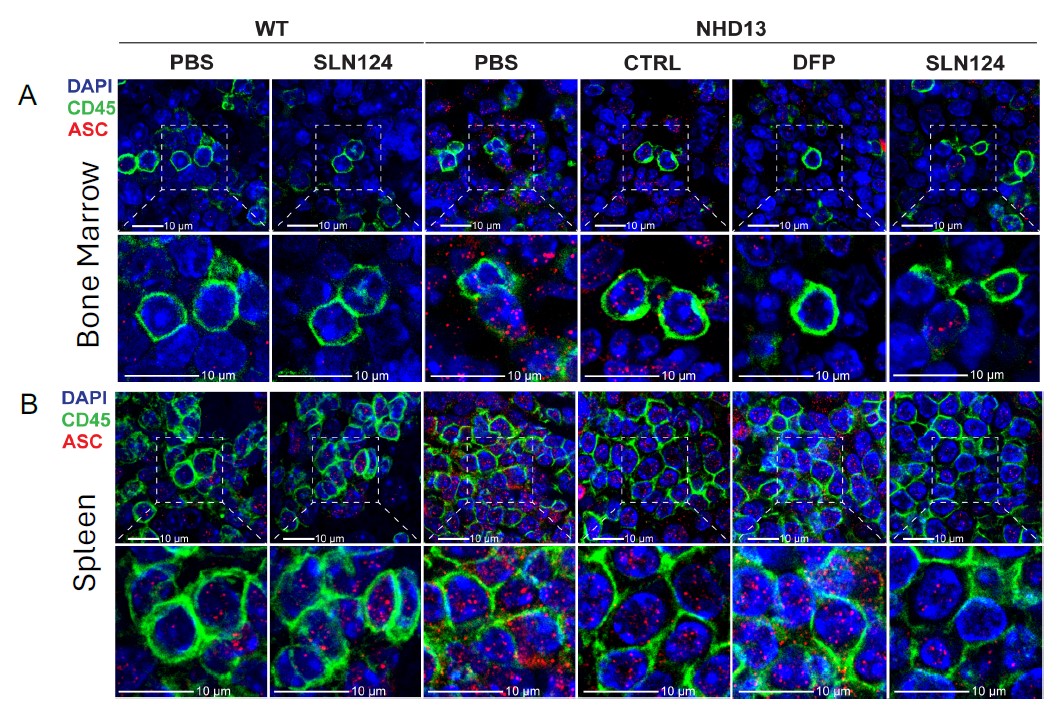
Using a clinically relevant preclinical model, the research team proved that iron builds up within the bone marrow at a very early stage, long before the most severe symptoms of the disease surface. Crucially, this iron accumulation acts like fuel on a fire, triggering destructive inflammatory pathways known as “inflammasomes” that ravage the bone marrow environment.
“Our study is among the first to demonstrate a direct mechanistic link between dysregulated iron homeostasis and inflammasome-driven inflammation in MDS,” explains lead researcher nd Dr Jim Vadolas, from Hudson Institute’s Immunohaematology Research Group and the Department of Molecular and Translational Sciences, Monash University.
“We discovered that excess iron doesn’t just sit there; it actively drives the chronic inflammation that damages healthy blood cell production. By identifying this link, we’ve found a vulnerable target in the way the disease operates. It’s proof-of-concept that therapeutic modulation of iron homeostasis may represent a disease-modifying strategy for bone marrow failure disorders.”
Activating the body’s natural shields
Having found the root cause, the researchers set out to fix it. They focused on a master iron-regulating hormone in the body called hepcidin. To boost hepcidin levels naturally, the team used an innovative gene-silencing technique to target a specific gene called TMPRSS6, which normally keeps hepcidin turned down.
By silencing TMPRSS6, the body was able to produce more hepcidin, effectively instructing cells to redistribute iron away from vulnerable tissues. The results were remarkably comprehensive. The treatment successfully:
- Suppressed the harmful inflammatory pathways.
- Reduced overall cellular damage within the bone marrow.
- Restored healthier blood counts.
- Extended survival rates in preclinical models.
First author Dr Shahla Vilcassim, from Hudson Institute and Monash University’s School of Clinical Sciences, notes the profound shift this represents for future therapies. “Patients with MDS currently face very limited choices, particularly when they are in the early stages of the disease. Existing therapies are band-aids; they manage anaemia or transfusion dependence, but they don’t fix the underlying biology. Our approach actually corrects the abnormal iron metabolism, reducing the harmful bone marrow environment and giving healthy blood cells a chance to grow.”
A powerhouse collaboration for patient care
This milestone was achieved through a multi-institutional, global effort. Hudson Institute worked hand-in-hand with leading local healthcare providers, including Monash Health and Bayside Health, ensuring that the lab bench discoveries remain deeply rooted in real-world clinical needs. The project also integrated vital expertise from several renowned international institutions, combining global knowledge to solve a complex puzzle.
Associate Professor George Grigoriadis, a consultant haematologist believes this collaborative approach involving researchers and clinicians is exactly what makes the discovery so significant.
“In the clinic, we see firsthand how devastating transfusion-dependence and chronic fatigue are for our elderly patients,” says A/Prof Grigoriadis. “What makes these findings a true world-first is the preclinical proof-of-concept. We have shown for the first time that therapeutic manipulation of systemic iron regulation can actually modify disease biology. We aren’t just treating the consequences of MDS anymore; we are looking at a real strategy to slow the disease down and prevent it from becoming leukaemia.”
Looking ahead: the path to human trials
As the global population ages, the number of individuals diagnosed with MDS is expected to rise significantly, making the search for disease-modifying therapies more urgent than ever.
By proving that targeting iron homeostasis can alter the trajectory of the disease, the researchers have opened a new avenue for drug development. This foundational study provides a strong, hopeful launchpad for future clinical trials, bringing science one step closer to transforming a chronic, threatening blood cancer into a manageable condition, and ultimately improving the lives of thousands of patients.