Closer links between communities and health authorities could help Papua New Guinea detect disease outbreaks earlier, strengthen regional biosecurity and reduce the risk of serious disease threats reaching Australia.
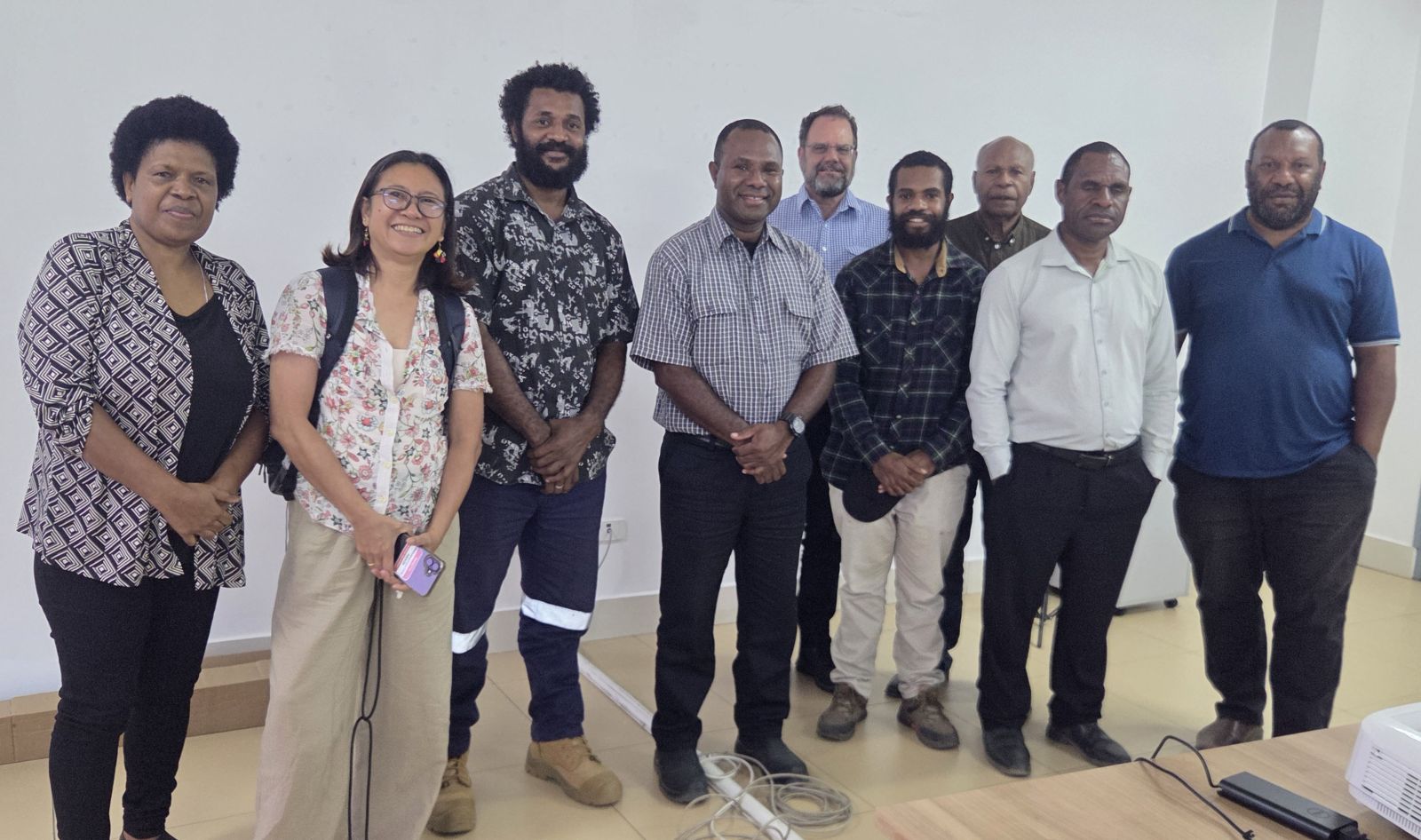
That’s the finding of two scientific workshops at the PNG Biosecurity Authority in Port Moresby, where 15 animal, human and environmental health experts looked at how disease outbreaks are detected, reported and shared in PNG.
The workshops were led by James Cook University’s Professor Bruce Gummow, a veterinary preventive medicine specialist, and the PNG Biosecurity Authority’s Dr Andy Keponge Yombo.
Both organisations are part of the Asia Pacific Consortium of Veterinary Epidemiology (APCOVE), which works with regional partners to strengthen capacity to detect and control disease outbreaks.
“This work matters because disease does not respect national borders,” Professor Gummow said.
“Australia and Papua New Guinea face common regional threats, including foot and mouth disease, avian influenza, rabies and African swine fever.
“Detecting and controlling these diseases early benefits Papua New Guinea while also strengthening Australia’s biosecurity.”
He said the workshops considered how information about possible disease outbreaks moves from communities through animal, human and environmental health systems, and where those connections could be strengthened.
“One important message was that disease surveillance begins in the community,” Professor Gummow said.
“In PNG, the first person to notice something unusual may be a farmer, family member or community leader.
“We discussed how trusted community networks, including churches and local leaders, could help important information reach the formal surveillance system.”
Professor Gummow said the One Health approach recognised that the health of people, animals and the environment are interconnected.
“The aim is to get existing systems communicating more effectively, so important information reaches the right people quickly,” he said.
“Ultimately, stronger surveillance protects Papua New Guinea’s communities and livelihoods, while stronger regional biosecurity helps protect us all.”