Nesting season has started and residents should be on the lookout for swooping magpies and plovers.
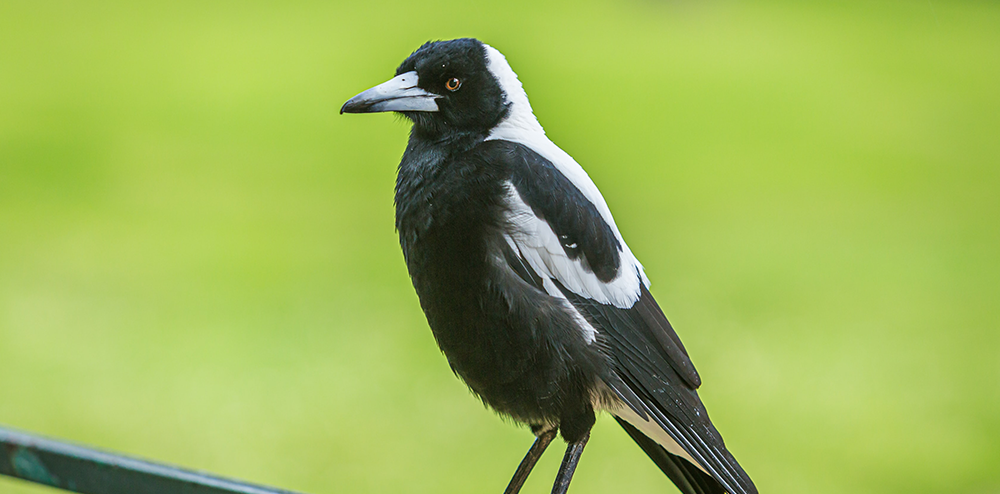
Key points:
- Nesting season is underway and magpies and plovers can become territorial and more aggressive at this time of year.
- Report swooping magpies on Council-owned or managed land to us so we can look at installing warning signage in the location.
- The migration of the short-tailed shearwaters – or muttonbirds – is also underway.
Wollongong City Council is encouraging residents to be mindful of swooping magpies and plovers as nesting season gets underway.
While both of these birds are not known to be aggressive year-round, nesting season can see magpies and plovers become territorial and more aggressive.
We’re aware the Woonona magpie along the bike track is already protecting his nest. Cyclists are recommended to dismount at any location where magpies are active.
Council encourages residents to report any swooping magpies on Council owned or managed land through our website or Customer Service team so that we might be able to install warning signage in the location.
“We all love our magpies and their song is particularly beautiful, but a small number of them are known to swoop and this can be a frightening experience,” Lord Mayor of Wollongong Councillor Tania Brown said.
“To help reduce the risk of being caught unawares by a magpie we do ask people to let us know locations where they’re swooped and, if it’s on public land that is managed by Council, then we will install warning signage to let other people know it might happen to them.”
Both magpies and plovers are native protected species and residents should not attempt to move birds on from their nesting locations or harm the birds.
This is particularly relevant this year with H5 Bird Flu present in the local government area.
“While at this stage, it is the Greater Crested Tern that has tested positive to H5 bird flu in our city, the NSW Government is asking everyone to be aware of the disease and that it can impact many more species,” Cr Brown said.
“It’s certainly a time to be cautious around birds. If you see sick or dead birds or other animals, do not touch them. Avoid contact. Record what you see. Report sick or dead birds or other animals to the Emergency Animal Disease Hotline on 1800 675 888.”
With the migration of the short-tailed shearwaters – or muttonbirds – underway, we’re also anticipating an increased number of birds washing up on our beaches over the coming weeks.
Shearwaters travel far and wide to places such as Antarctica, Siberia, Japan, South America and New Zealand.
Each year, many short-tailed shearwaters (also called ‘muttonbirds’) die at sea during their migration along the New South Wales coast. Wind and tides regularly cause these birds to wash up on Wollongong’s beaches.
“This event is an unfortunate, but natural occurrence, but it will feel more concerning this year due to H5 Bird Flu,” Cr Brown said.
“If you see a sick or dying short-tailed shearwater you should report it to the Emergency Animal Disease Hotline so that they can confirm whether it’s unwell or dead due to the impact of the migration or another illness.”