The UK has an enormous amount of steel in service across critical infrastructure. Yet every day, millions of people cross bridges without giving much thought to the structures beneath their feet.
Author
- Barbara Rossi
Associate Professor and Tutorial Fellow in Engineering Science (Structures & Mechanics), University of Oxford
Many of these structures are far older than we might imagine, and they survive under demands their original designers could hardly have anticipated. But ageing infrastructure cannot be taken for granted.
As a recent report from the Royal Academy of Engineering warned: “The need to act is urgent. Many of our ageing assets are approaching a critical state where they risk compromising the reliability of the services they provide.”
Addressing this requires extending the life of steel structures in their primary functions. This may involve using additional steel for repairs or replacing part of the structure.
Steel production – including low carbon methods – and steel recycling are both carbon-intensive, so there’s an impact on the climate. The question is therefore not whether we need to intervene, but how best to intervene.
In the UK, around 300 million tonnes (Mt) of iron and steel are embedded in buildings and what’s known as mobility infrastructure: the systems that support the safe and efficient movement of people. If life extension allowed just 1% of this stock to remain in service instead of being replaced, 3 Mt of steel production could be avoided.
Even when using greener methods of steel manufacturing, such as scrap electric arc furnace production, this would correspond to approximately 2.1 million tonnes of carbon dioxide-equivalent (MtCO₂e) and 8.2 terawatt-hours (TWh) of steelmaking energy. In a future where low-carbon steel production competes for constrained supplies of clean electricity, hydrogen and carbon dioxide from carbon capture, the tonne of steel that uses fewest resources is the tonne we do not produce.
Yet repairing structures often requires disproportionately extensive, costly and disruptive interventions – and comes with its own carbon cost. What if instead we could encourage purpose driven innovations that extend the life of ageing structural steel for generations to come?
Layer by layer
Imagine an old steel bridge with a section weakened by fatigue cracks. Traditionally, engineers would reinforce the damaged region by attaching additional steel plates or replacing part of the structure.
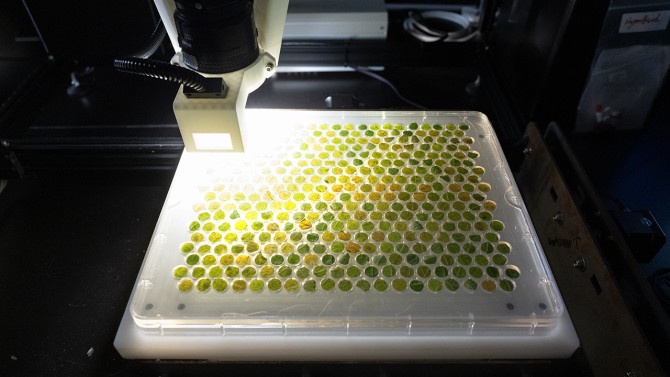
Today, additive manufacturing allows us to restore deteriorated steel precisely where it is needed, without replacing entire structural components. It is a process where three-dimensional objects are built up layer by layer from a digital model.
The German company Siemens and US-based Fastech, already offer additive manufacturing for the onsite repair of, for example, steam turbine rotors or the rock-wheel trenchers used to grind through concrete.
To restore steel, a thin metal wire is fed into a controlled laser beam, which melts the wire as well as a small region of the existing steel surface. This allows new metal to bond directly to the original metal. By moving the laser across the damaged area, we can build up material only where it is needed. This technique is known as wire-fed laser-directed energy deposition (DED).
This concept builds on weld cladding, used for decades in safety-critical marine and nuclear applications. However, laser-DED enables more localised and controlled addition of new material with a lower heat input.
The electrically powered process makes unusually efficient use of materials. Jason Hutt, director of UK and international business development at Fastech, says the process allows degraded steel to be restored “precisely where material has been lost, potentially extending the life of an asset without replacing the entire structural component”. It could enable shorter interventions and reduce disruption caused by the work.
Safe lifetime
So why isn’t similar technology used to extend the life of vital UK infrastructure? The key question is how long the repaired structure will remain safe. Bridges are subjected to millions of loading cycles as vehicles pass over them. Even when the stresses are well below those needed to break steel, the repetitive nature of those stresses can open up cracks and then cause them to grow.
This phenomenon, called fatigue, is particularly important in steel bridges, because a repair that looks sound today must remain safe for decades. Independent evidence confirms the genuine potential of wire-fed laser DED for the repair of steel structures. In tests, wire-arc deposition arrested existing fatigue cracks beyond nine million cycles, compared with failure at 0.95 million cycles without repair.
A related but distinct technique called laser cladding also shows promise. Studies to evaluate it show that it restored more than 90% of fatigue strength – the maximum stress steel can withstand over a given number of load cycles – in artificially damaged modern steel.
But much of the scientific evidence comes from small specimens of modern steel that have been artificially damaged. Real bridges may contain century-old steel with different chemical compositions, accumulated fatigue damage and defects from decades of service. Laser deposition also changes the microscopic structure of the steel around the repair.
Engineers need to understand how the old material and the new interact, so that they can assess how much additional safe life the repair provides.
Climate benefits
Bridges also provide a tremendous immediate opportunity to mitigate carbon emissions. A recent study found that interventions using UHPFRC, a high-strength construction material, could save 1.7 million tonnes of CO₂ equivalent across just 800 bridges, rising to 7.7 million tonnes across Switzerland’s federal network of 3,903 bridges.
The UK has 16,000 metallic railway bridges alone. When they were surveyed in 2004, 80% were already over 50 years old and half were over 100. The environmental benefits of preserving infrastructure extend beyond the steel itself. Bridge closures can mean weeks or months of diverted journeys, increased congestion and emissions while disrupting public transport, businesses and communities.
Focused renovation can produce 84-93% lower emissions than replacement – even before accounting for indirect emissions from diverted traffic – while reducing the time taken for the intervention and allowing bridges to remain open.
The economic value is equally colossal. The European Commission’s Sustainable Bridges project, set up to increase the use of the European railway network, estimated that a modest 2% increase in residual life across European railway bridge stock could generate savings of the order of €1 billion (£832 million).
And for historic bridges, retaining the original steelwork can protect architectural and cultural heritage that replacement would permanently erase.
We have become accustomed to thinking of technological progress as building something new. As our assets age, extending their safe lives becomes an increasingly important part of the transition to a low-carbon economy.
Offshore wind turbines, industrial facilities and other key structures rely on enormous quantities of steel. Many operate in corrosive environments where replacement is costly and technically challenging. Some of the most important innovations of the coming decades may be those that allow us to preserve what we already have.