Australia needs a national Human Rights Act
Three years after the Disability Royal Commission, People with Disability Australia (PWDA) is calling for a National Human Rights Act that gives people with disability stronger, enforceable protection of our rights in Australian law.
People with disability have the same human rights as everyone else, the issue is they are not respected.
While Australia has agreed to uphold rights for people with disability as identified in the United Nations Convention on the Rights of Persons with Disabilities (CRPD), many of those rights are still not adequately reflected and protected in Australian law. This can leave people with disability with limited protections and options for redress when our rights are breached, ignored or violated.
PWDA wants that to change.
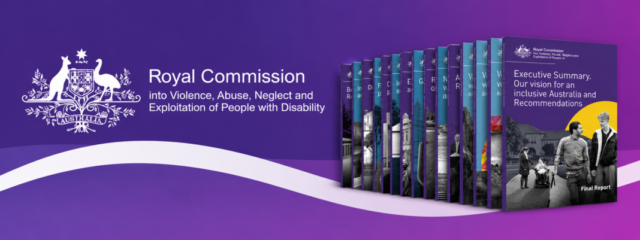
The Disability Royal Commission recommended strengthening legal protections of the rights of people with disability to give effect to Australia’s CRPD obligations. The proposed mechanism was a Disability Rights Act. Three years later those recommendations have not progressed sufficiently.
PWDA is advocating for a strong national Human Rights Act that protects the rights of all Australians while also explicitly recognising the rights of people with disability as set out in the CRPD.
The need for stronger human rights protections is evident when we look at what happens when a person with disability needs an organisation or institution to recognise their rights in everyday life.
Disability advocate and law student Alison Moreno experienced this when her university ended remote learning options during the ongoing COVID-19 pandemic.
Alison requested reasonable adjustments that would allow her to continue studying with her disability. When the university refused the adjustments she proposed, she found herself having to repeatedly explain her needs, navigate internal university processes and ultimately take her complaint to the Australian Human Rights Commission.
Much of the work required to enforce her rights and challenge those barriers fell to Alison. This placed a significant physical and emotional burden on her.
“The more I see of these systems, the more I feel like they’re structured around what’s convenient for the organisation running the process rather than what the person can actually manage,” Alison said.
For Alison, the effort required to challenge decisions that disregarded her rights also had consequences for other parts of her life.
“I think that most disabled people will understand that stability for us is different from stability from abled people because our stability is like a house of cards. It might look great for the moment but then something changes and it falls down.”
Her experience has shaped what she believes institutions should be required to do differently.
“The baseline should be the university proactively saying, ‘Hey, we understand that people have different types of disabilities. Here is how we’ve met them at the level that they need.
“Anticipating barriers means that the university has already done some of the thinking before I arrive… I shouldn’t have to start from scratch every single time.”
That principle extends well beyond universities. People with disability should not have to negotiate for their human rights one institution, one decision and one complaint at a time.
A national Human Rights Act would help change that. It would require government and public authorities covered by the Act to consider human rights when developing laws, policies and making decisions, rather than only responding after harm has occurred.
It would also ensure people have clear, enforceable mechanisms for accountability and legal remedy when their rights have been breached.
PWDA’s consultations following the Disability Royal Commission showed strong support for action.
72 per cent of surveyed PWDA members said they wanted better laws to protect and enforce the human rights of people with disability.
PWDA Acting CEO Megan Spindler-Smith said three years after the Disability Royal Commission, governments need to act.
“The Disability Royal Commission showed us what can happen when the rights of people with disability are treated as principles rather than protections that shape decisions in everyday life.
“A National Human Rights Act would help move us from responding after someone’s rights have been violated to making sure governments and public authorities consider and respect those rights from the beginning.
“And when rights are breached, people need an accessible way to do something about it,” Spindler-Smith said.
University of Sydney Associate Professor Dinesh Wadiwel said a national Human Rights Act would shine a light on how people with disability should be treated.
“Australia has this real patchwork when it comes to human rights protections… and this has led to a lack of clarity around core human rights obligations and maybe a standalone bill or instrument for human rights would actually… help that change happen.”
Associate Professor Wadiwel also said stronger laws needed to be accompanied by broader cultural change.
“Something we pointed out [in the DRC] is that…transformative human rights change can’t be driven by law alone. It needs to be driven from the ground up through social and cultural change,” he explained.
PWDA also believes human rights protections need to extend beyond government to all agencies that provide services to people with disability, including NDIS providers. These agencies must be able to be held accountable for respecting our rights and ensuring our safety across all living, care and community settings.
PWDA is calling on the Australian Government to begin work on a national Human Rights Act, co-designed with people with disability and our representative organisations, so our rights can be respected in everyday life.