This article originally appeared in the July 2026 issue of Land Rights News.
Michaeline Gallagher lives in Nyirrpi. She teaches at the local school and rents a three-bedroom house with her partner and three children. She represents Nyirrpi on the community’s Granites Mine Affected Area Aboriginal Corporation committee, the Walpiri Education and Training Trust’s advisory committee, and chairs the board of the local Outback Store. Ms Gallagher is a pillar of her community, and she is worried.
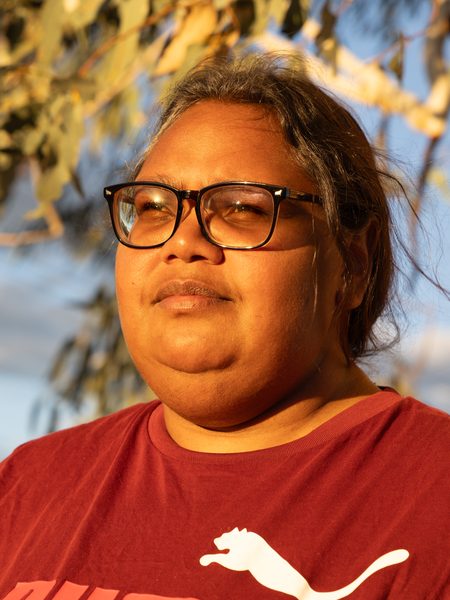
Walking through her home, Ms Gallagher points to cracks in the walls where light shines through, to the leaking roof, to the air conditioner that sits in a hole in the wall, unsealed and supported by a 44-gallon drum.
“Even our doors don’t have locks,” she says, worrying about break-ins. “When it rains, it drips down from the ceiling and some of our lights and fans are not working at the moment.”
The Territory government last renovated the house nine years ago and hasn’t maintained it well. They haven’t had a visit from Territory Housing in more than eight months.
“When we call, they do come out, but they don’t do proper work,” Ms Gallagher says.
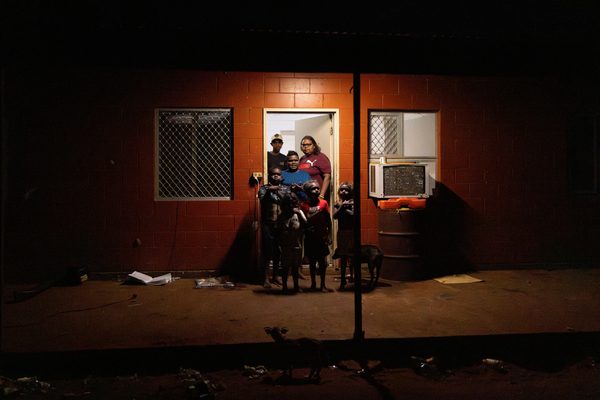
She has heard about the Central Land Council’s calls for regular, scheduled checks and repairs, also known as cyclical maintenance. “I would like that, someone to come out every month, once a month, just to check on every house. We would like that for the community.”
Ms Gallagher pays around $300 a week in rent. The besser block house faces south, lacks insulation and costs a lot to heat and cool.
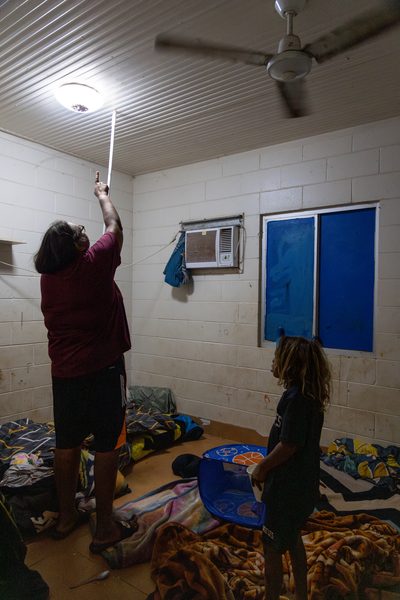
“When it’s really hot, like summer, when we have a heat wave, we can feel it inside the house, and everything in the house gets hot. It’s really cold in the winter.” Without proper insulation or sealing, the house is very difficult to heat or cool. “At first when the summer started, I had three aircons, but it was still hot,” says Ms Gallagher, who now has four box aircons to keep the house at a liveable temperature. Her electricity bill costs more than rent.
Add to that the high price of groceries and fuel out bush, and extreme cost of living pressure remote residents are under becomes clear.
“It’s really expensive and it’s really hard for me to manage all of that,” Ms Gallagher says. “It’s just not good for the community and everyone nowadays struggles. It’s not just me, it’s everyone in the community.”
While a government subsidy recently made a range of essential grocery items in the store cheaper, Ms Gallagher says the community is still struggling. “They did reduce the price down on 30 items, but it’s still not enough, because there’s so many other things that aren’t on the list. The prices are always going up and it worries me.”
The February and March floods have added to the community’s troubles. Ms Gallagher hasn’t had a water delivery in about two months. Like many remote communities, Nyirrpi’s water is unsafe to drink. Here, the high levels of fluoride in the tap water means that children and pregnant women must rely on weekly deliveries of boxed drinking water.
“They [usually] do it every week. Four boxes, five boxes each for each house. It’s been two months. We don’t know what’s happening. We need answers as a community. Safety for our kids. Because they’re just running around and drinking water from the tap. Some of them get bugs in their tummies and it’s really not good. It saddens us Yapa when we see them. I look out for these kids so much, I want to help them, so they can grow into a good leader in the future.”
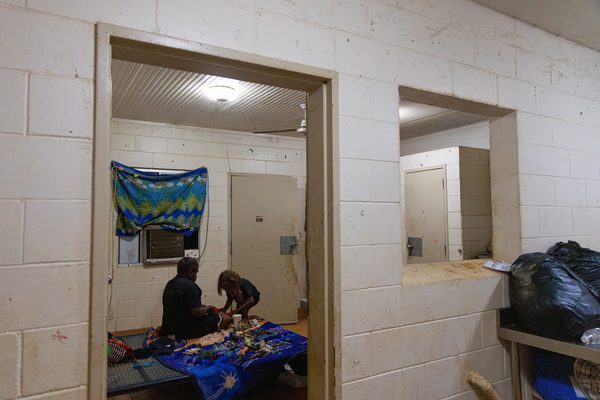
Ms Gallagher’s nine-year-old son has autism and rheumatic heart disease – a preventable condition that is common in remote communities with overcrowded houses.
“I’m just worried about these kids and our houses. No one ever came to visit us, gave us answer about housing, about water, power, the prices at the shop. We don’t know what’s going on. Someone should come.”
Ms Gallagher is determined to keep fighting for better conditions for Nyirrpi. “I know it’s my responsibility to take care of my community.”
The problems she faces are issues that are seen in every remote Aboriginal community in Central Australia. Ms Gallagher wants the government to take notice. “They haven’t been listening to us, we need them to listen to us now.”