The successful work of the Else Kröner Centre Würzburg-Mwanza can continue: the Else Kröner-Fresenius-Stiftung is funding the collaborative project to improve healthcare for a further 2.5 years.
The “Else Kröner Centre for Advanced Medical & Medical Humanitarian Studies Würzburg – Mwanza” (EKC) began its work over six years ago. The centre has since become an integral part of German-Tanzanian cooperation between the Faculties of Medicine of the University of Würzburg and the Catholic University of Health and Allied Sciences in Mwanza. It is regarded at both universities as a flagship programme for German-African cooperation.
A great deal has happened since the centre was founded: Fifty medical students from the partner faculties have completed placements in the partner country; doctors have observed their colleagues at work; a bilateral Master’s programme has been launched; and eight PhD students have advanced their research at both locations.
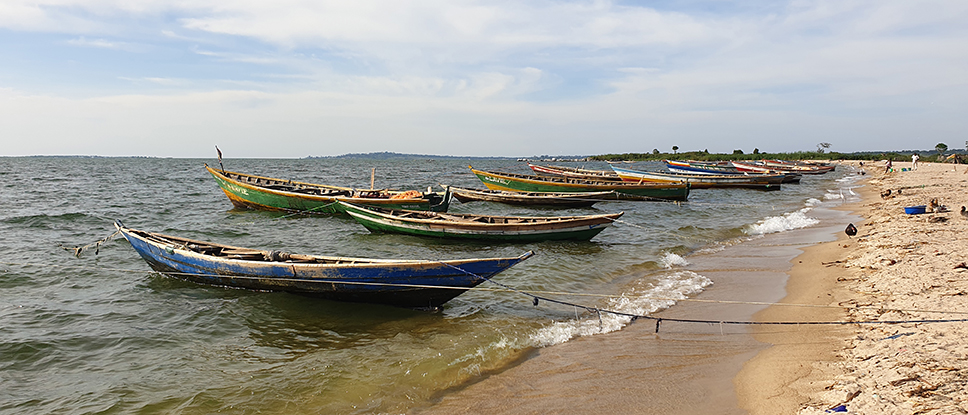
Above all, healthcare provision in the region around Mwanza has been significantly improved: As part of a wide-ranging programme to combat schistosomiasis – a parasitic disease that is widespread around Lake Victoria – large sections of the population living on the islands were educated about the disease and its consequences, screened for infection and treated. The local hospital was also expanded to provide adequate care for schistosomiasis patients, and the local staff were trained.
850,000 euros for the second phase of the project
The Else Kröner-Fresenius-Stiftung has now pledged to fund the centre with 850,000 euros for a further two and a half years. It had already supported the project with 2.5 million euros during its initial years.
Project management will remain in the hands of the Faculty of Medicine at Julius-Maximilians-Universität Würzburg (JMU) during the second funding phase as well. Cooperation partners in Würzburg are the University Hospital of Würzburg (UKW), medmissio – Institute for Global Health, and the German Leprosy and Tuberculosis Relief Organisation (DAHW) e.V.. Partner organisations in Mwanza are the Catholic University of Health and Allied Sciences and the Bugando Medical Centre.
Ambitious goals for the second funding phase
In addition to continuing the existing programmes, the forthcoming funding phase will also see the introduction of a programme to support early-career researchers in Mwanza.
Furthermore, the partners have set themselves the goal of extending the schistosomiasis programme to all communities in the Ukerewe District around Lake Victoria. In addition to adults, they now also intend to include children under the age of five in the treatment campaigns. This will ensure that all 400,000 people in 62 villages have access to regular screening and treatment. The programme will be accompanied by scientific studies on the prevalence and epidemiology of the parasites. The programme’s efficiency and costs will also be assessed.
In the final stretch, the focus is on sustainability
Over the next two and a half years, the centre will place particular emphasis on the sustainability of the structures it has established. The PhD students trained as part of the EKC programme commit to remaining at the partner university in Mwanza for a further six years after completing their doctorates, contributing their expertise to teaching and research on the ground. A clinician-scientist programme is designed to support particularly talented early-career researchers in establishing independent research groups.
In addition, a handover strategy has been drawn up, under which the not-for-profit programme to combat schistosomiasis is to be gradually transferred to local management. By the end of the second funding period, key functions – such as the procurement and distribution of medicines – are to be taken over by the local health authority and institutions.
The aim of those involved is to have established long-term structures by the time the funding from the Else Kröner-Fresenius-Stiftung comes to an end, which will sustain academic teaching, patient care and community work on the islands. The partnership between the universities and university hospitals, which has existed for decades and involves a lively exchange of students and doctors, as well as the close collaboration between the other partners, will continue even after the Else Kröner-Fresenius-Stiftung funding comes to an end.
Comments on the continued funding
“At the Else Kröner Centre Würzburg-Mwanza, patient care, prevention, training and research are closely intertwined. The work carried out to date has established key structures for schistosomiasis control and healthcare on Ukerewe. Over the next two and a half years, these are to be firmly established, extended to the entire district – home to around 400,000 people – and gradually handed over to the responsibility of the Tanzanian partners. It is this combination of immediate medical assistance, capacity-building and local ownership that has convinced us.”- Dr Judith von Heusinger, responsible for humanitarian funding at the Else Kröner-Fresenius-Stiftung
“At the Else Kröner Centre, our long-standing partners from Mwanza and Würzburg have been brought even closer together, and existing projects have been deepened and significantly expanded. The commitment of the Else Kröner-Fresenius-Stiftung to provide further funding for 2.5 years will enable the structures that have been established to be consolidated and ensure the Centre’s long-term impact, extending beyond the funding period. We therefore very much welcome the commitment to continued funding.” – Prof. Dr Matthias Frosch, Dean of the Faculty of Medicine at the University of Würzburg
“The collaboration between all partners over recent years has shown that much can be achieved together. We have also set ourselves ambitious goals for the second funding phase. Our project work encompasses academic teaching, the training of PhD students, research funding, patient care and the regular treatment of everyone in Ukerewe District for the neglected tropical disease schistosomiasis. The strong interconnection between the various project areas ensures sustainable support across all fields.” – Prof. Dr Oliver Kurzai, Scientific Director of the Else Kröner Centre
“We are delighted that the EKFS is also supporting the second round of funding. Right now, it is crucial to reach the entire population on Ukerewe Island – both geographically and by including children under the age of five. This represents an important step towards breaking the cycle of schistosomiasis infection. Furthermore, the successes already achieved, together with the community-centred measures, enable us to place even greater emphasis on self-management and personal responsibility, involving all local stakeholders, whilst at the same time making valuable scientific insights into the current context available.” – Dr Saskia Kreibich, Research Co-ordinator at DAHW, German Leprosy and Tuberculosis Relief Association
Else Kröner-Fresenius-Stiftung (EKFS) – Promoting research. Helping people.