What if Queensland was home to not one but three “vegan Draculas”?
Thanks to new funding, a team of scientists is learning more about the mysterious, jawless, non-parasitic Australian brook lamprey with circular rows of teeth, while potentially confirming the taxonomy of two other undescribed species found in Queensland waters.
Griffith University aquatic ecologist Dr Luke Carpenter-Bundhoo, from the Australian Rivers Institute, was awarded $90,116 under the Protecting Queensland’s Threatened Species Applied Research Grant Program, delivered by the Queensland Government’s Department of the Environment, Tourism, Science and Innovation (DETSI).
Working alongside DETSI Principal Scientist David Moffatt, Dr Carpenter-Bundhoo will conduct further field work and lab analyses to better understand one of Queensland’s newest and least-known threatened fish, the Australian brook Lamprey (Mordacia praecox).
Discovery of ‘vegan Dracula’
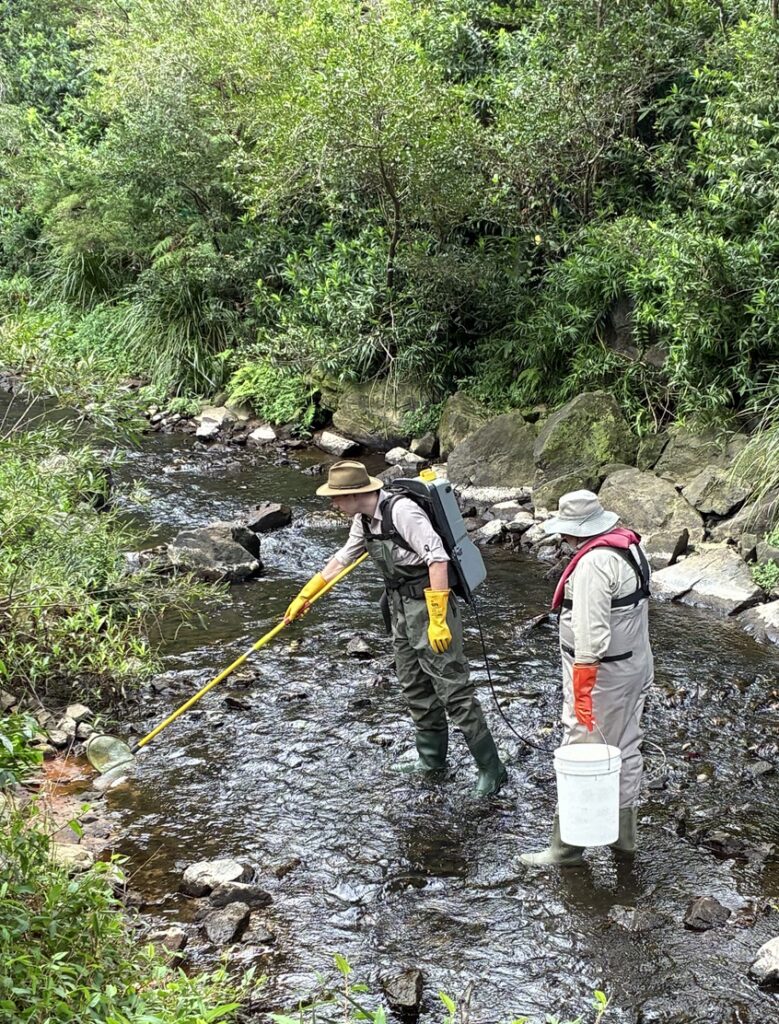
In 2022, the scientists were on K’gari studying ecosystem impacts of the Black Summer bushfires when Dr Carpenter-Bundhoo was startled to find “an eel-like creature that had seven gills” while electrofishing one of the island’s many creeks.
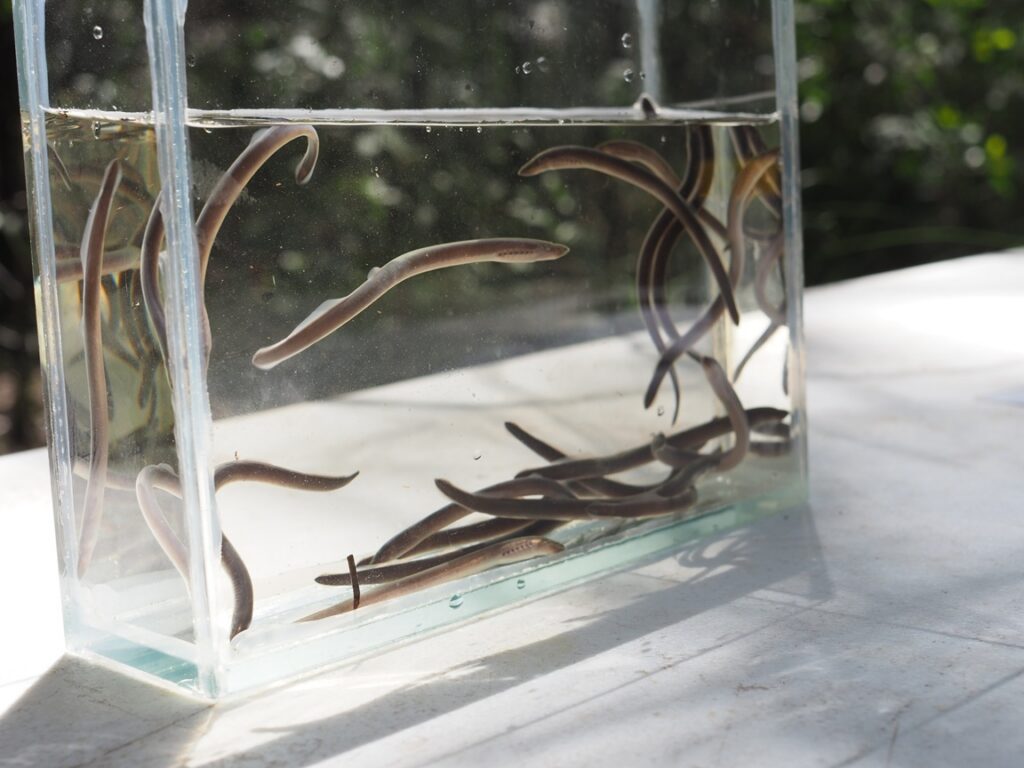
“I knew that what we had found were lampreys, and my immediate thought was ‘what are they doing here?’,” he said.
“Nobody knew they were on the island, which wasn’t surprising either – this particular species of lamprey was 1,400km north of its previously documented location in streams near the border of New South Wales and Victoria.
“Lampreys are such a cryptic, ancient species.
“About 485 million years ago, we split off from them, and from about 150 million years ago, they don’t change – what we see as lampreys today pretty much existed then.
“They’re even more of a dinosaur fish than our Australian lungfish.
“It was always thought they couldn’t exist in warmer waters, but they’ve been here and as far north as Rockhampton for more than a decade.
“Technically, Queensland is home to the world’s first tropical lamprey.”
Cryptic creatures key to unlocking scientific secrets
Despite the Australian brook lamprey’s distinctive, circular rows of sharp teeth, the researchers determined it to be a non-parasitic species, at the time earning it the moniker “vegan Dracula”.
Aside from their lifespans and growth progression, not much else is known about lampreys.
A process of metamorphosis ushers them to adulthood which is when they stop eating and focus everything on spawning, leading to death within about eight months.
Their first three to four years are spent sightless in larval form on the bottom of a creek, filtering microscopic algae from the water.
But the ancient, relatively simple biology of lampreys meant their physiology made them an ideal ‘model species’ for further scientific research into understanding human health and diseases.
“Studying lamprey DNA is a bit like looking back at an earlier edition of the vertebrate instruction manual, before hundreds of millions of years of evolutionary tinkering,” Dr Carpenter-Bundhoo said.
“Understanding them can help us understand more complex organisms, including humans.”
Hidden in plain sight
There are about 50 species of lamprey in the world, with the largest growing to 120cm.
Australia is home to three species, and the Australian brook lamprey is among the smallest, growing to just 15cm.
With possibly two other undescribed lampreys in the Griffith University labs, Dr Carpenter-Bundhoo and Mr Moffatt were confident these slightly smaller species were new to science and would bump Australia to five species, with Queensland being home to three.
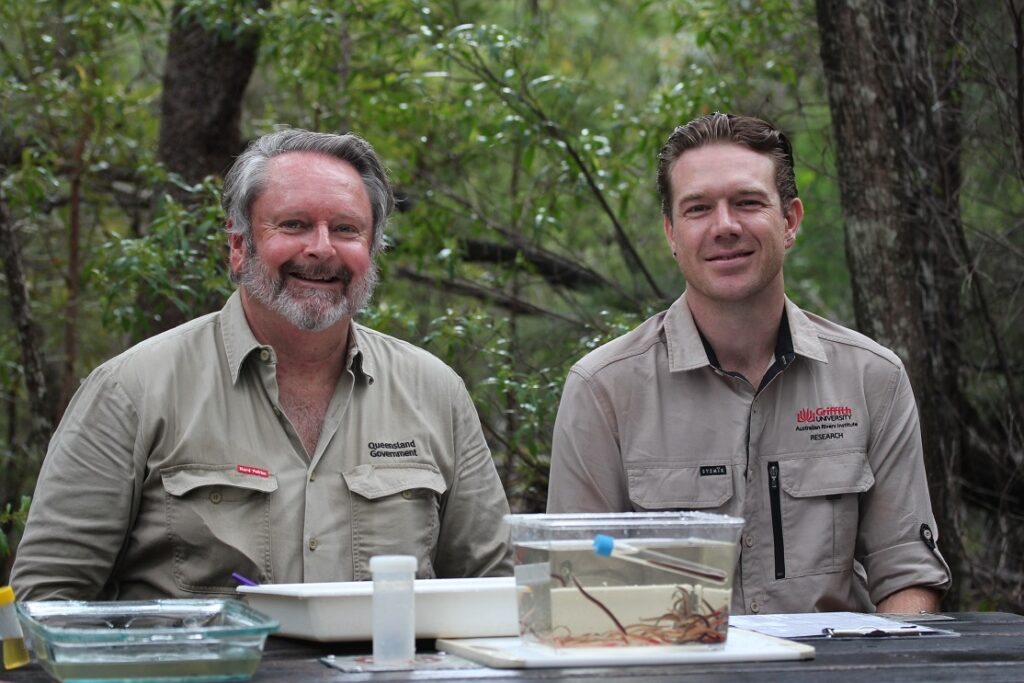
One of the reasons the Australian brook lamprey had gone largely undetected previously was because they buried themselves under the sand, so water-lovers need not have worried about swimming with the diminutive, prehistoric creatures.
However, their preference for remaining hidden from sight also presented a problem; without knowing where established populations were, decision and policymakers could not facilitate adequate protection and conservation programs for lampreys.
“This species was thought to be extinct in its original range, and now Queensland may be the only place it exists,” Dr Carpenter-Bundhoo said.
“This might be the last bastion of this endangered species.”
Back to the wild for answers
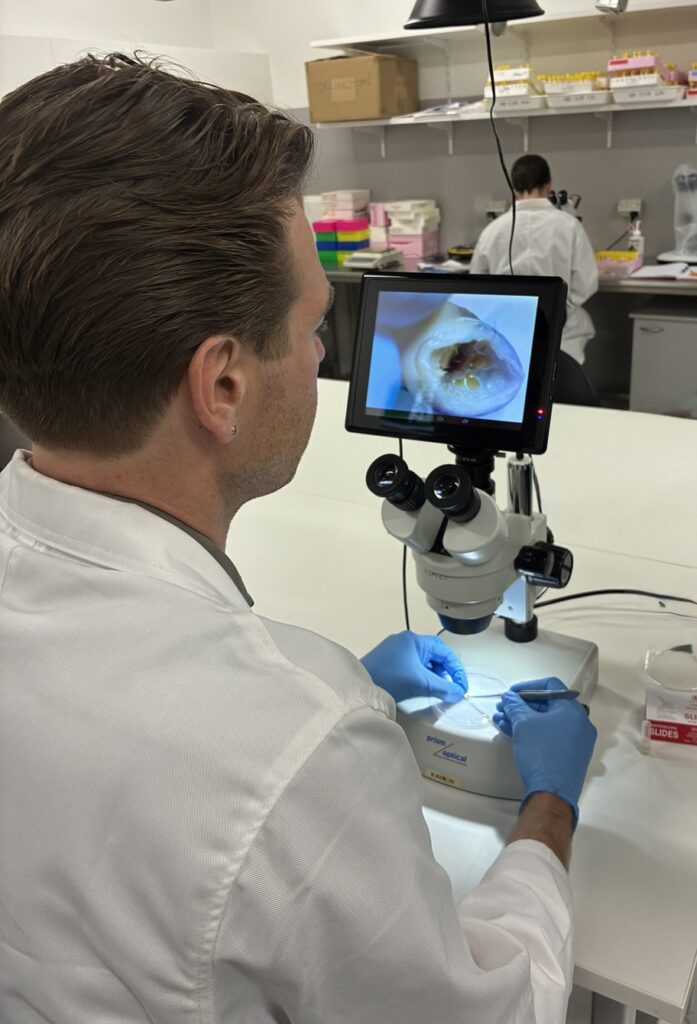
Dr Carpenter-Bundhoo and Mr Moffatt said finding the Australian brook lamprey and the two other yet-to-be-named species in a “few little spots in Queensland was the tip of the iceberg”.
To fully understand its population and range, the team would return to K’gari and other Queensland sites in the hope they continue to find these “vegan Draculas”.
“An excellent way we can understand more is by going out and sampling all these remote and difficult-to-sample habitats,” Dr Carpenter-Bundhoo said.
“Luckily, our new Protecting Threatened Species Grant from the Queensland Government will allow us to go out there, sample all these remote locations that we think lampreys might be and confirm exactly where they are.
“Knowing their locations will help us create awareness and increase opportunities for their protection, while confirming Queensland as a southern hemisphere biodiversity hotspot for these incredibly cryptic and fascinating non-parasitic creatures.”

13: Climate Action
14: Life Below Water

6: Clean Water and Sanitation