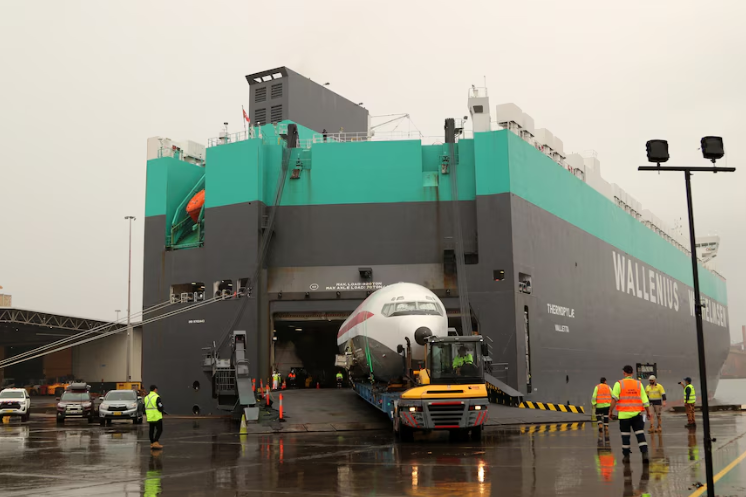
A rare piece of aviation history has touched down on Australian soil for a new chapter, with departmental biosecurity officers helping ensure the safe arrival of a Boeing 707-138 once owned and flown by actor and aviation enthusiast John Travolta. The aircraft, donated to the Museum by the previous owner, is now destined for restoration and public display at the Historical Aircraft Restoration Society (HARS) Museum in Shellharbour.
The Boeing 707-138 was shipped to Port Kembla, near Wollongong, NSW, after being carefully dismantled in the United States as part of a long-term restoration project led by HARS.
While the aircraft’s Hollywood connection has captured public attention, its arrival also presented a unique biosecurity challenge.
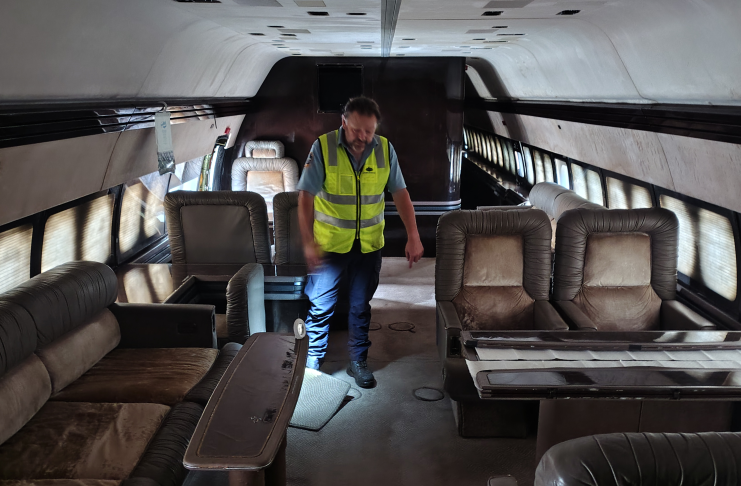
On arrival, department biosecurity officers conducted detailed inspection activities to identify and manage any biosecurity risks associated with the aircraft and its components. During the inspection process, officers detected plant material contamination in multiple areas, including cargo holds, the cabin, cockpit and internal compartments.
Working closely with the approved arrangement site, officers coordinated cleaning and treatment activities to address the contamination. This included supervised unpacking of aircraft components and targeted cleaning to ensure all biosecurity risk material was removed and appropriately disposed of.
Once these activities were completed and all biosecurity requirements met, the aircraft and its components were cleared from biosecurity control and approved for onward transport.
This inspection highlights the important role biosecurity officers play in protecting Australia from exotic pests, diseases and contaminants, regardless of whether goods arrive in a shipping container, on a vessel, or as a historic aircraft.
Every imported item has the potential to carry biosecurity risks. Through detailed inspections and strong collaboration with industry partners, the department helps ensure significant and unusual imports can enter Australia safely while protecting the nation’s environment, agricultural industries and way of life.