QUT has received a $5 million Australian Research Council grant to establish a new research hub focused on the safe and ethical use of humanoid robots in Australian workplaces.
The ARC Research Hub for Safe and Ethical Humanoid Robot Implementation and Adoption, which will have total funding of more than $9 million, will bring researchers and industry together to examine how humanoid robots can support workers in care, construction and manufacturing.
Hub director Professor Jonathan Roberts, from the QUT Centre of Robotics, said the hub would help Australia prepare for the arrival of humanoid robots in real workplaces.
“Humanoid robots have the potential to take on dangerous, physically demanding or repetitive tasks, but their introduction must be guided by strong evidence and a clear focus on people,” Professor Roberts said.
“This hub brings together expertise across robotics, engineering, built environment, design, health, law and the social sciences to ensure humanoid robots are introduced safely, responsibly and in ways that support people rather than replace them.
“Our goal is to give industry, government and the community practical guidance they can trust, including new design tools, workforce resources and frameworks addressing safety, accountability and privacy.”
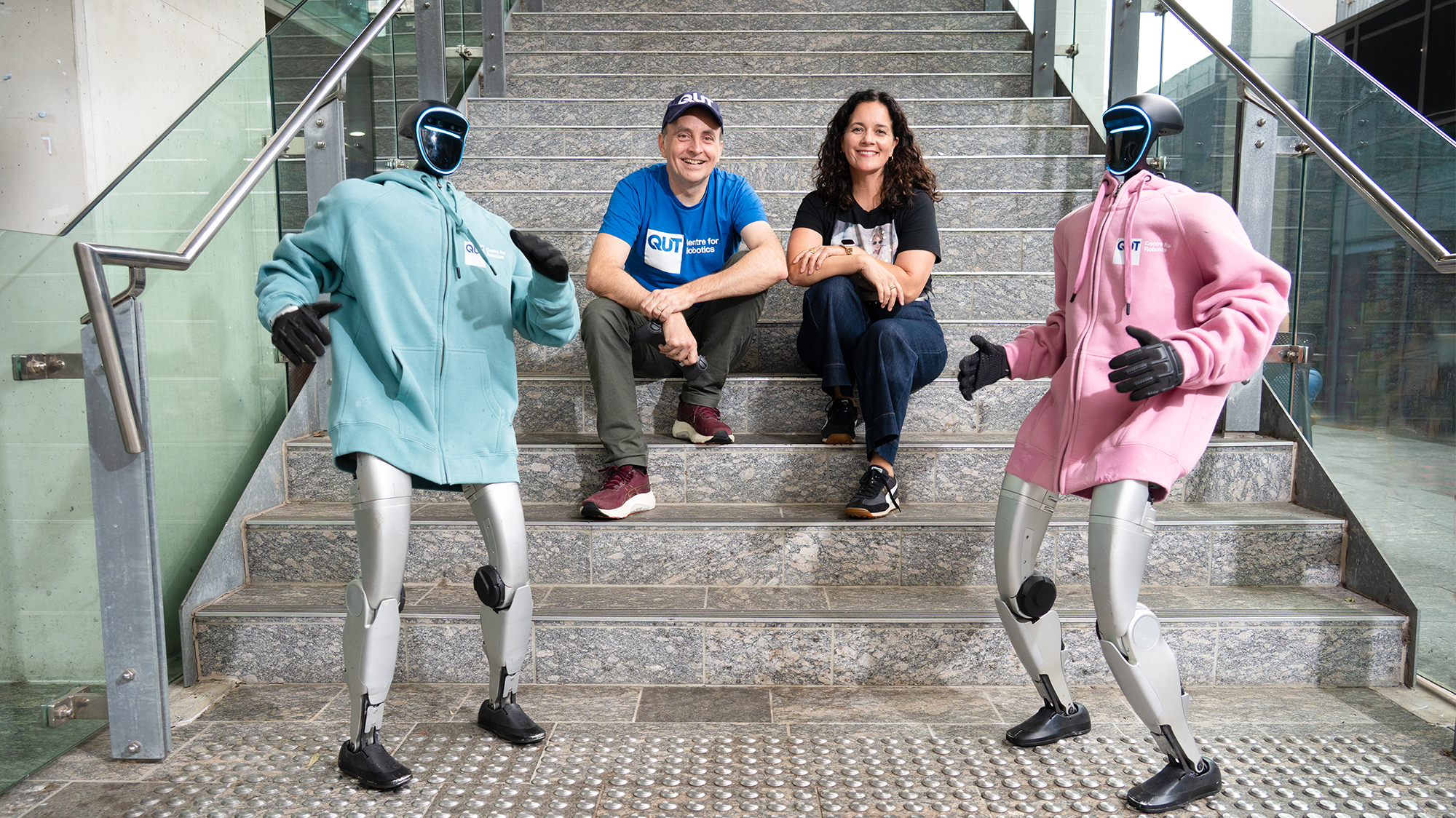
Professor Jonathan Roberts and Professor Glenda Caldwell with QUTie
The QUT-led collaboration includes Swinburne University of Technology, Flinders University, CSIRO, ARM Hub, Queensland Health, National Injury Insurance Agency Queensland, McNab Construction, Brickworks, Armstrong Bricklaying, NVIDIA Corporation, BMW, Treasury Wine Estates, Fourier Intelligence, Catalyst Health Reit, PAI Paradox AI and Robotics, CID 5GaaS, Immersive Realities, HML Services, Daylight Foundation, Spinal Life Australia, and Endeavour Foundation.
The hub will test how humanoid robots could help reduce workplace injuries, respond to labour shortages, and improve worker wellbeing and productivity. It will also develop practical guidance, standards and design tools to support their responsible introduction.
Professor Glenda Caldwell, deputy director of the hub, said Australia had an opportunity to shape the development and adoption of the technology before its widespread availability.
“We want to ensure decisions about humanoid robots are made with workers and communities, not simply for them,” she said.
“By working directly with the organisations that may use these technologies, we can identify risks early and develop approaches that protect workers, reflect community values and deliver genuine public benefit.”
The Hub will combine expertise in robotics, engineering, built environment, design, health, law, ethics and the social sciences to address the technical, human, organisational and regulatory challenges of adopting humanoid robots.
The project is expected to strengthen Australia’s capability in responsible robotics, attract international collaboration and support national priorities in advanced manufacturing, construction, care innovation and national resilience.