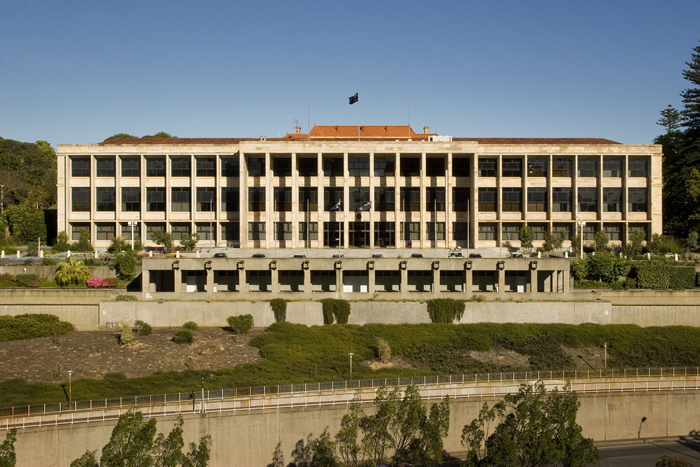
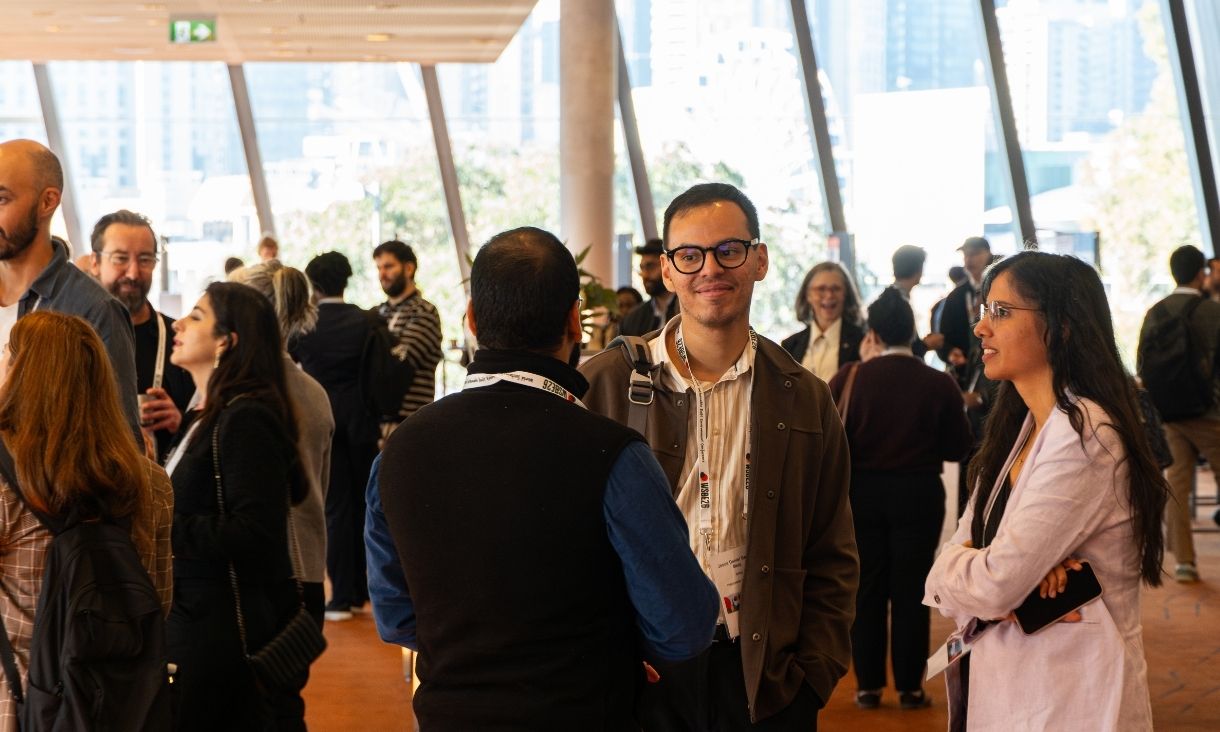
RMIT University was honoured to recently host the World Sustainable Built Environment Conference 2026 (WSBE26) in Melbourne, one of the longest‑running global scientific and technical conference series dedicated to sustainability in the built environment.
Attended by over 400 delegates from 36 countries, WSBE26 brought together leading scientists, researchers, practitioners and educators to examine how cities, housing systems and infrastructure must evolve as the world moves beyond the 2015-2030 Sustainable Development Goals (SDGs) timeline.
The conference invited participants to look beyond incremental change and instead consider what it will take to genuinely transform housing and urban development at scale in the coming years.
 Credit: Aaron Alvarez
 Beyond the SDGs
In her opening remarks, WSBE26 Co‑Convenor Professor Usha Iyer‑Raniga framed the core agenda for the week, focusing on who will shape the next era of sustainable development beyond 2030, which issues the sector must prioritise, and the practical steps needed to move from plans and commitments to implementation, accountability and genuine systems change.
Professor Iyer‑Raniga noted that while the SDGs have given the world a shared language, the built environment sector needs to move well beyond business‑as‑usual before 2030 to respond to growing pressures, especially in rapidly urbanising regions in the Global South.
“This conference is our opportunity to take stock and focus on action, addressing the critical challenges that are driving the triple planetary crises of climate change, biodiversity loss and pollution.
“By listening to and speaking with each other throughout the week, we aim to chart a new course for humanity, encouraging out‑of‑the‑box thinking and accelerating solutions for the Global North and the Global South,” she said.
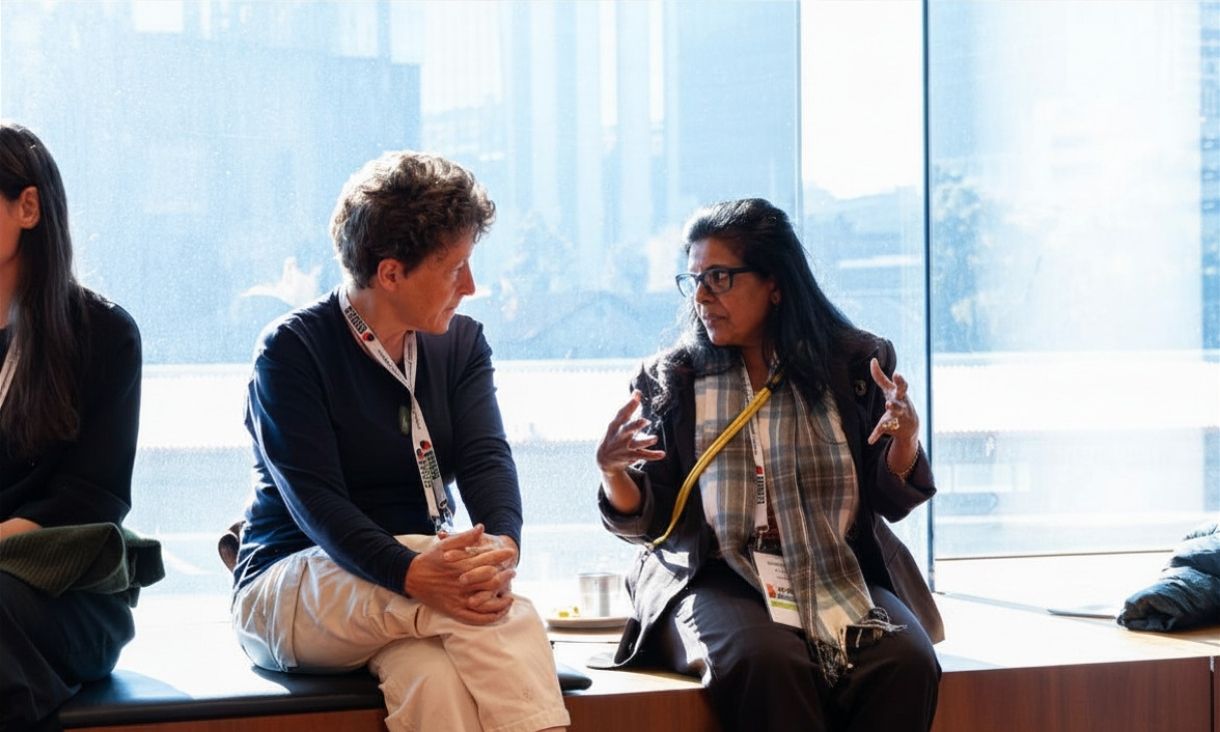 WSBE26 Co‑Convenor Professor Usha Iyer‑Raniga (right) in discussion with conference attendees. Credit: Aaron Alvarez
 Designing cities for people and the planet
A presentation from Dr Nadia Boschi, Lendlease’s Head of Sustainability for Italy & Continental Europe, explored the intersection of climate action, social equity and economic resilience when considering sustainable urban environments.
As global communities face intensifying climate impacts, Dr Boschi described the need to focus on regenerating existing infrastructure rather than new expansions. She framed sustainability as not just key to reducing emissions in urban settings, but also a core driver of positive community outcomes.
Dr Boschi emphasised the importance of an evidence‑based approach to planning and delivering urban projects, so cities can work towards tangible outcomes such as health, wellbeing and resilience, rather than simply complying with regulations. She presented case studies of urban projects that are already combining energy efficiency, low‑carbon mobility and nature‑based solutions to cut emissions while improving everyday life and strengthening social outcomes.
Ultimately, Dr Boschi argued that cities must be designed for people, not just performance metrics. By aligning science, policy and investment with human outcomes, data‑informed planning can help European cities become more resilient, adaptive and sustainable when facing future climate challenges.
Housing, biodiversity and education as critical infrastructure
Another key session from the week featured renowned scientist and climate advocate Professor Tim Flannery, whose presentation brought the Pacific communities facing climate and housing vulnerability into sharp focus.
Drawing on RMIT’s work in the region, the session explored how decisions about infrastructure and housing can critically shape local ecosystems and biodiversity in small island nations and other emerging economies.
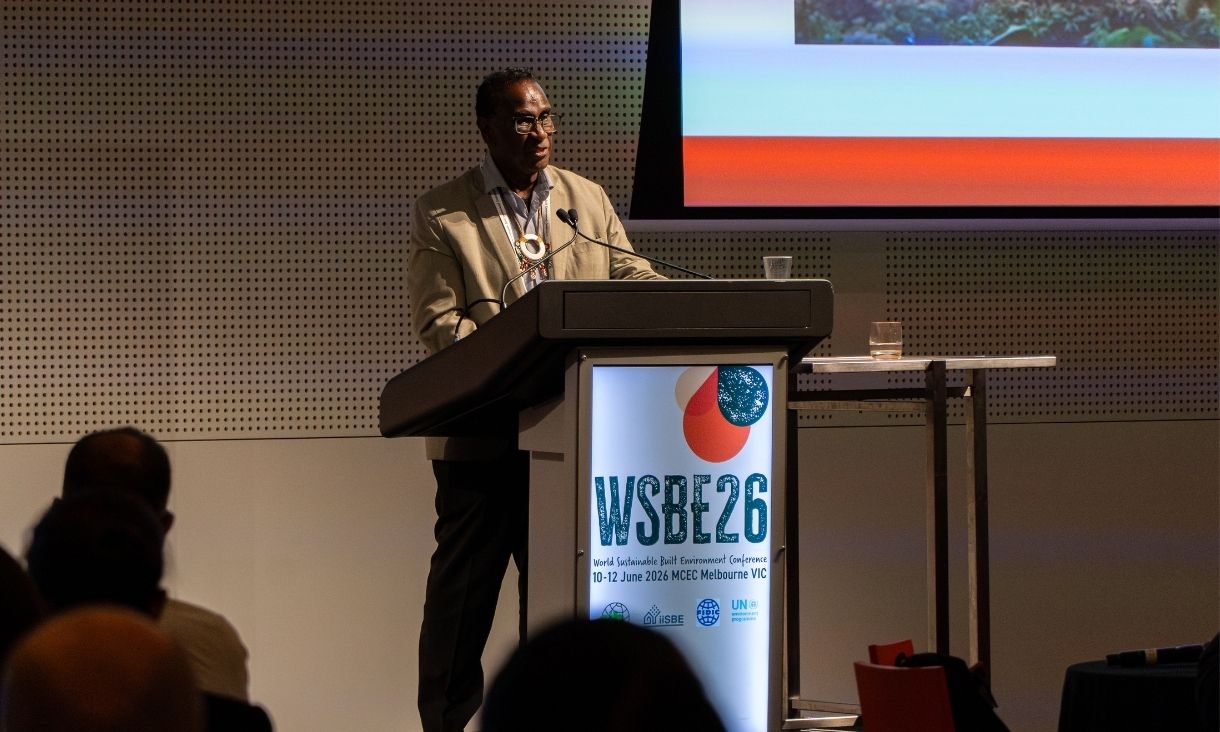 Professor Transform Aqorau, Vice-Chancellor of Solomon Islands National University. Credit: Aaron Alvarez
 Professor Flannery and fellow keynote, Professor Aqorau linked climate impacts, disaster risk and planning with the need for a different kind of infrastructure investment; one that views local education, skills and research capability as equally important as roads and buildings.
Speakers argued that without human capacity, physical infrastructure cannot succeed, and without local knowledge, cities are left vulnerable to being governed by outsiders’ assumptions.
Finally, the session underscored the importance of a decolonised approach to supporting the Pacific, one that moves away from being donor-driven and instead centres local decision‑making, community‑guided conservation and long‑term capacity building.
Housing roundtable with industry leaders
In parallel to the conference, RMIT hosted an invitation-only Housing Supply and Productivity Industry Roundtable, attended by leaders across housing, construction, materials and government sectors.
The session combined a briefing of RMIT’s Australian Urban Research Institute (AHURI) funded enquiry into Overcoming construction constraints for the supply of new detached and high‑rise housing, which included recommendations on practical, system‑wide solutions to accelerate delivery and improve performance across the housing system.
The candid, Chatham House rule discussion encouraged participants to test, challenge and refine emerging insights on the structural constraints limiting Australia’s housing system, from construction productivity to the scaling of off-site manufacturing, and how market volatility affects a skills workforce.
Next steps
Reflecting on the week, WSBE26 Co‑Convenor and Dean of the School of Property, Construction and Project Management, Professor Ron Wakefield, highlighted the significance of hosting such a globally recognised forum at this moment in time.
“Our role now is to take the momentum from WSBE26 and apply it to the very real housing and sustainability challenges facing Australia, the Pacific and the wider region.
“RMIT is committed to doing this in close partnership with governments, industry and communities to ensure we deliver practical change in how we plan, finance and deliver sustainable housing at a global scale.”