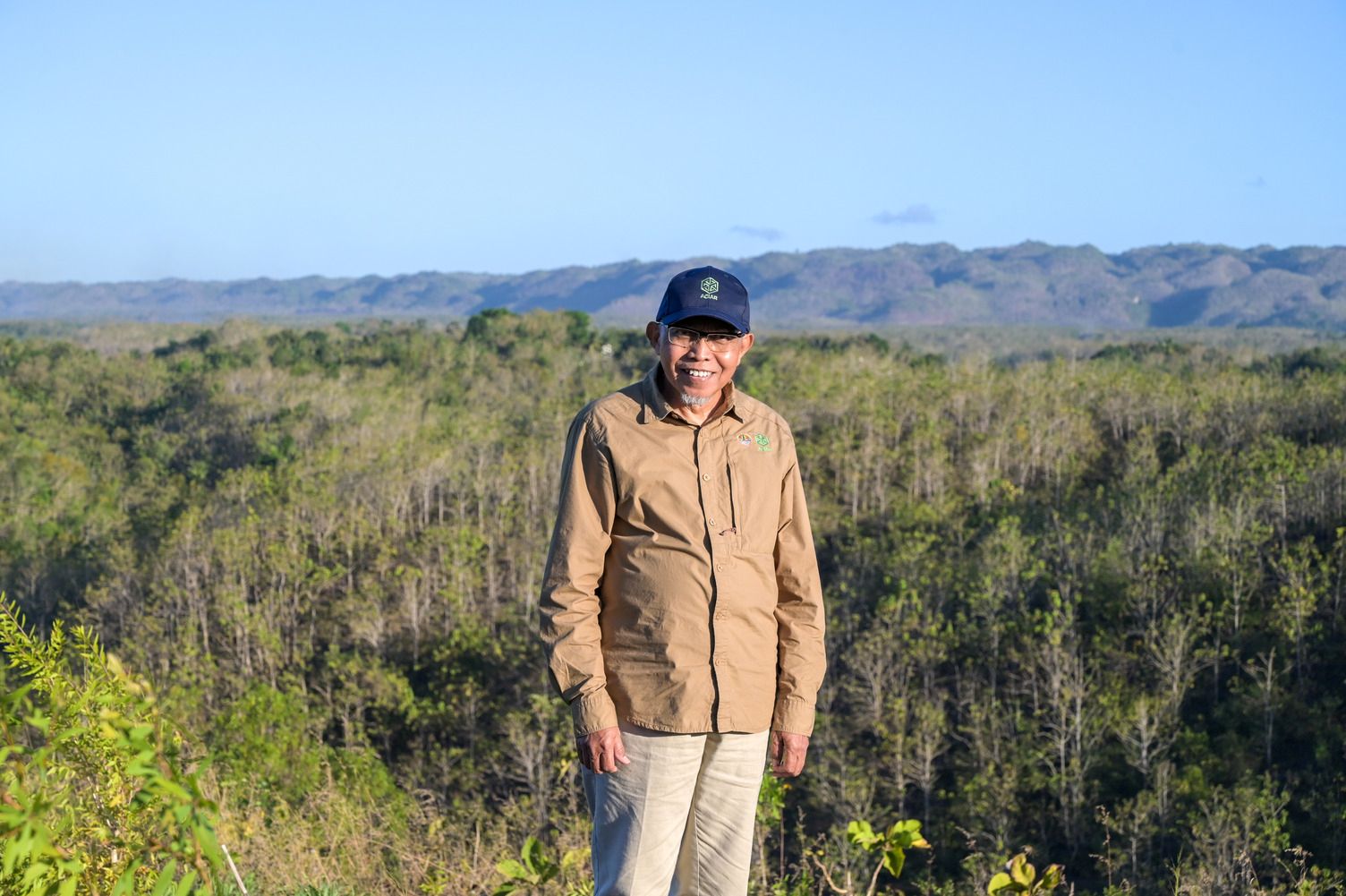
Some people stumble into their profession by chance. Others choose it for practical reasons. For Dr Anto Rimbawanto, the path seemed written in his name.
A senior Indonesian forester whose work focused on the country’s native forest species, Dr Rimbawanto likes to joke that he was destined for the field. Part of his surname, rimba, means ‘lush forest’ in Indonesian.
‘My profession is dictated by my name,’ said Dr Rimbawanto with a laugh. ‘I was born in a village surrounded by forests, and my father also happened to be a forester, so it is in my blood.’
For more than four decades, Dr Anto Rimbawanto dedicated his career to advancing the understanding and sustainable management of Indonesia’s forest resources as a researcher with the then Ministry of Environment and Forestry’s Agency for Forest Research and Development and, later, the National Research and Innovation Agency (BRIN).
Through much of that journey, collaboration with ACIAR connected him and his team with Australian researchers through joint research, training and capacity development.
Having stepped back from a lifetime devoted to forestry, Dr Rimbawanto reflects on a partnership that has connected researchers, strengthened scientific capacity and delivered lasting benefits for Indonesia’s forestry sector and the communities that depend on it.
A growing partnership
ACIAR’s forestry partnership in Indonesia spans more than three decades, bringing together researchers and institutions from both countries to address shared forestry challenges and deliver practical benefits for forest-dependent communities. The partnership has also deepened Australia’s understanding of tropical forestry systems and plantation species across the region.
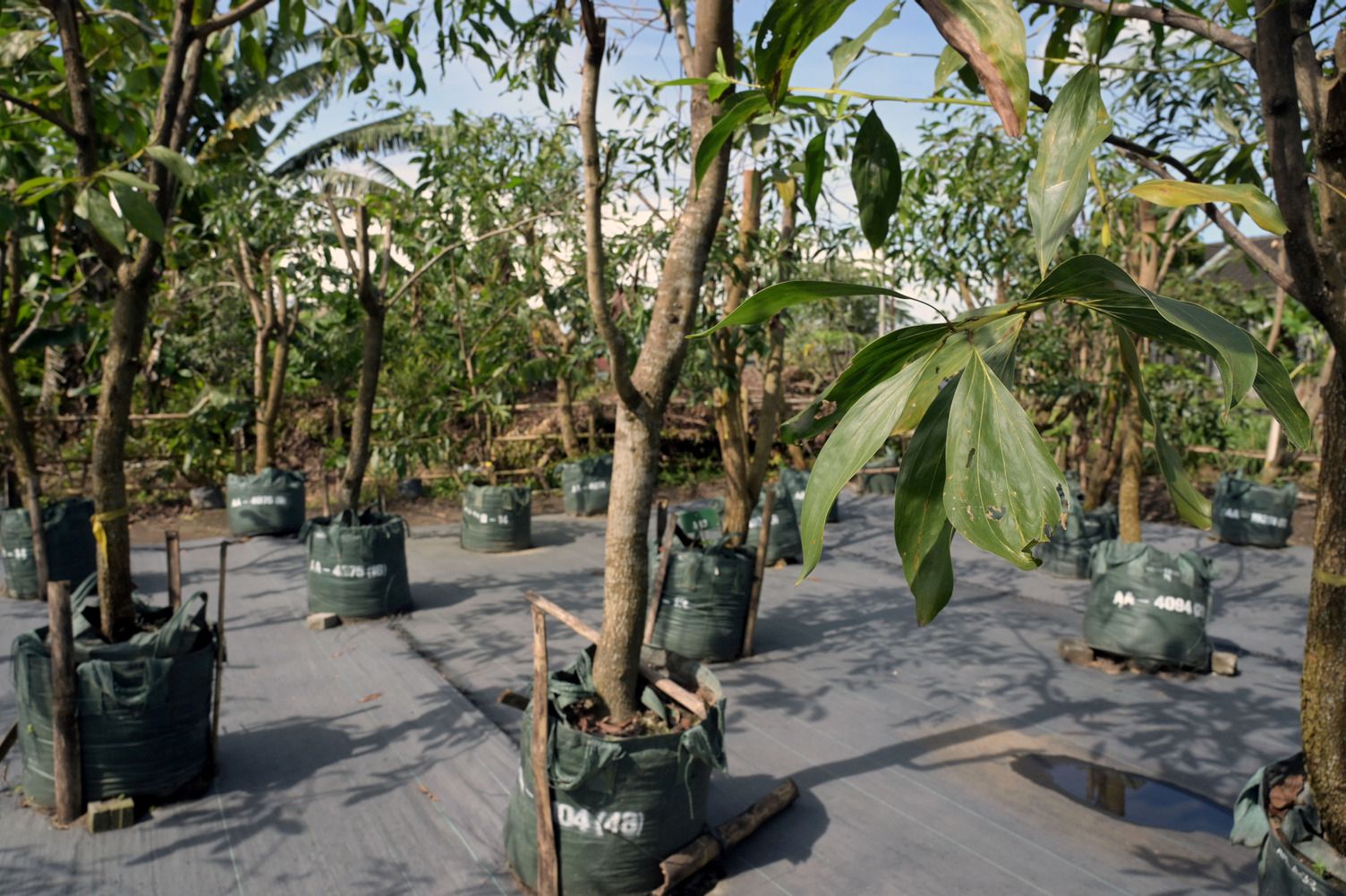
Dr Rimbawanto was at the centre of many of these collaborations. A specialist in forest genetics and tree improvement, Dr Rimbawanto played a leading role in eight ACIAR-supported forestry projects over 25 years. His work tackled plantation forest diseases, improved cajuput varieties (Melaleuca cajuputi) and applied DNA technologies to strengthen plantation productivity and resilience.
For Dr Rimbawanto, the research was never just about trees. ‘It is about ensuring plantation forests continue to provide materials and economic opportunities for communities across Indonesia.’
Collaboration that crosses borders
Over the years, Dr Rimbawanto collaborated with Australian researchers from universities, research agencies and industry on a wide range of forestry challenges.
One of ACIAR’s greatest strengths is its ability to connect Indonesian research institutions with leading research organisations and universities in Australia. Working together allowed us to share knowledge, learn from different approaches and address challenges that affect both our countries.
Dr Anto Rimbawanto.
One recent example is a regional forest biosecurity project that brought scientists and communities together to detect threats early, strengthen surveillance and protect forest livelihoods. By combining Indonesian expertise and local knowledge with Australian innovation and regional networks, the project contributes to regional preparedness for emerging forest pests and diseases that cross national boundaries.
In the project, Dr Rimbawanto tested acacia and eucalyptus species that are shared by Indonesia and Australia and widely grown in Indonesia to supply the pulp and paper industry. The work identified varieties better suited to disease-prone areas, supporting productivity and giving communities access to more resilient planting material.
Research that extends beyond laboratories
Some of Dr Rimbawanto’s most widely felt impact came through his work on cajuput, a tree species native to eastern Indonesia, Timor-Leste and northern Australia. Its oil has been a fixture in Indonesian households for generations as a trusted natural remedy.
‘Like many Indonesians, I grew up with cajuput oil,’ said Dr Rimbawanto. ‘I still use it today to cure colds, stomach discomfort and insect bites-although my cats do not seem to appreciate it as much and tend to keep their distance afterwards,’ he joked.
As demand for cajuput oil grew, his work on improved planting material and practical guidance contributed to more productive plantations and more reliable incomes.
The research also became an important part of his partnership with ACIAR, which supported his team’s breeding program through specialised training, technical expertise and tools, including analysis of leaf oil content.
Our collaboration with ACIAR on cajuput also provided valuable capacity building for our team members, enabling our researchers to conduct our own analyses and become more independent and creative in our work.
Dr Anto Rimbawanto.
The impact of this work extended well beyond the laboratory. In 2022, the Kofarwis farmer group in Biak Numfor Regency that he supported received the Kalpataru Award, Indonesia’s highest environmental accolade. Their experience has since become a model for community-led, environmentally responsible forestry in other villages.
Two years later, Dr Rimbawanto received Satyalancana Pembangunan, Indonesia’s Medal of Honour for Development, recognising years of work with farming groups and communities, including supporting the shift from illegal logging to sustainable cultivation.
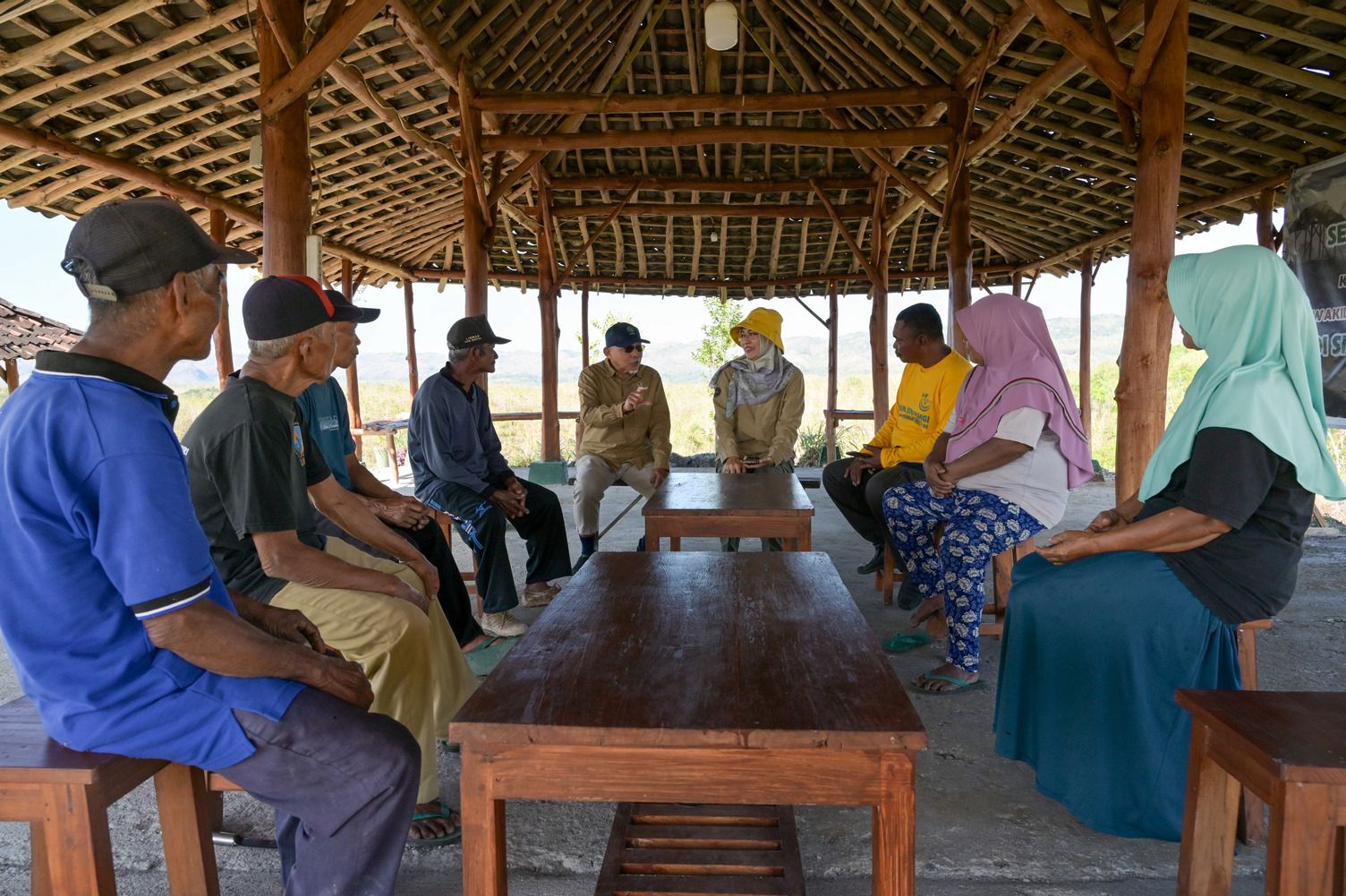
Closer to home, Dr Rimbawanto worked with cajuput farmers in Yogyakarta, including the Shafaluna community, providing planting material, technical knowledge and access to resources.
A shared journey and a lasting legacy
Looking back on his years with ACIAR, Dr Rimbawanto said the relationships built on trust and mutual respect have been among the most rewarding parts of the experience.
‘When I think about my experience with ACIAR, what I remember most is the sense of partnership,’ said Dr Rimbawanto. ‘From defining research priorities to communicating the results, Indonesian and Australian teams contributed as equals.’
‘Dr Rimbawanto has been much more than a research partner to ACIAR,’ said Dr Nick Hogarth, ACIAR Research Program Manager for Forestry.
‘He has been a trusted colleague, mentor and friend to many people across our organisation and Australian research partners.’
Dr Hogarth said Dr Rimbawanto’s generosity and commitment to supporting others had strengthened relationships, knowledge and capability that would continue benefiting Indonesia’s forestry sector into the future.
‘ACIAR recognises Dr Rimbawanto’s contribution with deep respect and gratitude.’
For Dr Rimbawanto, one of the strongest legacies of his work with ACIAR has been the people-to-people connections it created.
Through ACIAR-supported capacity development programs, ten researchers and academics from Indonesia’s forestry sector whom he mentored completed John Allwright Fellowship and postgraduate studies in Australia, returning with new skills, professional networks and strengthened research expertise.
‘These education pathways matter because they extend the value of individual projects,’ said Dr Rimbawanto.
Yet for him, the most meaningful achievements are not research papers or awards, but the benefits and opportunities created for farmers and their families. He speaks of the satisfaction of seeing farmers succeed: growing better trees, building viable businesses and earning enough to send their children to school.
I believe in the importance of empowerment. I want to build our farmers’ confidence in running their own business, having total control of the whole process, seeing themselves not just as suppliers of raw materials but as producers with their own products.
Dr Anto Rimbawanto.
Change, he reflected, often takes time.
‘It took us a long time to see the uptake of genetically improved seeds for planting. But the key is to keep producing proof and keep talking.’
Having stepped back from his formal role, Dr Rimbawanto takes comfort in knowing the work will continue through the people and partnerships he leaves behind.
‘I am happy to know that I am leaving behind farmers who have gained confidence, and a team that will carry this work forward.’
When asked what he considers his greatest achievement, Dr Rimbawanto said it is ‘having good friends, surrounded by good people who will go the extra mile to make all this possible.’
ACIAR is proud to be among those friends and to have shared part of Dr Rimbawanto’s story.
Learn more about ACIAR’s investment in the Indonesian forestry sector here.