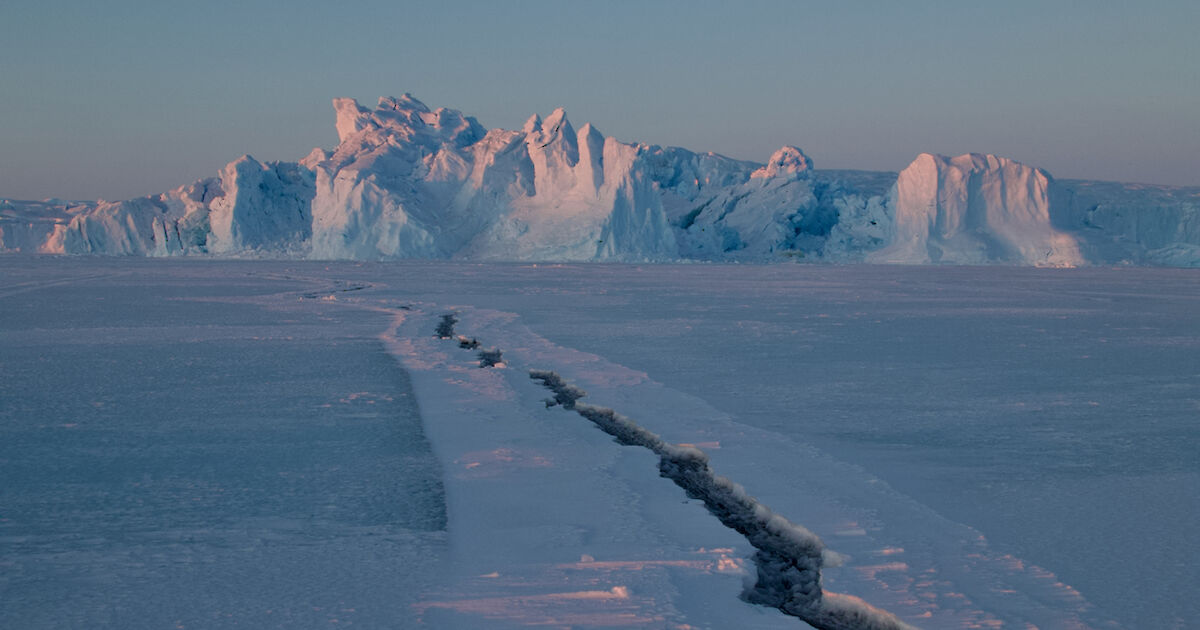
A side-event at COP31 in Türkiye entitled ‘Why changes in Antarctica and the Southern Ocean matter for the Pacific and global climate’ was hosted by the International Cryosphere Climate Initiative (ICCI) on the second day of the conference.

Photo: Claire Elliott
The scientists are from the Australian Antarctic Division (AAD), the Australian Antarctic Program Partnership (AAPP) at the University of Tasmania, and the Australian Centre for Excellence in Antarctic Science (ACEAS).
Their key message was that even a relatively small and brief overshoot of the 1.5°C warming threshold increases the risk of crossing critical tipping points such as irreversible losses from the Antarctic Ice Sheet.
Dr Krystyna Saunders from the AAD said that what happens in Antarctica does not stay in Antarctica.
“Collapse of parts of the Antarctic Ice Sheet would transform the natural world and human society, leading to multi-metre sea level rise exceeding the average elevation of some Pacific Island nations.”
“Continued loss of ice may amplify warming through climate feedback, while heatwaves, ocean change and ice melt intensify biodiversity loss in Antarctica and beyond.”
“These changes can also affect Pacific ecosystems and communities through disruptions to global ocean circulation, weather patterns, and the supply of nutrients that support marine productivity,” she said.
Dr Karen Palmer from AAPP and ACEAS said that multi-metre sea-level rise is now locked in, if not by 2100 then within the coming centuries.
“More must be done to protect the human and environmental systems that are too essential to fail, and everything possible must be done to prevent one to two metres of sea-level rise becoming 15 metres.”
“This requires strengthened international collaboration and commitment to observing and information systems that support global through to local actions,” she said.
Dr Elizabeth Shadwick from AAPP said that the Southern Ocean, which covers 30% of the global ocean surface, accounts for 40% of the global ocean CO2 uptake and provides an essential service as a ‘climate shock absorber’.
“The remaining carbon budget to limit warming to 1.5°C is now equivalent to less than four years at the current rate of emissions. Given the importance of the Southern Ocean as a carbon sink, we must commit to sustained observations so that predictions of future changes can be used to support urgent action.”
Professor Nathan Bindoff from AAPP and ACEAS said that abrupt and extreme changes in the south will be exacerbated by a temperature overshoot.
“Shifts in the overturning circulation, a rapid decline in sea ice, mass loss from the Antarctic Ice Sheet: all of these changes have been a surprise for the oceanographic community. No-one actually saw them coming.”
“This really makes the point that we must start tracking the Southern Ocean system on a much more regular and frequent basis as these observations are critical to track the benefits of mitigating emissions and also the risk of dangerous changes.”
Earlier this year the Australian Antarctic Program made a submission to the United Nations Framework Convention on Climate Change (UNFCCC) Mission to Belem 1.5, about the implications of a temperature overshoot for Antarctica and the Southern Ocean, with a key recommendation that:
“Antarctica and the Southern Ocean should be considered within the UNFCCC climate negotiations as a core component of the Earth system. Changes in this region and the crossing of critical thresholds are directly relevant to assessing climate risks, hazards, losses and damages globally – now and into the future.”