The honeybee mite, Varroa destructor, finally breached Australia’s biosecurity defences four years ago, and is here to stay . Even more concerning, our standard treatments – such as specialised pesticides – are already failing .
What does this mean for Australians, and what can we do about it?
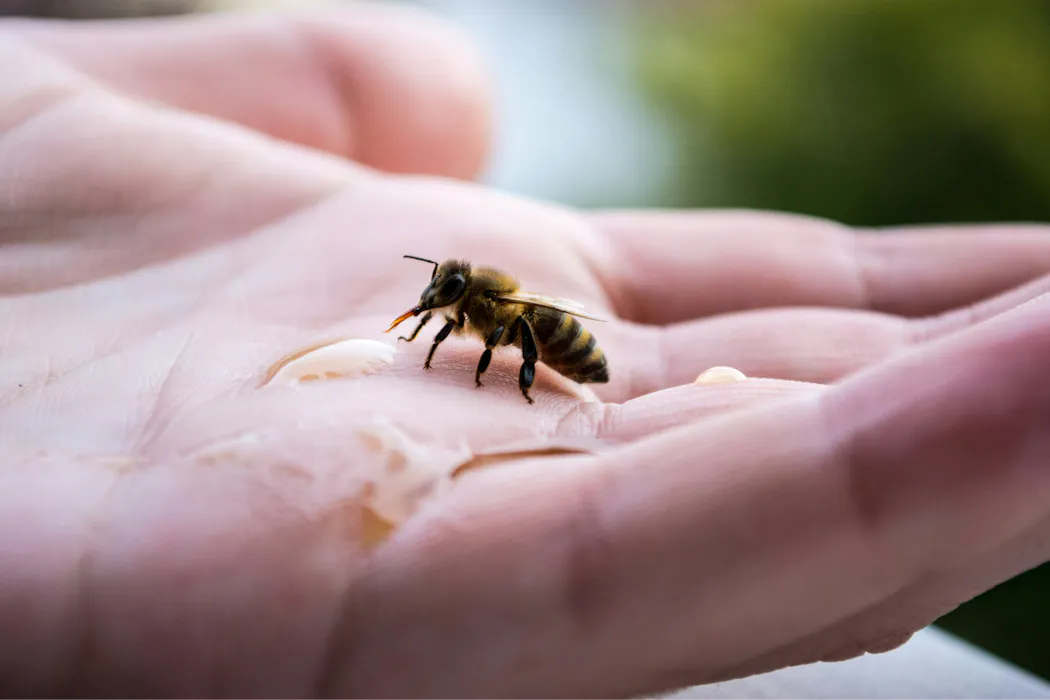
Roughly the size of a pinhead, the parasitic mite is regarded as the most destructive pest of honeybees worldwide. It feeds on bees, weakening colonies and causing their collapse.
For decades, Australia was the only continent free of the mite. That changed in 2022 , when Varroa was detected in sentinel hives at the Port of Newcastle, New South Wales.
An ambitious eradication campaign was launched, but abandoned by 2023. Today, Varroa is established across much of Australia’s eastern and southern states. The focus has shifted from eradication to management, and we now face a new threat – treatment-resistant mites.
Varroa is more than just a beekeeping problem. Managed honeybees underpin a significant portion of Australian agriculture, contributing about A$14 billion annually . More than 30% of food production depends on pollination from bees. When bee colonies collapse, the effects ripple through food production, farm profitability and ultimately food prices.
Native pollinators also play an important role , but they cannot fully replace managed honeybees for many large-scale crops.
This makes the health of honeybee populations critical to both food security and biodiversity.
Chemical control is under pressure
Controlling Varroa is costly and labour intensive for both commercial and backyard beekeepers. Current strategies rely heavily on chemical miticides – a type of pesticide engineered to control mites. These fall into two broad groups.
“Hard” miticides, such as formamidines (amitraz or Apivar) and pyrethroids (Bayvarol), are synthetic chemicals designed to kill mites quickly. “Soft” miticides, including formic acid, oxalic acid and thymol, are naturally derived compounds that tend to linger less in the environment.
While these treatments can suppress mite populations, they’re not a long-term solution. Varroa is well known to evolve resistance, and pyrethroid- and amitraz-resistant Varroa mites have already been found in Australia less than four years after the mite’s arrival.
A new generation of pest control
As conventional treatments falter, researchers are exploring new technologies. One of the most promising is RNA interference , or RNAi. RNA is a molecule found in all living organisms that helps control how genes are expressed.
RNAi is a natural process where small RNA fragments “switch off” specific genes, blocking the production of essential proteins the pests need to survive. The RNA fragments can be delivered to bees via sugar syrup. This then gets distributed through the hive and Varroa are exposed either by feeding or absorption.
RNAi pesticides are designed to be species specific, meaning they’re unlikely to cause harm to other organisms. This makes them more desirable than chemical pesticides that can have widespread effects on beneficial insects, the environment and even human health if not applied correctly.
RNAi treatments are also unlikely to give rise to genetic resistance. This is because resistance usually involves single-point changes in the gene sequence, while these treatments target larger gene segments. RNAi is also exceptionally safe because it don’t linger in the environment as much as a chemical pesticide might.
Furthermore, RNAi doesn’t create genetically modified organisms, because the RNA fragments don’t become part of the host genome.
Not just theoretical
RNAi pesticides are no longer theoretical. In 2025, the United States approved the first RNAi-based Varroa treatment, marketed as Norroa . This product targets a gene essential for mite reproduction, effectively acting as a form of “birth control” that reduces population growth within hives.
However, Norroa has its limitations. Because it suppresses reproduction rather than killing mites outright, it’s most effective when mite numbers are low. In heavily infested colonies, it can’t reduce populations quickly enough to prevent collapse.
Research is now focused on making RNAi more effective and adaptable. One key question is which genes to target. Many current research approaches focus on “housekeeping” genes – ones essential to mite biology and therefore survival. But these are often similar across species, raising the risk the treatment could kill other species we don’t want to wipe out.
Our research group is exploring an alternative strategy to target genes involved in the mite nervous system or muscles. These are the same systems affected by existing miticides, but RNAi would provide greater specificity.
A pest like no other
Varroa is the latest in a long line of invasive pests to reach Australia. But its impact is unusually far-reaching, touching agriculture, ecosystems and food supply.
The situation is already serious. Beekeepers are facing rising costs for miticides (which may or may not work) and hive losses, and treatment options are narrowing.
Yet there is also a window of opportunity, and Australia can still take proactive steps to manage Varroa effectively. Norroa and similar emerging RNAi treatments are not yet available for use in Australia, and would need to receive approval from the Australian Pesticides and Veterinary Medicines Authority ( APVMA ).
Investment in research, including next-generation tools like RNAi, will be critical. So too will be coordinated management strategies, monitoring, and support for beekeepers adapting to this new reality.
The alarm bells are ringing. But with the right mix of innovation and action, we still have a chance to protect Australia’s bees and safeguard this billion-dollar industry.