A major new national health initiative led by Flinders University is set to transform the early detection and prevention of glaucoma, the leading cause of irreversible blindness in Australia.
With glaucoma affecting almost 400,000 Australians – and half of them unaware they have it – targeted action is urgently needed to reach the thousands of people at highest risk.
Up to one in four Australians with a family history of glaucoma will develop the disease, making them up to nine times more likely than the general population to experience vision loss. Early diagnosis is critical, yet current screening approaches cannot reliably identify who within a family is most at risk.
Backed by a $939,500 National Health and Medical Research Council (NHMRC) Partnership Project, the Flinders‑led initiative will introduce a world‑first targeted screening program using accredited polygenic risk score (PRS) testing to pinpoint which relatives of glaucoma patients face the greatest genetic risk.
By combining PRS results with comprehensive eye examinations and a recall system to support follow‑up for high‑risk individuals, the program aims to detect glaucoma earlier, begin treatment sooner and prevent avoidable blindness.
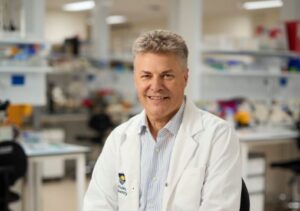
Chief investigator – Co-Director of the Flinders Health and Medical Research Institute Eye and Vision Flagship, Professor Jamie Craig, from the College of Medicine and Public Health – will lead the initiative with partners Seonix Bio, Southern Adelaide Local Health Network (SALHN) and Glaucoma Australia.
“Glaucoma is highly hereditary, yet we currently lack precise tools to identify which relatives are genuinely at risk,” says Professor Craig.
“This program brings together cutting‑edge genetic testing, clinical expertise and patient‑centred resources to deliver earlier diagnosis and intervention. It represents a major step forward in preventing avoidable blindness.”
The program will engage a large cohort of Australians with a family history of glaucoma, offering personalised genetic risk results alongside detailed eye assessments.
High‑risk participants will receive tailored reminders and follow‑up pathways, helping reduce drop‑off from care which is a key contributor to preventable vision loss.
The initiative will also produce new national clinical guidelines for the use of glaucoma PRS testing, education resources for eyecare professionals, and clear, accessible information for patients and families to support widespread adoption across Australia.
Seonix Bio, Australia’s first provider of clinically accredited glaucoma PRS testing, will generate the accredited genetic risk reports used to guide clinical screening decisions.
SALHN and its network of ophthalmologists and its community optometrist partners will deliver clinical assessments across metropolitan, regional and interstate locations.
Glaucoma Australia, the nation’s leading glaucoma advocacy organisation, will drive consumer engagement, resource distribution and communication with families affected by the disease.
Dr Sinead O’Connell, Vice President of Operations at Seonix Bio, says the partnership will accelerate real‑world impact.
“SightScore, our accredited polygenic risk score, is already helping clinicians identify individuals at significantly elevated risk of glaucoma. This project is an important opportunity to embed this technology into routine practice and deliver real‑world benefits to families affected by the disease,” says Dr O’Connell.
Flinders researchers say the collaboration between genetic scientists, clinicians, educators and consumer advocates will drive meaningful, long‑term impact.
“This is about giving Australians the knowledge, tools and clinical pathways to protect their sight before damage occurs,” says Professor Craig.
“It’s another example of Australian‑led innovation setting a new benchmark for eye‑care prevention, with benefits that will be felt for generations.”
The NHMRC Partnership grant (GNT2053517) ‘New targeted glaucoma screening program for high genetic risk individuals’ was 1 of 9 new NHMRC Partnership Project grants totalling $13.7 million, with an additional $17.4 million committed by funding partners announced this week.