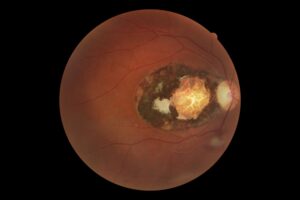
One third of the world’s population is infected with the Toxoplasma parasite, which can cause ocular toxoplasmosis, an eye infection that can damage the retina and result in permanent vision loss.
Although often seen as an unavoidable part of everyday human-animal interaction, toxoplasmosis is preventable and controllable.
A new global paper led by Associate Professor João Furtado from the University of São Paulo and Professor Justine Smith from Flinders University has brought together experts from the Americas, Europe, Africa, and Asia.
It calls for the disease to be formally recognised as a neglected tropical disease (NTD) by the World Health Organization (WHO).

Senior author and internationally recognised ophthalmologist, Professor Justine Smith, from FHMRI Eye & Vision at Flinders University, says the impact of toxoplasmosis on eyesight is significant but widely overlooked.
“Toxoplasmosis is a leading eye infection and a major cause of vision loss worldwide, yet it receives limited attention in global health agendas,” says Professor Smith.
“With WHO’s recognition, we can make substantial progress in prevention and management of this infection.”
People can become infected through eating undercooked meat, contaminated produce or water, or exposure to cat faeces.
In pregnancy, infection can be passed to the unborn baby, leading to miscarriage or permanent damage to the brain and eye. Many affected children develop vision problems that worsen over time.

Lead author Associate Professor João Furtado, a prominent Brazilian ophthalmologist, researcher and educator based at the University of São Paulo, says the disease is often misunderstood.
“Toxoplasmosis is often seen as inevitable, but it has well characterised transmission pathways and can be prevented and controlled,” says Associate Professor Furtado.
He says the most severe outcomes, including blindness, occur in communities with limited access to healthcare, safe food, clean water and prenatal care.
“These impacts could be reduced through practical public health measures such as improved food safety, clean water, sanitation and better access to antenatal care,” he says.
Despite its global burden, toxoplasmosis receives less research funding and policy attention than diseases with similar or lower impacts.
The researchers say formal recognition as an NTD would unlock funding for research, prevention and treatment.
“It would support countries to integrate toxoplasmosis prevention into maternal and child health programs, food safety systems and primary care,” says Professor Smith.
Recognition would also place the disease within the global One Health agenda, encouraging coordinated action across human, animal, agricultural and environmental sectors.
“Addressing toxoplasmosis requires collaboration across multiple fields,” says Associate Professor Furtado.
The team says other diseases have seen rapid gains after NTD classification, including improved health outcomes.
“At a time when the WHO NTD framework emphasises equity, integration and multisectoral action, toxoplasmosis represents a clear and actionable gap that warrants corrective action,” says Professor Smith.
“Our statement is a call to action to finally address the unacceptable global health burden of toxoplasmosis.”
The paper also outlines a practical roadmap for action, including better screening in pregnancy, improved food and water safety, and coordinated global responses.
The paper, ‘Toxoplasmosis meets the World Health Organization criteria for a neglected tropical disease’ is published in PLOS Neglected Tropical Diseases journal. Lead author is Associate Professor João Furtado (Universidade de São Paulo) and co-author is Professor Justine Smith (Flinders University) with the full list of authors available in the published paper. DOI: 10.1371/journal.pntd.0014425
Acknowledgements: Fundação de Apoio ao Ensino, à Pesquisa e à Assistência do Hospital das Clínicas da Faculdade de Medicina de Ribeirão Preto da Universidade de São Paulo (1395/2025 to JMF), Brazilian National Council for Scientific and Technological Development (306547/2025-2 to JMF), National Health and Medical Research Council of Australia (2025222 to JRS).