As Grand Theft Auto VI edges closer to release, one of the biggest debates surrounding Rockstar’s crime opus isn’t violence or car chases. It’s about romance.
A wave of social media commentary has questioned whether engaging with the incredibly immersive new relationship mechanics could amount to infidelity for players in real-life relationships. Users have shared posts claiming that if you romance a character in a video game, it equates to cheating.
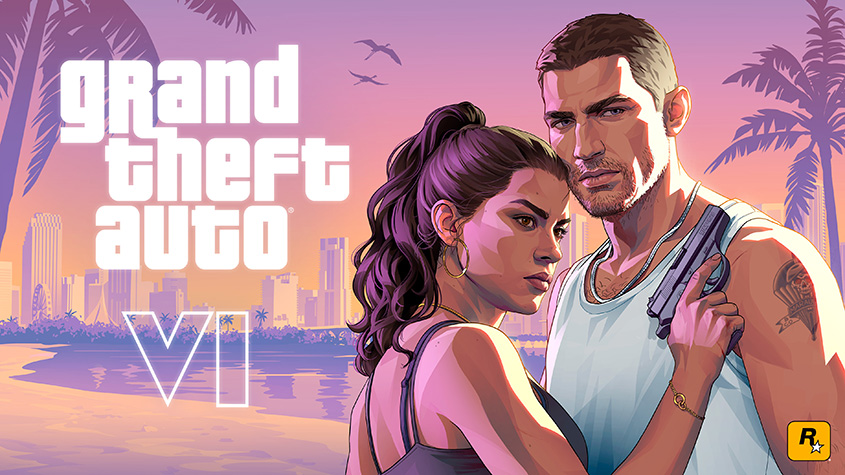 GTA6 has already made an estimated US$600 million in pre-sales revenue, even a month before its release. The game is widely forecast to set new record multi-billion-dollar sales worldwide. Photo: Rockstar.
Some go as far as claiming even playing the game is immoral. “There is no human way my fiancé is playing GTA VI after I just saw that you have to maintain a relationship with a girl…you have to take her on dates, and you can have sex with her. Don’t let your boyfriend or fiancé play GTA 6,” Shelby Haas posted. TikTok user Eumiverse confronted her partner on camera: “I can show you every text she sends me and I will never respond,” her boyfriend promised in a bid to change her mind. “You’re not going to buy the game, or you’re not going to have a PS5,” another disgruntled girlfriend threatened in a video that racked up 167,000 likes.
The controversy follows Rockstar’s reveal that GTA VI will feature the series’ first playable couple.
Players step into the shoes of Jason Duval and Lucia Caminos – an ex-military drug runner and a fighter fresh out of prison, respectively – and can choose to either play as a couple or go off and cause chaos independently. The fluid system enables players to take the wheel as Jason in one moment, then fire on pursuers as Lucia out of the passenger window the next. Whether they do so as lovers or simply as partners in crime is entirely up to you.
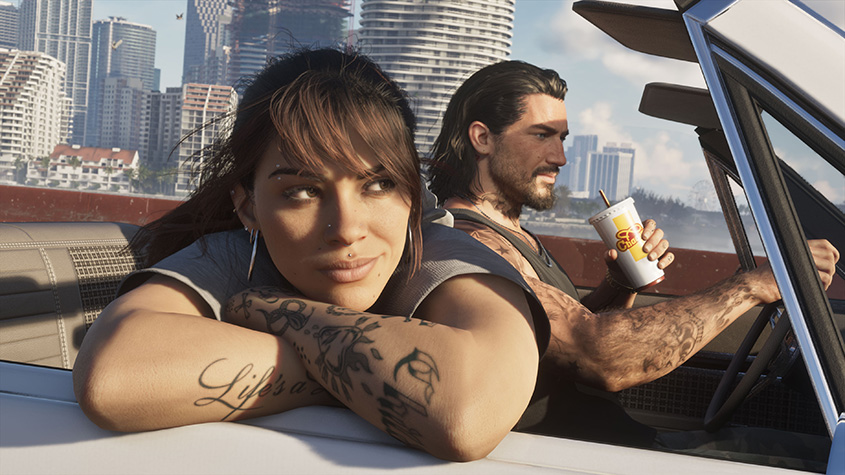 Lucia and Jason (pictured) are Grand Theft Auto’s first playable couple. Photo: Rockstar.
Players can strengthen or weaken the relationship through everyday interactions like spending time together, shopping, exercising, and even replying to text messages. The trailers alone feature a slew of intimate cutscenes from Jason and Lucia’s fugitive tale (a steamy shower kiss featuring an ankle bracelet, hips swinging on a nightclub dance floor, and hands held as they jump off a high rise roof). For a franchise long associated with mayhem and underground sex work, the addition of a realistic relationship has provoked an unexpected public outcry.
But is playing a game really cheating? Experts in game design, development, and philosophy say the answer is “complicated”.
“This is not really a question about video games,” Macquarie University Associate Professor Dr Malcolm Ryan tells Lighthouse. “There is no one definition of what cheating on your partner is. It’s what you and your partner agree is cheating.”
However, the debate taps into a broader question researchers have been grappling with for years: how much of ourselves do we bring into the characters we control?
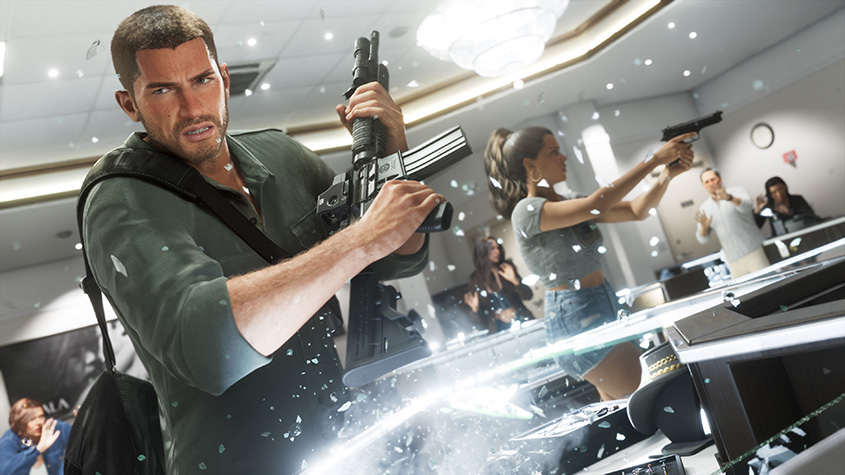
GTA VI is very consciously staged as a “Bonnie and Clyde-type” narrative. Photo: Rockstar.
Ryan, who researches ethics and player behaviour in games, says studies conducted through Macquarie University’s Serious Games Research Network suggest players often carry their real-world moral frameworks into virtual environments.
“It’s very easy for us to say it’s just a game, it’s not real,” he says. “Then we turn around and say games are great for learning because there’s so much transferability between what we do in games and what we do in real life. You can’t have it both ways.”
Research led by Ryan and Professor Paul Formosa through the narrative game The Great Fire examined how players respond to moral decisions and social influences inside virtual worlds. Their findings suggested players frequently interpret in-game actions through the lens of their own values rather than treating games as consequence-free spaces.
But Ryan argues that labelling GTA VI players as “cheaters” is too simplistic.
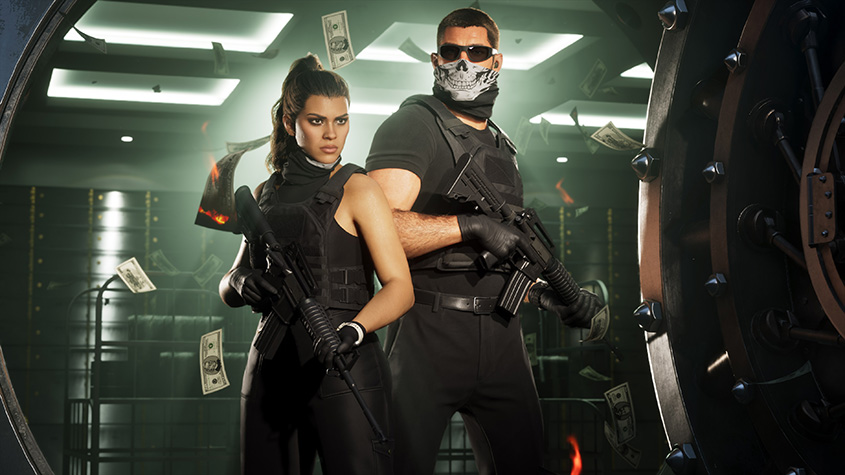 Jason and Lucia’s appearance will reflect their in-game actions, including their diet, gym routines, and lifestlye. Photo: Rockstar.
“A lot of players do feel uncomfortable playing games in which they have the option to do something that goes against their personal morality. At the same time, there’s no value in making a game that morally tempts you unless the tempting thing is actually tempting, right? The thing I like about these characters is they’re not irredeemably or stereotypically bad.
“They are making bad choices for understandable reasons. Having more works of art – and I do consider games to be art – engage with moral difficulty is a good thing.”
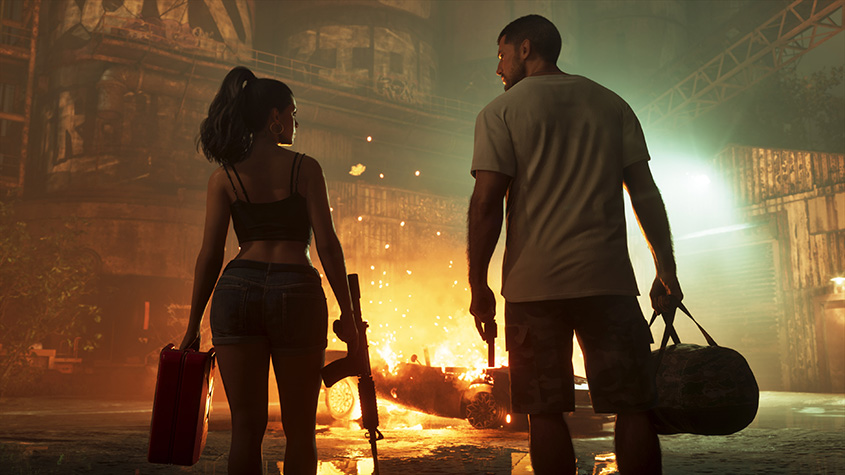 There are no in-game rewards for a happy relationship. Jason and Lucia’s dynamic functions more as a role-play mechanic. Photo: Rockstar.
For philosopher Thomas Montefiore, whose doctoral research examined the ethics of virtual worlds and player behaviour, the key question is one of identity.
“When you’re playing GTA VI, are you in a relationship with Lucia, or is Jason in a relationship with Lucia and you’re playing as Jason?” he said. “Who is actually in the relationship?”
Montefiore’s research explored how players cross fictional moral boundaries in games and the extent to which actions in virtual spaces should be treated as morally significant.
He argues that romance in games differs fundamentally from real-world relationships because players engage with it as fiction. “If you were reading a book where the protagonist experiences a romance and you strongly identify with that character, are you committing an act of infidelity?” he said. “Presumably not.”
 Vice City, based on Miami, is twice the size of Los Santos, the version of Los Angeles in Grand Theft Auto V. The overall map, Rockstar said, is three times as large as the playable area of its previous game, Red Dead Redemption 2.
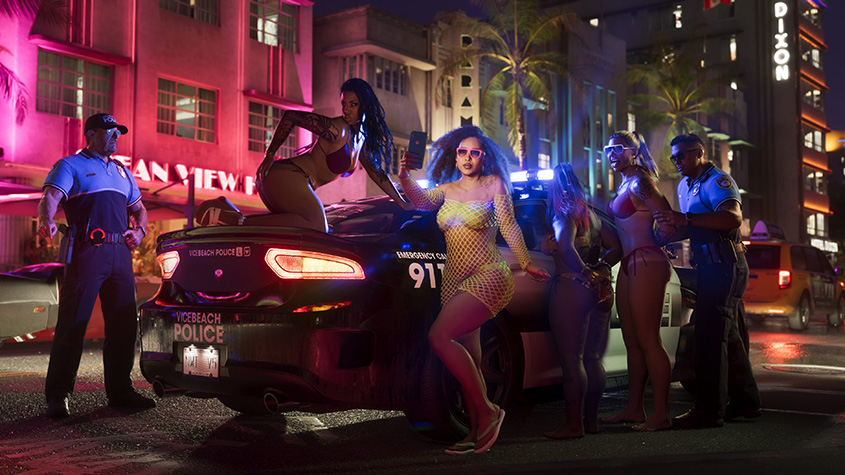 Grand Theft Auto VI has well over 600,000 animations, compared with 55,000 animations in Grand Theft Auto V and 300,000 animations in Red Dead Redemption 2. Photos: Rockstar.
Dr Cameron Edmond, a senior game development lecturer, sees that distinction as central to the GTA debate. “When I look at it, I don’t say, ‘I’m a guy holding hands with a girl’,” he says. “I say, ‘I’m playing as these two characters, and I’m making them hold hands’.” For some players, he says, the characters function as extensions of themselves. For others, they are more like actors in a story being directed by the player. The level of immersion can shape how people experience both romance and morality in games.
GTA VI is by no means the inventor of in-game dating. For at least 20 years dating and romance have been a significant element of all sorts of different titles. “Hug someone ten times and then you’re married is what The Sims taught me,” Edmond jokes.
The relationship system does represent a significant shift for a franchise often criticised for its portrayal of women. Lucia is the first fully fleshed-out female lead in a mainline GTA title. Before her, it’s male protagonists all the way down, dating back to 1999. “As soon as we had that Bonnie and Clyde concept,” Head of Narrative Rupert Humphries told the New York Times , “we knew it was the only way for us to go with this game.”
Edmond believes at least some of the hostility directed at Lucia (who is often referred to in online posts as “Jason’s girlfriend”) reflects misogyny, rather than genuine concerns about game design. “This game has suddenly given us a woman character, who is of colour, with agency and that is causing certain groups online to get very upset,” he says.
 Professor Cameron Edmond suspects at least some of the backlash is an “ugly” response to a female character with agency. Photo: Rockstar.
Part of the complexity stems from the way games are designed.
Developers deliberately manipulate how closely players identify with the characters they control, Ryan says. “Just showing the world through a character’s eyes in first person, versus third person, creates a closeness with that character,” he says.
The stronger that identification becomes, the more likely players are to feel personal ownership over their characters’ actions. For him, what makes Rockstar’s approach exciting is not the romance itself, but what it adds to the storytelling. “Every person you murder and every bank you rob is now contributing towards these characters building a life together,” he says. “It’s a real advance.”
Whether players embrace that added emotional complexity, we’ll have to wait for the November 19 release to find out.