Graphene is an exceptionally useful material for creating batteries, catalysts, and electronic devices. Yet producing graphene typically requires temperatures as high as 900°C, limiting energy efficiency and making structural control difficult. To make graphene production more practical, a recent study has overcome this long-standing temperature barrier.
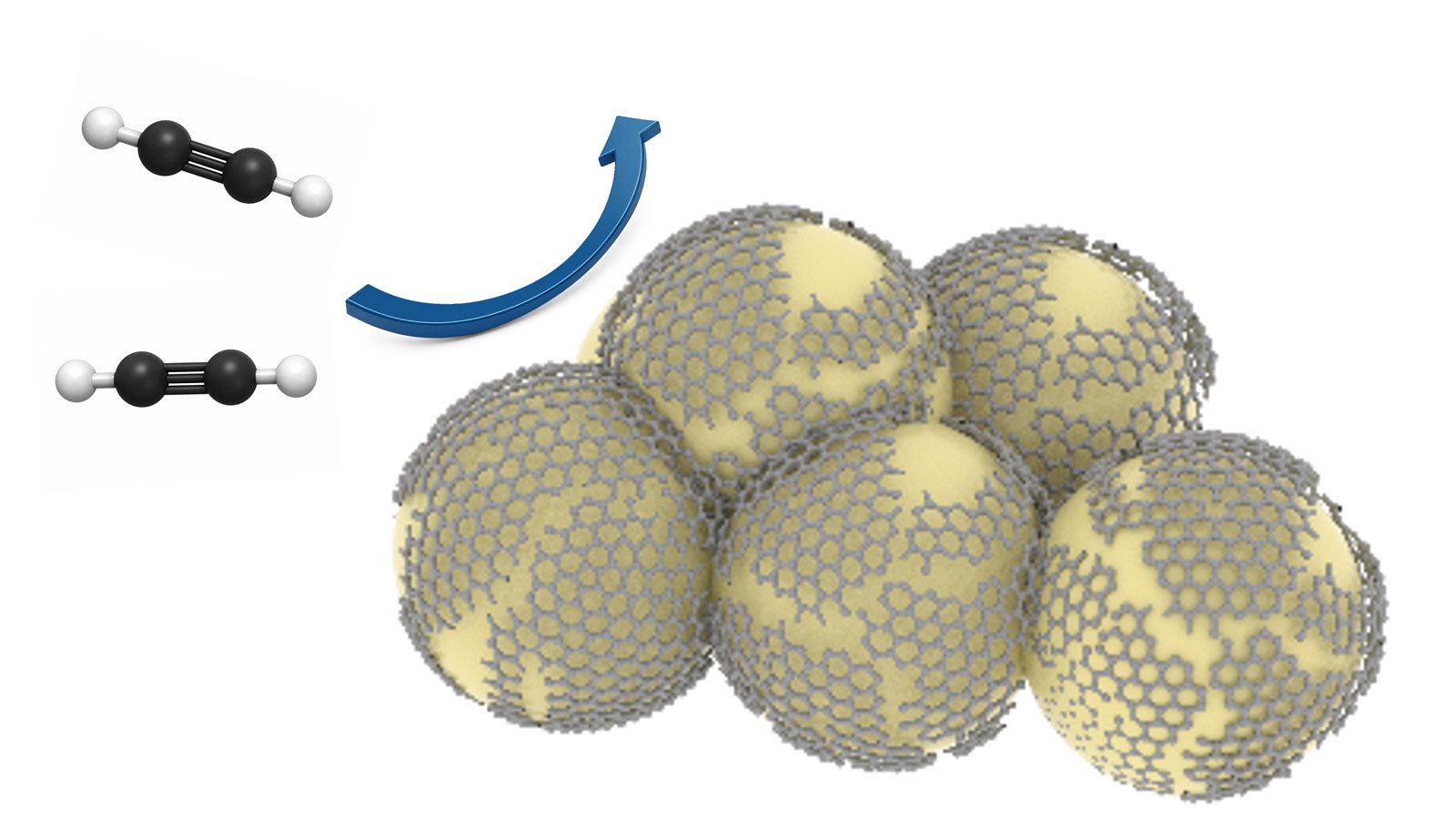
In a study published in the Journal of the American Chemical Society on June 8, 2026, a joint research team from Tohoku University and Queen Mary University of London successfully synthesized graphene-based materials at temperatures as low as 300 °C. They achieved this by utilizing acetylene gas over a cerium oxide (CeO₂) surface.
The key lies in the interaction between acetylene and cerium oxide. Since cerium oxide readily forms oxygen vacancies on its surface, acetylene begins to decompose at temperatures as low as 113 °C. As the temperature reaches 300 °C, the acetylene extracts oxygen from the catalyst, generating additional oxygen vacancies that serve as active catalytic sites for graphene growth.
“Conventionally, controlling the structure of graphene-based materials during high-temperature chemical vapor deposition (CVD) is challenging because the process happens too fast,” explains Associate Professor Takeharu Yoshii, co-corresponding author from Tohoku University. “By switching to highly reactive acetylene and pairing it with cerium oxide, we established a low temperature growth process that enables much better structural control.”
By simply adjusting the CVD temperature, the team achieved unprecedented control over the material’s final form. At 300 °C, they produced blue-fluorescing graphene quantum dots. Bumping the temperature to 450 °C yielded aggregated graphene, while 600 °C resulted in high-surface-area porous graphene. This method opens new doors for sustainable resource recycling, as acetylene can be derived from industrial waste gases, biomass, and recycled plastics.
“Our findings provide a design blueprint for low-energy, eco-friendly carbon manufacturing,” says Professor Hirotomo Nishihara, co-corresponding author from the Advanced Institute for Materials Research (WPI-AIMR). “Instead of using surplus hydrocarbons or low-grade carbon resources as fuel, we can now aim to ‘upgrade’ them into high-value functional materials via recycling.”
This study successfully shatters the long-standing “high-temperature barrier” in graphene production. By simply adjusting the reaction temperature, the researchers demonstrated precise control to create completely different types of carbon materials, which could be applied to different technologies. The research team is excited to continue testing, so they can work on expanding the utility and scalability of this technology to move closer to practical application.
- Publication Details:
Title: Defect-Mediated Catalysis for Low-Temperature Formation of Graphene-based Materials
Authors: Mengxuan Zhang, Takeharu Yoshii, Qi Zhao, Yuichiro Hayasaka, Devis Di Tommaso, Hirotomo Nishihara
Journal: Journal of the American Chemical Society
DOI: 10.1021/jacs.5c20150