
More than half a century after he helped save the Great Barrier Reef from mining and oil drilling, pioneering conservationist John Busst has been honoured with two coral reefs named in his memory.
The two previously unnamed reefs (17-060 and 17-061), located off Mission Beach in Far North Queensland, have officially been named the John Busst Reefs in recognition of his extraordinary contribution to protecting the Great Barrier Reef.
Busst (1909-1971) was an artist and conservationist who, alongside acclaimed poet Judith Wright and members of the Queensland Littoral Society (now the Australian Marine Conservation Society), spearheaded the campaign to save the Great Barrier Reef from coral mining and oil drilling in the 1960s.
On Saturday, November 7, multiple generations of Reef scientists, conservationists and community leaders gathered at the newly named reefs to celebrate Busst’s legacy and continue his mission of protecting the natural wonder he fought so hard to save.
Legendary coral scientist Professor Charlie Veron, the first full-time scientist to work on the Great Barrier Reef, ceremonially christened the reefs with a splash of champagne.
The group also visited nearby Ellison Reef, where Busst and his fellow campaigners won a landmark battle against coral mining in 1967, helping pave the way for the Reef’s eventual protection as a Marine Park.
In a fitting tribute to Busst’s legacy, participants conducted scientific surveys at both reefs, bringing together decades of Reef research and conservation experience.
Among those taking part were pioneering marine scientists Tony and Avril Ayling, who each have more than 50 years of experience diving and researching the Great Barrier Reef, alongside representatives from the Australian Marine Conservation Society, Reef Ecologic, the Mandubarra Rangers, the Reef Authority, Citizens of the Reef and other organisations.
The celebrations began on Friday, November 6 at heritage-listed Ninney Rise, Busst’s former home at Bingil Bay, where scientists, historians and conservationists gathered to reflect on his remarkable life and enduring influence.
The event featured presentations from Professor Veron, Australian Marine Conservation Society Great Barrier Reef Campaign Manager Dr Lissa Schindler, historian Rohan Lloyd and the Reef Authority’s Rebecca Allen.
The John Busst Reefs were officially named by the Reef Authority, which is responsible for naming reefs within the Great Barrier Reef Marine Park.
AMCS Great Barrier Reef Campaign Manager Dr Lissa Schindler said: “If Busst, AMCS, and their fellow volunteers hadn’t stood up and stopped destructive mining projects back then, we might not even have a Great Barrier Reef now.
“This trip to John Busst Reef was an important opportunity to celebrate how people came together to save the Reef in the past, and reflect on what our generation needs to do to protect it from the challenges it is facing now.
“Busst’s legacy shows us that no matter who you are, when you get a large number of concerned people together, you can change things. You can shape the future.”
Eddie Hegerl, founding Director of the organisation that became the Australian Marine Conservation Society, who campaigned alongside John Busst to protect the Reef, said: “My visit to Ellison Reef 60 years ago was the first really worthwhile thing I’ve done in my life. Campaigning days were 100-plus-hour weeks. It’s important to talk to every politician you can and make them appreciate that Australia’s environment is so special.
“Thanks to John Busst, we went, we saw, we reported. And, as a result of our 1967 Ellison Reef survey, the mining warden recommended that Ellison Reef not be mined. This success was the springboard for the 1970’s fight to Save the Barrier Reef, and the successful establishment of the Great Barrier Reef Marine Park in 1975 and listing as a World Heritage Area in 1981.”
Reef Ecologic CEO and Associate Professor Adam Smith, who nominated John Busst for the reef naming, said: “This is more than a name on a chart. It recognises a man whose voice helped bring the plight of the Great Barrier Reef to national attention, and the coastline he loved and worked to protect.
“John’s story is a reminder that one person with leadership and conviction can start a much bigger conversation. He never lived to see the Great Barrier Reef Marine Park established, so seeing his name now attached to part of the Reef is a very moving way to honour his contribution.”
James Cook University Masters of Marine Biology student and Reef Ecologic Intern Karah James said: “John Busst was no ordinary marine conservationist, and his story is truly inspiring. As part of the younger generation who is now using science to monitor and conserve the Reef, Busst’s story gives me hope that with enough passion, determination and perseverance, ordinary people can achieve extraordinary things.”
Special guest Charlie Veron, the ‘Godfather of Coral’, said: “John Busst led one of the most important environmental achievements in Australia’s modern history. He saved the GBR from heedless destruction – what could be more important than that?”
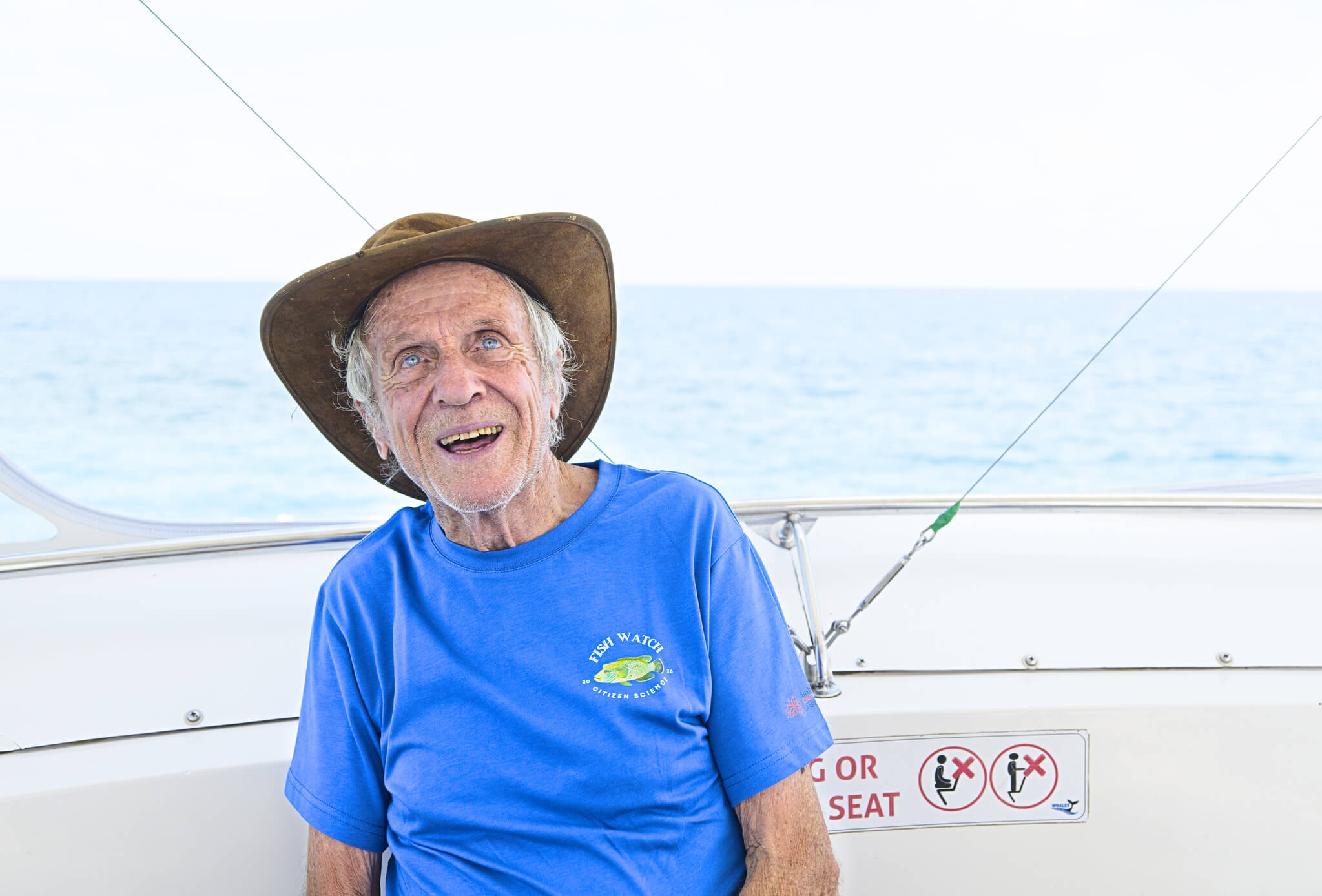
Charlie Veron
John Busst biography
John Horatio Busst (1909-1971) was an artist, architect and pioneering conservationist who, alongside Nobel Prize nominated poet Judith Wright and members of the Queensland Littoral Society (now the Australian Marine Conservation Society), led a successful campaign to save the Great Barrier Reef from mining and oil drilling in the 1960s.
Born in Bendigo in 1909, Busst attended Melbourne University, sharing a house with his childhood friend and future prime minister Harold Holt. In 1930, he dropped out of his journalism degree and began studying art. In 1940, he left Melbourne to live off-grid on Bedarra Island for 17 years before settling in nearby Bingil Bay.
Busst led successful campaigns to protect the region’s lowland rainforests from destruction, including preventing the Australian Army from destroying large areas of rainforest to test destructive Vietnam war defoliants like Agent Orange. The annoyed army officers dubbed him the ‘Bingil Bay Bastard,’ a nickname he adopted with pride.
In 1967, a cane grower sought to mine coral from Ellison Reef for agricultural limestone, claiming the reef was dead. Busst lodged a formal objection and at Judith Wright’s recommendation, contacted AMCS volunteers including Eddie Hegerl, who conducted surveys proving the reef was alive. Subsequently the Queensland Mines Minister rejected the mining application, establishing an important precedent that the Reef should not be mined.
Around the same time, Busst helped mount the Save the Reef campaign to fight more than 200,000 square kilometres of oil drilling leases which had been granted by the Queensland government. He argued for sovereign Commonwealth control of the Reef and a ban on oil drilling.
These campaigns were powered by extraordinary grassroots efforts. Busst and his fellow volunteers sold bumper stickers to raise funds. To build public support, they dispatched thousands of letters across the world and travelled the coast giving presentations and meeting with farmers, fishers, politicians and scientists. AMCS’s Eddie Hegerl said “Campaigning days were 100-plus-hour weeks.”
Their efforts drew in many national and international conservation organisations and generated significant media coverage and public pressure. Busst managed to obtain bipartisan support, including the active support of five current or future prime ministers: Harold Holt, Gough Whitlam, John Gorton, Bob Hawke and Malcolm Fraser.
Ultimately the Federal Government held a Royal Commission into petroleum drilling on the Great Barrier Reef, to which Busst and his fellow volunteers contributed extensive evidence.
Busst died on April 5, 1971 at Tully Hospital, as he prepared his evidence for the Royal Commission. Wright composed the words for a memorial plaque facing the ocean near his Bingil Bay home, Ninney Rise. It reads:
“In Memory of John H Busst died 5-4-1971, artist and lover of beauty who fought that man and nature might survive.”
Four years after Busst’s death, the Commonwealth took over management of the Great Barrier Reef with the establishment of the 1975 Great Barrier Reef Marine Park Act and the world’s largest marine protected area.
Sources:
- John Büsst: Bohemian artist and saviour of reef and rainforest
- The Artful Activist – How John Busst saved the Great Barrier Reef
- The Conversation: Bohemian, artist, conservationist: breathing humanity into the man who fought to protect Queensland’s rainforest and reef
- Book Review: John Büsst: Bohemian artist and saviour of reef and rainforest
- Inside Story: Bingil Bay Bastard
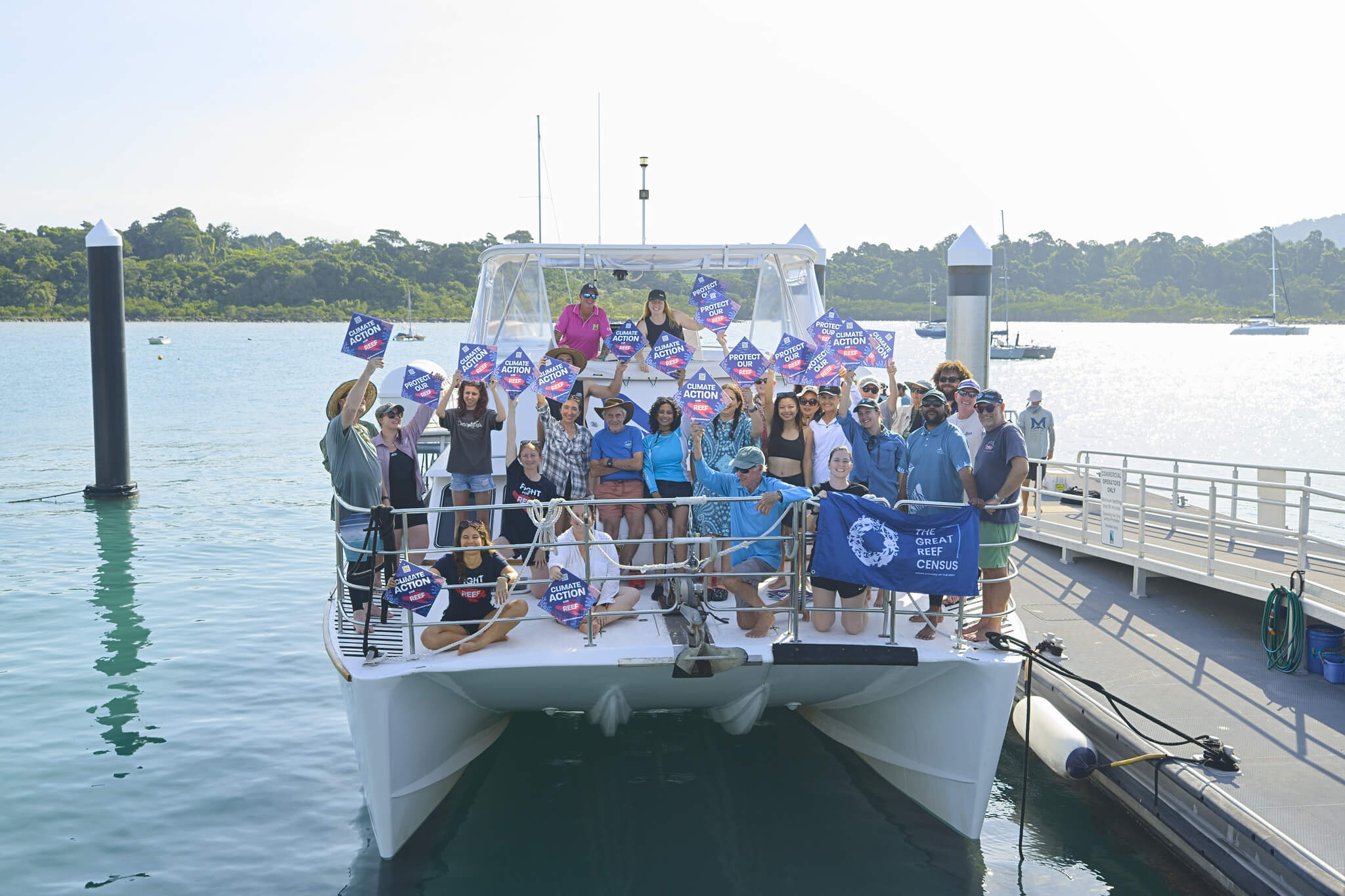
Header image: Adam Smith (Left) and Charlie Veron (centre) celebrating with AMCS team members Fran Rudischhauser, Lissa Schindler, Tanya Murphy and Jackie Leavitt.




-fao-lebaon--ralph-azar--gcp-leb-033-nor-north-lebanon-lebanon_0652.jpg?sfvrsn=47f9a831_6)
