“There is no other organ in the human body, and indeed in most animals, that discards most of itself each month, leaving behind a residual layer with a raw surface that is rapidly healed, and then regenerates approximately 1 cm of new tissue. The human uterus does this around 400 times, and we’re finding out more about how it happens.” – Professor Caroline Gargett
Amid all the advances in modern medicine, much of the science behind a woman’s menstrual cycle remains mysterious, so a team at Hudson Institute of Medical Research is aiming to change that.
Professor Caroline Gargett is an expert in the human endometrium, the highly regenerative lining of the uterus, and world-renowned for discovering the stem/progenitor cells it contains.
Her latest research, along with her team at Hudson Institute and their collaborators at The University of Queensland, provides the largest study of the gene expression profile of individual human endometrial epithelial progenitor cells and mesenchymal stem cells (endometrial stem cells), showing that they transition to more mature cells that regenerate and differentiate, to prepare the uterus for potential pregnancy.
“We sequenced the RNA of single cells derived from human endometrial hysterectomy tissue enriched to include the stem and progenitor cell populations found in the residual layer not shed during menstruation,” Prof Gargett said.
New molecules, critical roles in menstrual & stem cell science
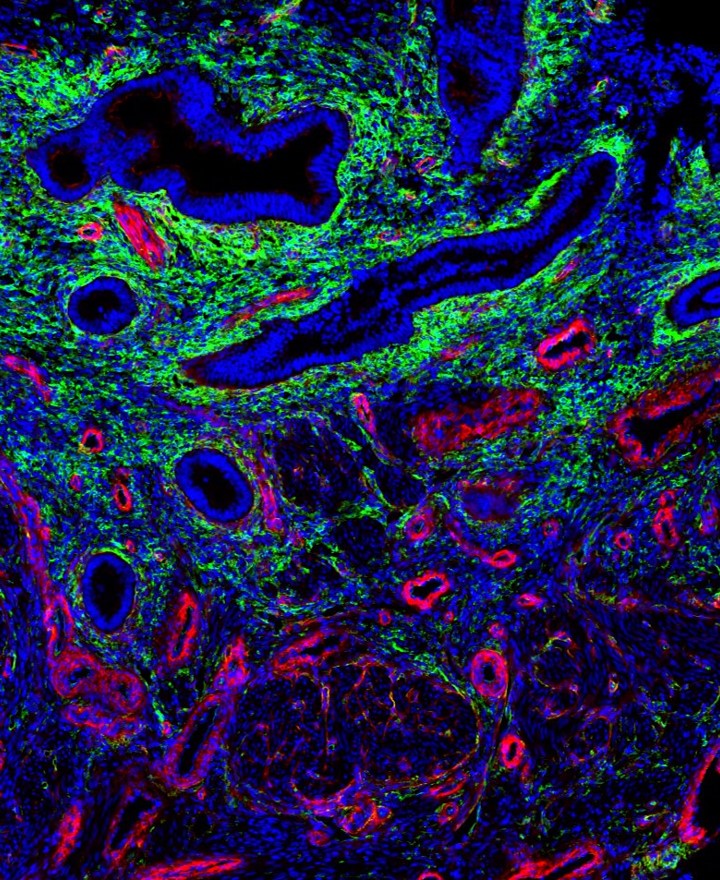
“We identified several new molecules that may have critical roles in human endometrial epithelial progenitor cells.”
“We also found another developmental molecule in the blood vessel-associated endometrial mesenchymal stem cells (eMSCs) called MUSTIN1 which has never been described before in MSC of any other tissue.”
She believes these findings are significant as they confirm the team’s earlier studies demonstrating the presence of stem and progenitor cells in human endometrium.
“The molecular signatures we have generated on significant numbers of these stem cell subpopulations generate new fundamental knowledge on the mysterious basal layer of human endometrium that is not shed during menstruation and has rarely been studied, despite its critical role in repairing and regenerating endometrium each month,” she said.
Equal First author Dr Harriet Fitzgerald believes these findings will have a profound impact on women’s health worldwide.
“Our research will help girls and women with several gynaecological disorders of endometrial function that we regard as endometrial stem cell disorders, such as endometriosis and adenomyosis,” she said.
New understanding of the endometrium
“It gives us a greater understanding of how the endometrium readies itself for embryo implantation, which is relevant to IVF and conditions such as recurrent implantation failure. It also provides new information on how endometrial stem cells function in such an amazing tissue as the endometrium and the basal layer in particular, which has hardly been studied.”
“Ultimately new therapeutic targets may be identified for treating these understudied conditions to improve the lives of countless girls and women.” Dr Fitzgerald said.
Her colleague in the Endometrial Stem Cell Biology Group, Dr Fiona Cousins, who specialises in researching endometriosis, said it is among the first studies to purify rare stem cell populations from adult human tissue and the first for human endometrium to enable powerful single cell RNA sequencing of a substantial number of stem cells.
“We could do this because our program of research had previously discovered specific markers on the surface of these rare cells and validated their stem cell properties reported in our earlier published studies,” Prof Gargett said.
“This enabled us to provide datasets and the molecular signature of endometrial stem cells to other researchers to help us understand how these cells might function in repairing the raw surface of endometrium as it sloughs off during menstruation, and how they might regenerate a new layer ready for an embryo to implant to establish a pregnancy in the subsequent menstrual cycle.”
The team’s world-leading menstrual science research is published this month in the journal Stem Cell Reports, reflecting years of collaboration between the stem cell specialists at Hudson Institute and UQ’s computational and genomics experts.