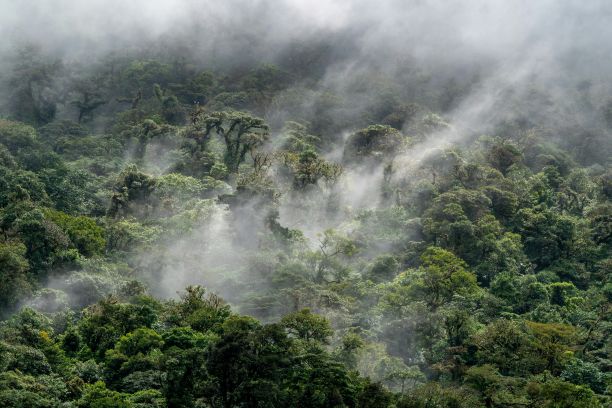
New research shows that pollution from bushfires in the Amazon damages surviving trees and further reduces the rainforest’s ability to absorb global carbon dioxide, with an ‘unprecedently large’ El Niño this year likely to make matters worse.
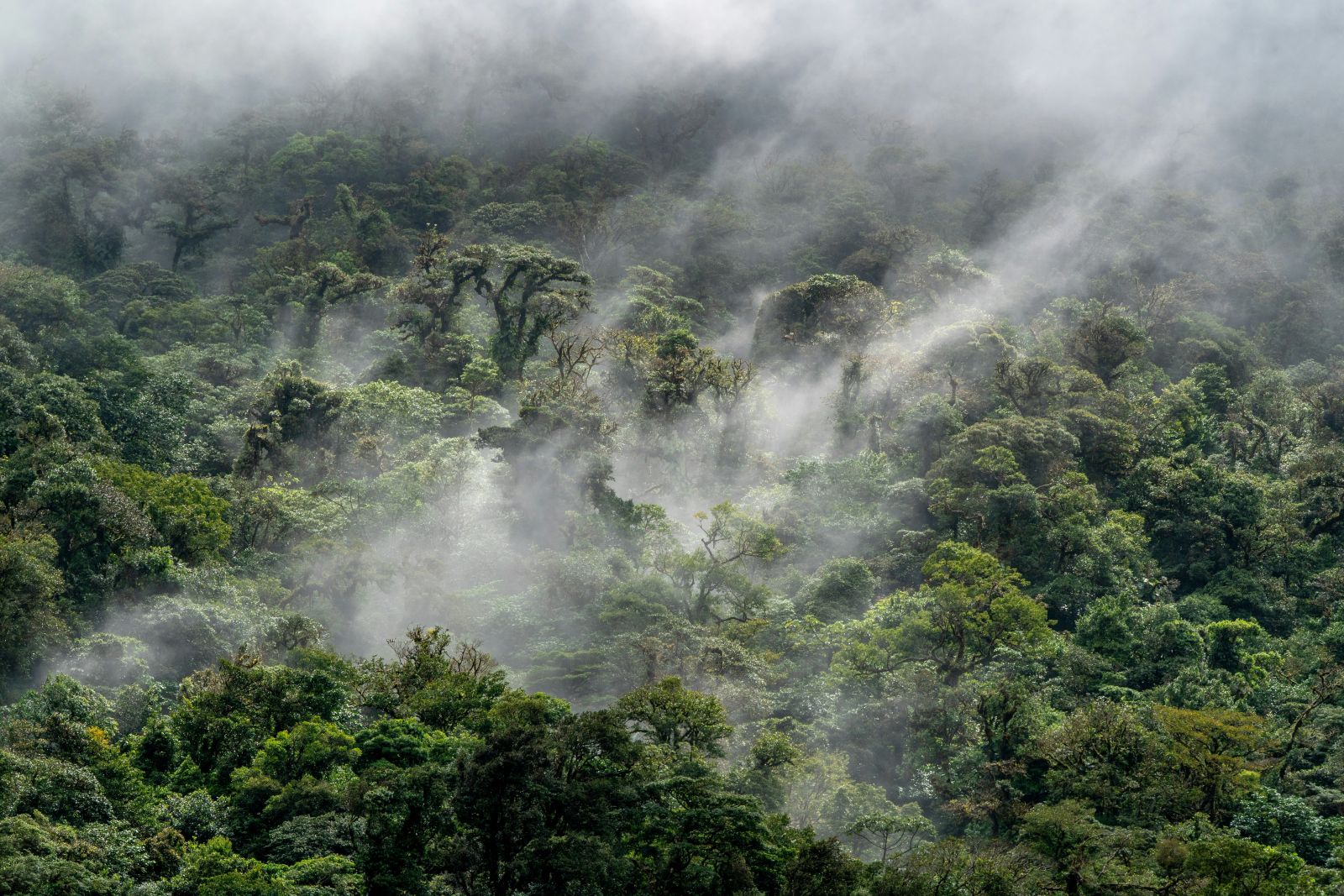
Alexander Cheesman, a Senior Research Fellow at James Cook University, is a co-author of the new paper. He said ground-level ozone forms when pollutants released by sources such as wildfires react in sunlight.
“Ozone is harmful to human health and can damage plant leaves, reducing their ability to absorb carbon dioxide. The question was to what extent was this happening in the Amazon – a massive carbon sink that stabilises the world’s climate,” Dr Cheesman said.
Researchers from JCU, the University of Exeter and ETH Zurich examined nearly three decades of observations, covering 1997 to 2024, alongside a global vegetation model.
Flossie Brown of ETH Zurich, the lead author of the study, said the researchers found fire-driven ozone pollution reduces the Amazon’s carbon uptake by an amount equal to about 24% of the carbon released by the fires themselves.
“We found that ozone damage becomes particularly severe during major droughts,” Dr Brown said.
“Three of the Amazon’s most extreme droughts in the past 30 years, in 1997-98, 2015-16 and 2023-24, occurred during El Niño events.”
She said El Niño is a natural climate cycle that causes temporary changes in global weather patterns. However, climate change has raised average global temperatures, increasing the potential for El Niño events to contribute to record heat and extreme weather.
“During the 2023-24 drought, ozone damage was nearly twice the average level recorded during the previous decade. This represents a ‘hidden’ loss from the Amazon’s carbon budget because damaged trees continue to lose some of their ability to absorb carbon after fires have ended,” Dr Brown said.
The researchers warn that an unprecedently large El Niño developing this year could bring another major increase in this hidden carbon loss.
Co-author Stephen Sitch, of the University of Exeter, said the worst ozone damage is concentrated in the Amazon’s ‘Arc of Deforestation’, where agricultural expansion is driving forest loss.
“Almost all fires in the region are started by people, either deliberately for land clearing or when agricultural fires spread into forests. This means the extra ozone damage we’re describing is largely preventable,” Professor Sitch said.
The researchers say the findings highlight the need to consider air pollution, deforestation and climate change together when assessing the Amazon’s future.
Dr Cheesman said the impacts interact in a vicious circle.
“But this also means that solutions may have multiple benefits. Policies that tackle deforestation and degradation address both the CO2 released directly by fires and the ozone pollution eroding what’s left of the forest’s ability to soak it back up,” Dr Cheesman said.
Images: Available here.
Paper: Link here.
Data was created as part of the TropOz collaboration between JCU and the University of Exeter.