Liquid metal device developed with UOW researchers harvests energy from movement to power emergency signals, wearable sensors without batteries
A life jacket that powers its own distress signal could soon provide protection for people on the water thanks to a device developed by University of Wollongong (UOW) researchers and their international collaborators.
The groundbreaking gadget generates electricity from movement, such as the rock of a wave or the flick of a wrist, paving the way for wearable sensors that don’t rely on batteries.
Senior Professor Weihua Li from UOW’s School of Engineering is a co-author on the research paper, published in Science Advances.
“In remote or harsh environments, replacing or recharging batteries is not always practical, but it can have a big impact on a person’s safety. A device that draws small amounts of power from its own movement could be very helpful,” he said.
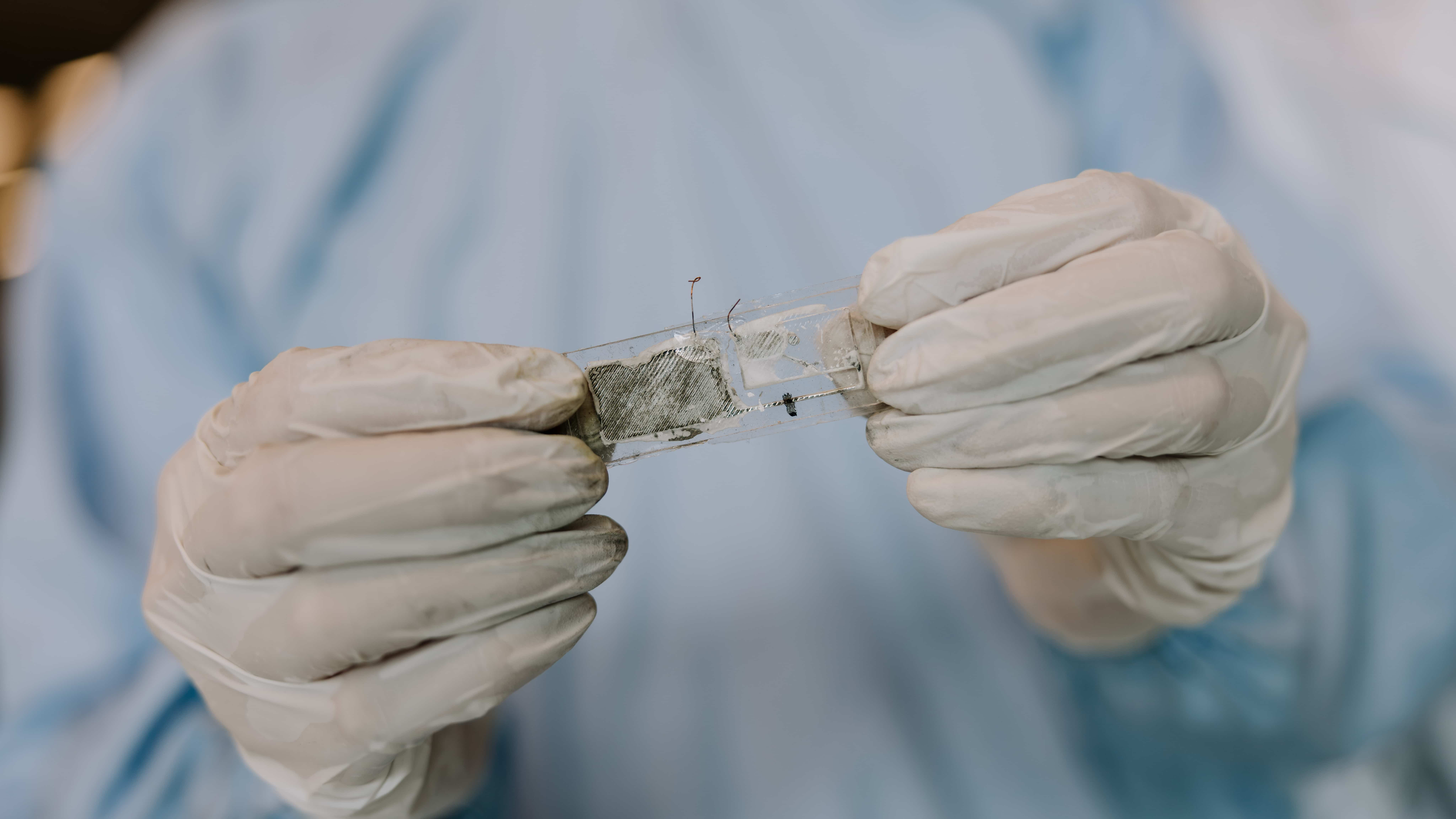
The soft device contains two droplets of gallium-based liquid metal in a solution that conducts electricity. As the device moves, the droplets shift and touch the liquid and the air in different amounts. This changes the chemical reactions on their surfaces and creates a small electric current.
Linking 40 devices produced about two volts, enough to light small LEDs, although a single device generated only a small amount of power.
In a life-jacket prototype, wave-like movement generated electricity that was stored and used to illuminate an LED ‘SOS’ display. The device produced more power in laboratory conditions but also operated in seawater.
The technology can also detect movement through changes in its electrical signal. Pressing, tilting, bending or twisting the device changes its output, allowing it to act as a sensor without an external power supply. The team showed it could detect movements as subtle as a wrist pulse, as well as walking, running and falling.
By placing sensors across a surface, they could also tell where pressure was applied. This could help in the development of wearable devices that track movement, and soft robots that can sense touch.

“Many wearable devices need regular charging, and that’s a barrier for people who want to use them every day. We want to reduce that dependence,” Professor Li said.
“What makes this approach interesting is the range of movements it can respond to, from a small movement at the wrist to much larger movements of the body. The same principle allows us to collect electrical energy and produce a signal that tells us about movement.”
The researchers will now focus on increasing the devices’ power, durability and reliability in real-world conditions.
About the research
‘Mechano-Electrochemical Energy Harvesting and Self-Powered Sensing via Dynamic Liquid Metal–Electrolyte Interfaces‘, was published in Science Advances.
The study was authored by Xiangbo Zhou, Jialu Wang, Yipu Guo, Liping Gong, Haiping Du, and Weihua Li from UOW, Hongda Lu from The University of Queensland, Zhisheng Lv from Xiamen University, Jian Shu from Nanyang Technological University, Shiwu Zhang from the University of Science and Technology of China, and Michael D. Dickey from North Carolina State University.