Inherited retinal diseases (IRDs) were once considered untreatable, but thanks to years of research new gene therapies are now emerging that could help slow, stop or even reverse vision loss.
In IRDs, genetic changes mean the cells responsible for vision do not receive the ‘instructions’ they need to work properly. In many cases, this causes progressive vision loss over a person’s lifetime.
Gene therapy is transforming how IRDs can be treated, offering new hope for people living with conditions such as retinitis pigmentosa, Stargardt’s disease and Usher syndrome.
For researchers developing these gene therapies, the effectiveness of vectors is crucial. How well a vector works determines how effectively treatments penetrate damaged cells, how safely they can be delivered, and which genes they can carry.
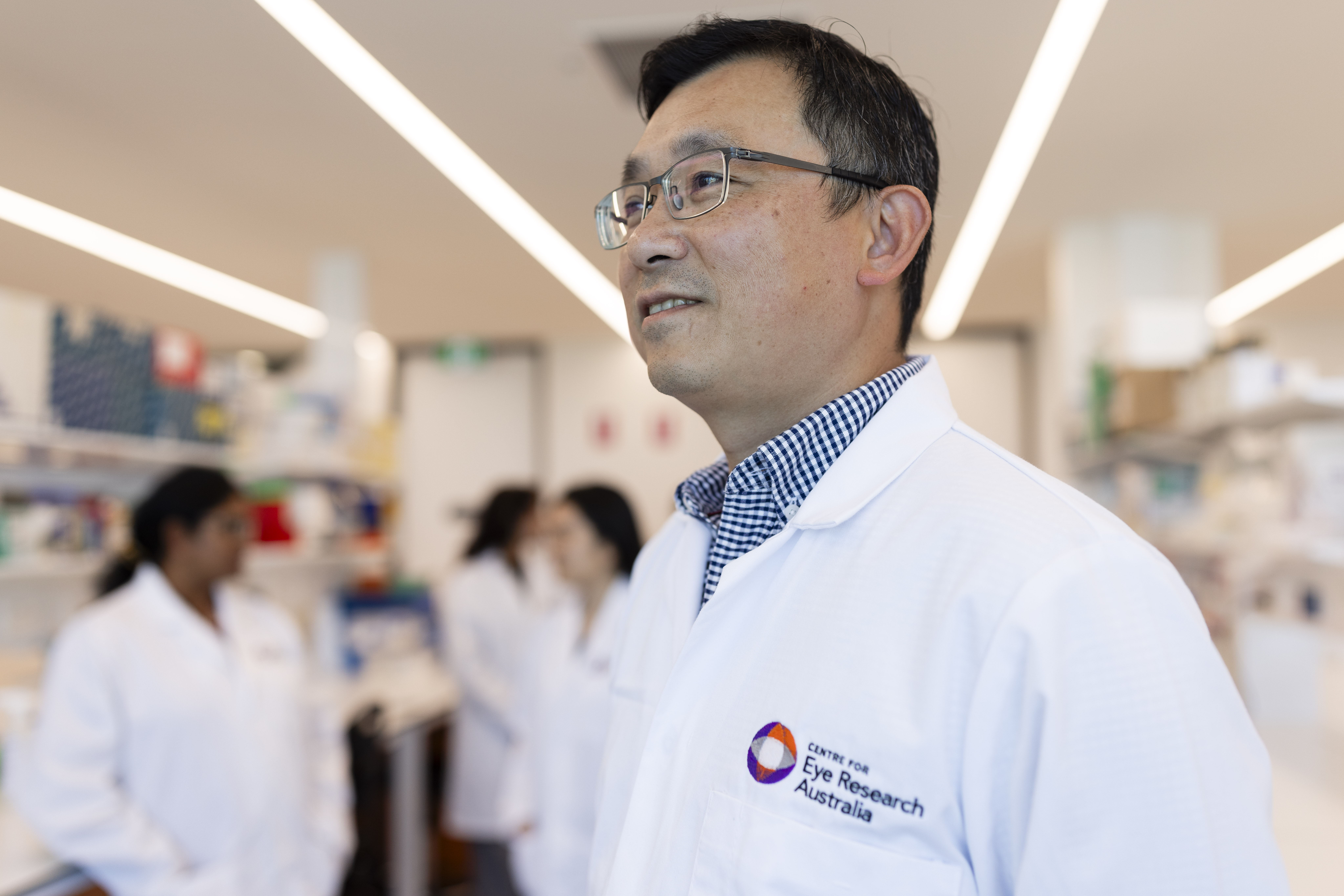
In his lab at CERA, Head of Ocular Genetic Therapeutics Research Dr Jiang-Hui (Sloan) Wang is establishing a Vision Vector Core to engineer the next generation of viral vectors to target IRDs and other genetic eye conditions.
What is a vector?
A vector is a delivery system designed to transport therapeutic genes directly into the specific cells in the eye. Vectors are usually viruses with the disease-causing genes removed and helpful genes put in their place.
Think of a vector as a tiny truck that carries a therapeutic gene or gene-editing tool, protects it during transport, and delivers it to the retina – the light-sensitive tissue at the back of the eye that powers our vision.
These therapeutic genes give retinal cells the correct instructions they need to function properly, helping to prevent – and in some cases potentially reverse – vision loss.
For some IRDs, this could one day mean a single treatment that tackles the cause of the disease before vision is lost.
Targeting deep retinal cells
Dr Wang is focused on engineering advanced adeno-associated virus (AAV) vectors – tiny, harmless viruses that deliver healthy genetic instructions directly to the cells affected by disease.
“These types of vectors do not cause disease, are safe and are capable of entering directly where it’s needed in the retina,” says Dr Wang.
Many IRDs take hold in cells deep within the retina. Getting a therapy to these cells, safely and effectively, remains one of the biggest hurdles in developing treatments for IRDs.
To address this challenge, Dr Wang is developing a new vector engineered to reach these deep retinal cells, delivered through a less invasive injection, improving both how effectively and safely gene therapies target the cells that need them.
By carrying the corrective therapy to the right cells safely and effectively, his work aims to open the door to treatments IRDs that have so far been out of reach.
“This kind gene therapy delivery can change the lives of so many people,” says Dr Wang.
Smarter vectors, future treatments
Dozens of AAV and other vector-based trials are now underway around the world, investigating new treatments for retinitis pigmentosa, Leber congenital amaurosis, choroideremia, achromatopsia, and age‑related macular degeneration.
Researchers are also starting to use artificial intelligence to design smarter vectors – with the potential to reach deeper layers of the retina, trigger fewer immune reactions, and be delivered without surgery.
“The impact of vectors being used in eye health for early intervention and routine care treatments in the coming years cannot be underestimated,” says Dr Wang.
Double your impact through our Matched Giving campaign.
In our latest edition, we celebrate 30 years of CERA and explore inherited retinal diseases and the research bringing treatments closer.