Climate change is worsening. There’s now no chance of holding temperature rise to 1.5°C. The future will bring worsening floods , glacial melt, megafires and lethal heat .
Authors
- James Hopeward
Associate Professor of Environmental Engineering, Adelaide University
- Andrew Lowe
Director, Environment Institute, Adelaide University
- Melissa Nursey-Bray
Associate Professor, Geography, Environment and Population, Adelaide University
But can we call this the ” new normal “? The phrase has become common in discussions about the upheavals and damage stemming from human-caused climate change.
It’s human nature to want the future to be predictable: we are creatures of routine. If the Earth’s climate really was going to settle into a “new normal” at 1.5°C of warming, we would find the idea comforting.
Unfortunately, it’s not true. Passing the 1.5°C threshold isn’t like stepping from one state into another. Global emissions of greenhouse gases are slowing, but have not yet peaked – let alone begun to fall. That means further heat, greater change and more climate uncertainty.
Many different futures are possible after 1.5°C. As Australia’s National Climate Risk Assessment spelled out last year, our future looks very different at 2°C. At 2.5°C, it’s something else again. At 3°C, it’s unrecognisable. Thinking of any of these futures as a new normal invites a dangerous misunderstanding of future risk.
What is a ‘normal climate’ anyway?
By “normal”, we mean usual and expected – a situation following predictable patterns .
“Climate” isn’t day to day weather: it’s the statistical fingerprint of weather patterns over 30 years , spanning typical weather through to rarer extremes.
For many weather phenomena, we lack reliable long-term data. As a result, we are often surprised by “unprecedented” events – even though some may actually sit within a pre-industrial natural range , representing rare extremes our records haven’t captured.
As a result, we’re exiting the old normal without having the data to fully understand what we’re leaving behind .
What happens to ‘normal’?
We might expect a steadily warming world will cause steady change to existing weather phenomena – hotter days, more rain, longer droughts.
Unfortunately, our desire for predictability won’t be satisfied here either. Weather will change unpredictably , meaning we can expect new extremes as well as new combinations , such as drought to flood climate whiplash and pyrocumulus clouds (thunderstorms forming from bushfires), which were virtually unknown a few decades ago.
Once-rare weather extremes will arrive more often , with more intensity and often lasting longer, like this year’s record-breaking European heatwaves .
We can no longer take a 30-year average of past extreme weather and extrapolate that into the future. We don’t know what will emerge as the atmosphere undergoes very rapid change at rates humans have never experienced.
Can we adapt to the unknown?
To date, much of the focus of global climate negotiations has been on mitigation – trying to stop climate change from getting worse by reducing emissions and protecting nature. Efforts to reduce emissions have helped , but at nowhere near the scale needed.
This failure to cut emissions has driven the view that climate change is inescapable. But this isn’t helpful. We will have to learn to adapt to the future climate.
If this seems scary, it might help to remember that we haven’t actually been in a stable climate state in our recent past.
Climate-related risks have been growing (even without climate change) over the past century, because of the growth of cities, infrastructure, farms and more.
Even without the influence of climate change, an intense heatwave, drought or bushfire in Australia will play out over natural habitat which is more fragmented and degraded than it used to be, making it harder for animals to escape.
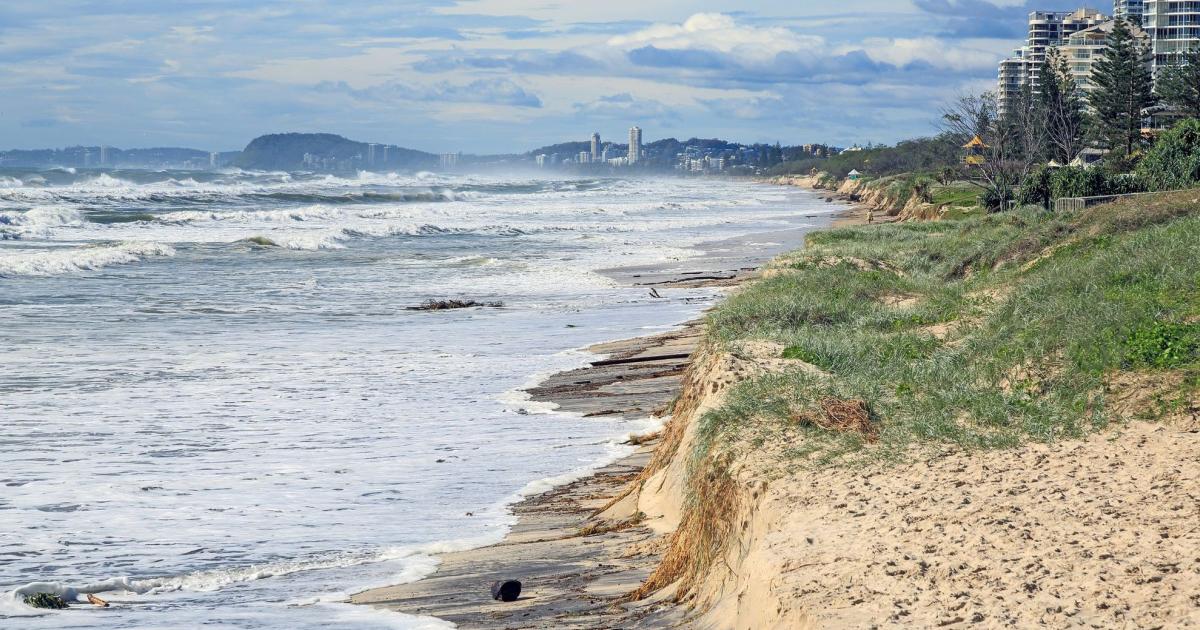
A strong coastal storm surge falling in a historically known range can reach more people, houses and businesses than it would have just 50 years ago – because there are more people on the coasts.
For these threats, climate change acts as a risk-multiplier. As temperatures climb and rainfall becomes more variable , our ability to respond becomes more limited.
What can we do?
Many people fear the uncertainty of climate change. Some are already grieving the current losses and those to come, or feel rage at our unwillingness to change course. These responses are understandable. We must act in empowering and hopeful ways – without shying away from the gravity of the task.
If we take a longer view, we can see Homo sapiens are highly adaptable. Faced with these threats, we will look for ways to adapt and cope, as we have done for millennia .
If we give up on the comforting idea of normal – old and new – we can focus on practical measures. These include bringing climate adaptation to the fore while embracing a future of clean energy, electric transport and regenerative farming to help reduce emissions.
It’s a mistake to focus either on reducing emissions or adapting to a warming world – we need both. Adaptation will be easier if we limit future warming .
The first step is to give up the idea of a “new normal”. We can no longer look to the past to predict the future climate, and we know that climate change will continue to intensify until such time as we stop it. We do not know what is to come.