This Bill is not reasonable. It is not necessary. This Bill must not pass.
Monday 10 August
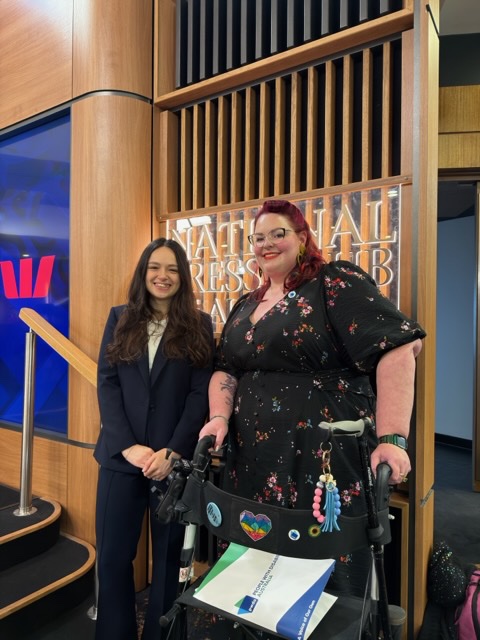
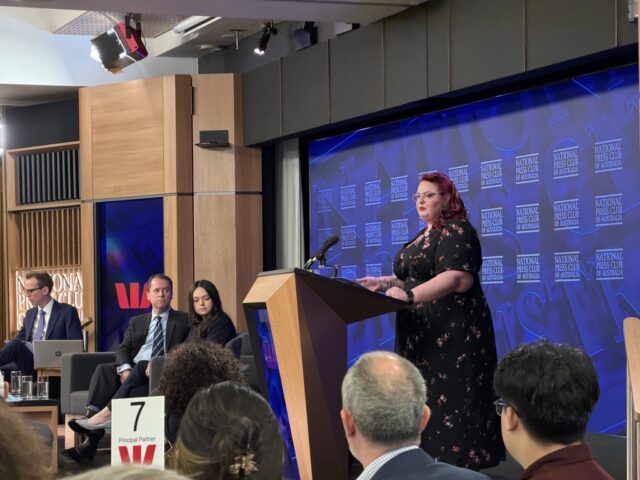
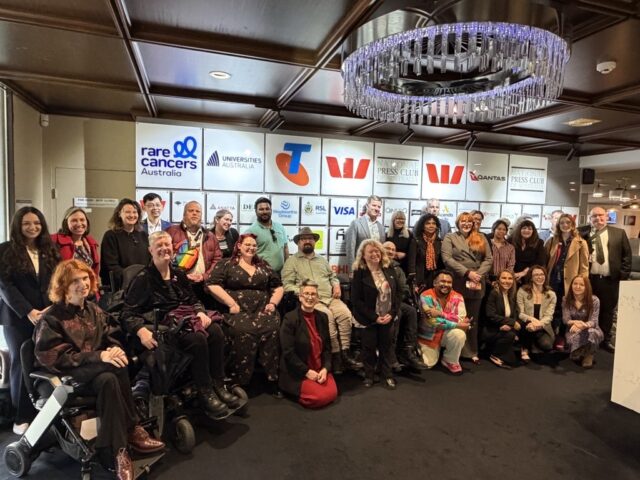
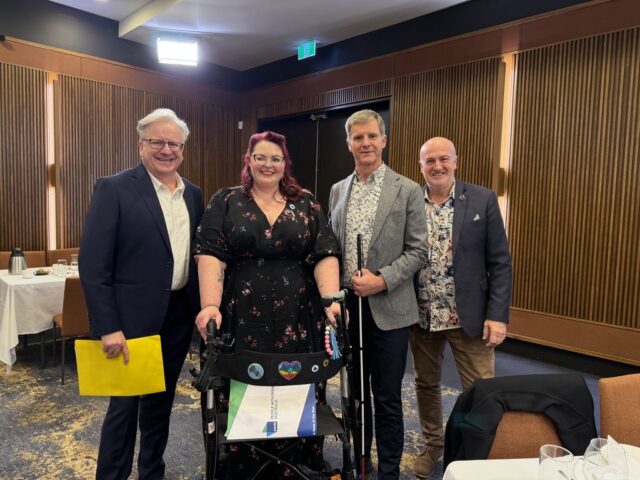
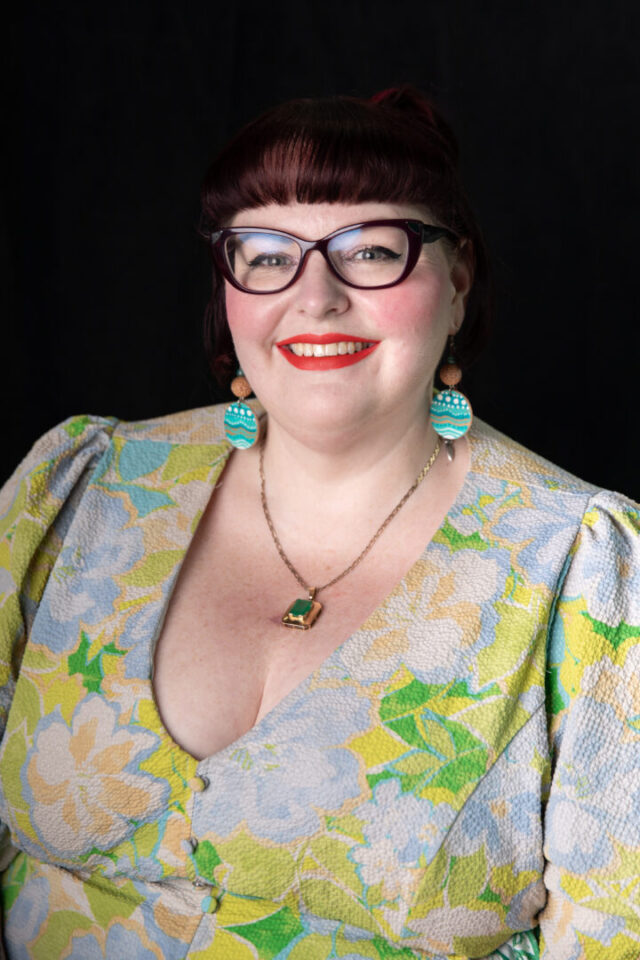
Megan Spindler-Smith speaking at the National Press Club
I stand here on behalf of People with Disability Australia the national cross-disability rights and advocacy organisation and our thousands of members across Australia. I also stand here as an Autistic person with Ehlers-Danlos syndrome, and psychosocial disability, who understands on the most personal level what the NDIS means when it is delivering as it was intended.
I, along with Sophie and every person with disability listening today know what disabled participation requires. We know the planning, support, energy and countless invisible decisions most Australians never have to consider. And more than 760,000 of us know how the NDIS makes our participation easier, less draining and in many ways possible.
In this room with me are people with disability who reflect the many ways we live, contribute and belong in Australian life. People leading organisations, raising families, shaping public policy and strengthening their local communities. Researchers, journalists, advocates, public servants, volunteers, neighbours and friends.
A small snapshot of the lived and professional expertise of a community that understands the NDIS in a way no government ever can. Because we live every day with the consequences of how it is designed, administered and funded. A community that is united in our opposition to this Bill.
The NDIS was never simply about funding disability supports. It was about replacing an inadequate and indefensible system that in the words of Prime Minister Julia Gillard “metes out support rationed by arbitrary budget allocations not real human needs” with a Scheme that would “bring an end to the tragedy of services denied or delayed and instead offer people with disability the care and support they need over their lifetimes.”
The NDIS was never intended to set the bar at our survival but at our opportunity to have what so many Australians take for granted – the ability to live safely, with dignity, choice and control. To study, work, raise families, spend time with friends, contribute to our communities and pursue our own goals and aspirations.
That was the promise Parliament made when it established the NDIS.
Parliament rejected a system where disability support depended on arbitrary budgets rather than human need and they must do it again by rejecting this Bill.
The Government’s own research has found that people who receive the right NDIS supports experience fewer hospitalisations, greater workforce and stronger social and economic participation. Those benefits extend well beyond individual participants. Families are stronger, more parents can work and pressure on other parts of the service system is reduced. And for every dollar spent on the NDIS $2.25 is returned to the economy, much of that through the hundreds of thousands of jobs it creates.
If anyone questions what the NDIS returns, they need only look around this room.
It’s in people like Jane Britt, who is Deaf Blind and can accept an invitation, travel independently, remain employed and participate in public life without first wondering whether getting there safely will be possible.
It’s in Jarrod Sandell-Hay, who has Cerebral Palsy and can build a life with his wife, spend time with family and friends, lead organisations and participate in his community knowing the support he relies upon will be there.
It is reflected in families like Dr Greg Jericho’s, where the right supports mean parents can spend more time being actual parents, and less time deciding who has to step away from work to support their daughter’s needs.
These are examples of the ordinary Australian lives the NDIS made more possible.
And they are being lived in communities right across this country.
That is why seven in ten Australians according to the government’s own research continue to believe the NDIS plays a vital role in the lives of people with disability. What has declined is not confidence in the Scheme itself. It is confidence in how it is being administered.
That distinction matters.
The Government had choices. It could have strengthened the NDIA and NDIS Quality and Safeguards Commission and tackled providers exploiting the Scheme. It could have raised revenue elsewhere. The Australia Institute estimates a 25 per cent tax on gas exports would raise $31.4 billion over four years, more than these cuts save.
Instead, it chose to cut almost $17 billion from the NDIS. It chose to make people with disability, our families and the care economy bear that burden.
The question before Parliament has always been was this the right choice? The evidence says no. It cannot be delivered safely and people with disability will pay the price.
The Australian National Audit Office found the NDIS Quality and Safeguards Commission only partly effective as a regulator and warned the pace of reform is outstripping the capability of the NDIA and the Commission. The NDIA itself has also revealed 40 per cent of providers are still claiming supports the NDIS doesn’t fund.
Administrative failures are the problem, not people with disability simply trying to get the reasonable and necessary supports we need. Yet we live with their consequences.
We have waited months for decisions that should take weeks. We fight for supports we were entitled to all along. We receive debt notices we never should have. We report abuse, neglect and exploitation without confidence the regulator can respond.
Reform should have strengthened these institutions. Instead, this Bill gives them more power and a timeline they cannot safely deliver.
The Government says this Bill secures the future of the National Disability Insurance Scheme.
It does not.
It cuts the very supports that give it purpose. It creates pathways to reduce supports that enable people to work, study, raise families, volunteer, spend time with friends and simply be part of their communities. It allows those supports to be narrowed through broad rules, arbitrary caps and ministerial discretion. It allows them to be changed at any time without scrutiny, consultation or enough checks and balances.
This bill outlines a new system designed to mete out support rationed by arbitrary budget allocations, not real human needs – a cruel echo of Prime Minister Gillard’s reflection on Australia before the NDIS.
If widespread fraud or weak regulation were undermining confidence in Medicare, no government would respond by reducing access to Medicare for every Australian. It would strengthen regulation, improve oversight and hold those responsible to account.
That is what good reform would look like.
This Bill does the opposite.
It leaves the administrative failures largely untouched and instead reaches into the lives of people with disability. It decides whether someone can continue living independently, remain in work, raise their children, participate in their community or simply leave their home.
The Government says Foundational Supports – provided by the states and territories – will fill some of the gaps.
But the states and territories are saying they will not be equivalent to the NDIS.
They are not operating, they are not available and Parliament does not yet know what they will provide, where they will exist or who they will support especially if you’re over the age of 8. And its people with disability and our families who will scramble to fill the gaps.
The Minister’s assurance was not that people with disability would retain choice, control or the supports that make ordinary life possible.
The assurance was that no one would die.
That is not the promise Parliament made.
The Government has modelled what it expects to save. It has not modelled the losses: the pressure on hospitals and state services, the parents, carers and people with disability forced to reduce working hours or leave the workforce. The Australia Institute estimates the cuts themselves could cost around 52,000 jobs in disability and social assistance services.
The costs of breaking this promise are real.
The Disability Royal Commission showed us what happens when people with disability do not have support. We become isolated, we experience harm, we die.
This Bill assumes gaps can be filled.
They cannot.
The Australia Institute estimates these cuts could remove 94 million hours of paid care every year. Those hours don’t disappear.
Parents cannot replace occupational therapists.
Ageing carers cannot replace trained support workers.
And Parliament must not legislate families and carers into becoming Australia’s unpaid disability workforce.
They are not a substitute for the specialist supports that keep us well, help us stay alive and remove barriers to our participation.
Need does not disappear because support does.
Responsibility does not disappear.
It simply shifts.
From governments to families.
From prevention to crisis.
From timely support to emergency intervention.
Parliament has been warned by our community.
The consequences are foreseeable.
The only question now is whether Parliament is prepared to accept them.
This Bill is not reasonable.
It is not necessary.
This Bill must not pass.