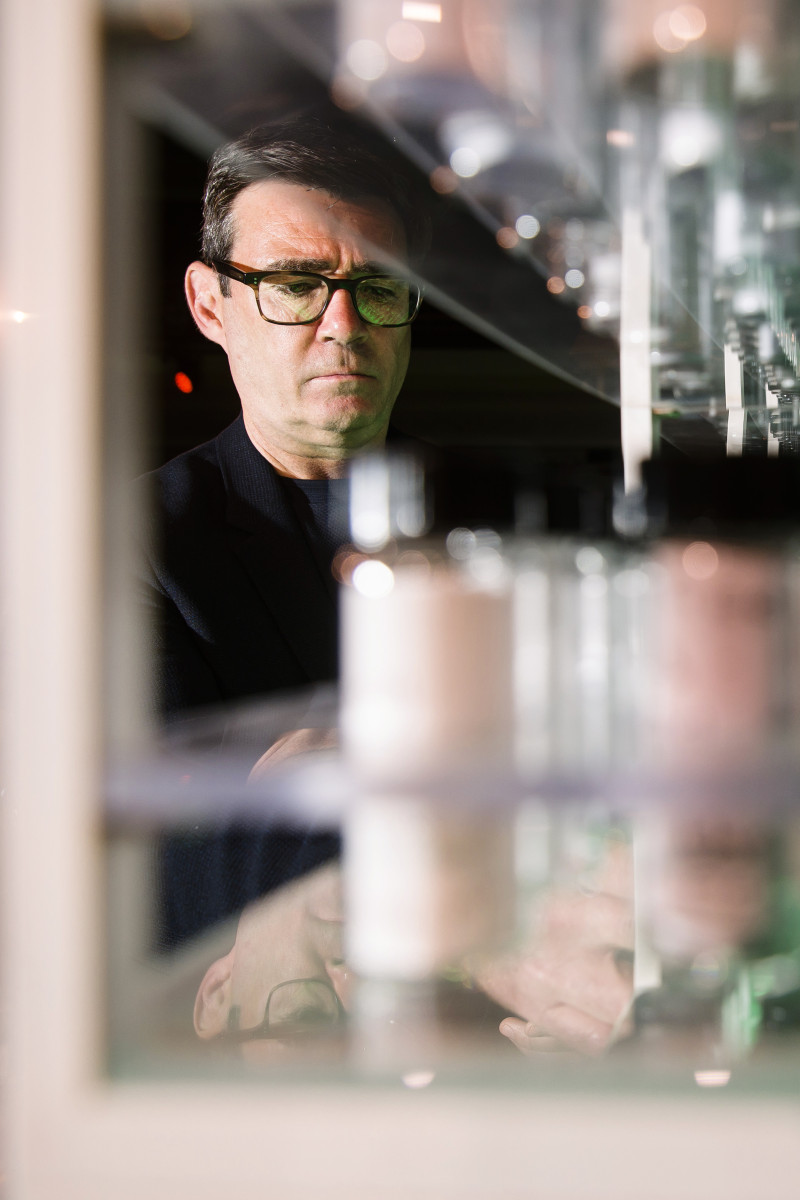
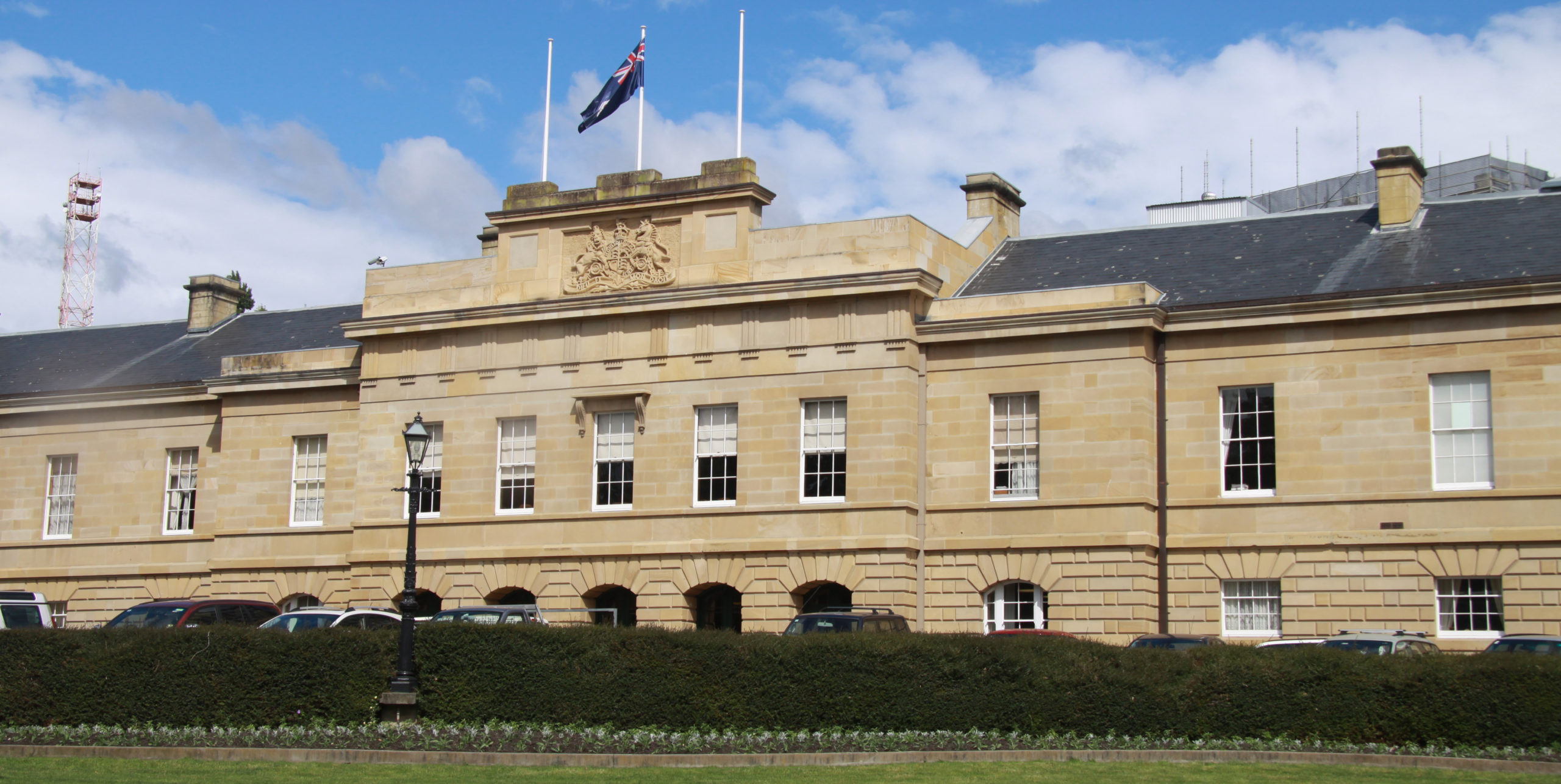
The University of Manchester will become the permanent home of the Infected Blood Inquiry Memorial, which honours the more than 30,000 people who were infected with HIV, Hepatitis and vCJD after receiving contaminated blood products in the 1970s and 1980s – an event that caused profound and lasting harm to individuals, families and communities across the UK.
The agreement to house the memorial at the University follows a commitment by Andy Burnham, Mayor of Greater Manchester, to find a permanent and fitting home for it within the city-region. The memorial will now become part of the University’s collections, where it will be cared for as a place of remembrance, reflection and learning for generations to come.
Developed in collaboration with Inquiry participants, the memorial contains bottles with a message in each one written by someone affected by the scandal.
On display at the Infected Blood Inquiry until the publication of the Inquiry Report in May 2024, the memorial has been sited in the Whitworth building. Its presence at the University will support research, teaching and public engagement, particularly in areas relating to patient safety, ethical practice in healthcare, trust, and health inequalities.
As a civic university rooted in Manchester, the University is committed to working alongside communities to acknowledge difficult histories and to create spaces where reflection and learning can take place with care and respect. Through exhibitions, teaching programmes and public events including the annual Universally Manchester Festival, the memorial will remain accessible to the public, helping to ensure that the experiences of those affected continue to be heard and understood.
By providing a permanent home for the Infected Blood Inquiry Memorial, the University hopes to honour those whose lives were changed forever, while supporting ongoing dialogue, understanding and learning that can help shape a more compassionate and responsible future in healthcare and public life.
Christine Burney, the widow of Peter Burney, who died of hepatitis following a blood transfusion said: “I lost my husband Peter Burney in 2019 to liver cancer, after being given hepatitis C following a blood transfusion. The inquiry memorial holds deep personal significance. As I live on the outskirts of Manchester I have visited it numerous of times since its arrival on the university grounds, finding solace in its presence.
It serves as a vital, permanent reminder of this tragedy for the medical professionals of tomorrow. My hope is that by including this history in their curriculum we ensure that the lessons of the past directly inform the care and ethics of the future.”