Australia’s Southern right whale (Eubalaena australis) population was nearly wiped out by whaling in the 1800s. Since whaling of the species was banned in the 1970s, the number of mother-calf pairs that visit Australia each winter has grown from a few individuals to several hundred.
Southern right whales seasonally use shallow coastal areas, such as semi-enclosed bays, as nursing grounds. And it was thought female whales were faithful to a specific site, choosing to nurse in the same bay they were born in.
Recently, a study led by the University of Tasmania’s Institute for Marine and Antarctic Studies (IMAS) reported that the recovery of the species in Australian waters had stalled , remaining far below pre-whaling numbers.
In a new study published today , researchers from IMAS and the Australian Antarctic Division’s Science Branch have looked closely at exactly where Southern right whales are spending their time in Australian waters.
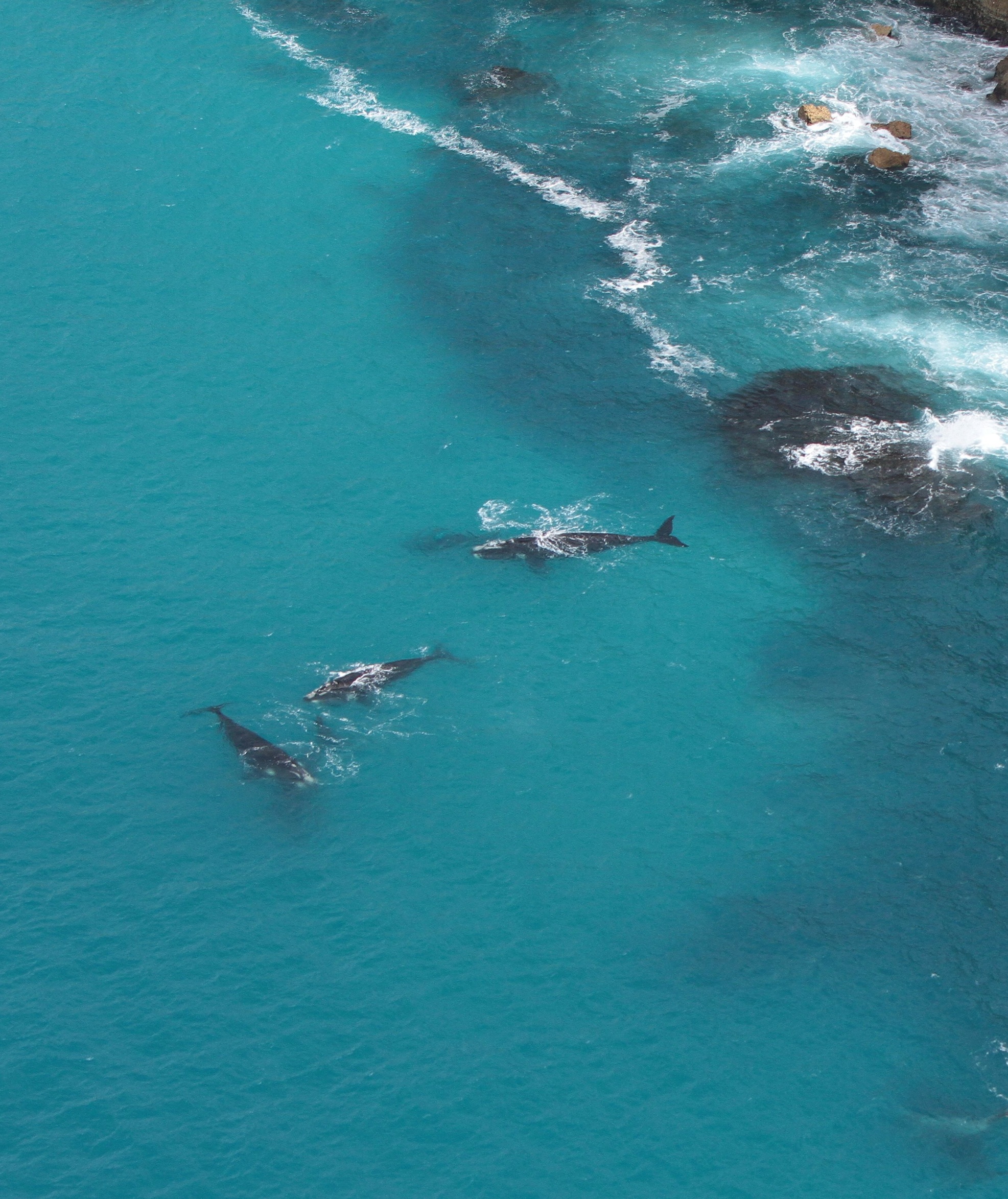
Researchers used large-scale annual aerial survey data from 1976 to 2023 to assess the change in the spatial distribution patterns in their nursing grounds, to better understand the spatial behaviour of Southern right whales.
They found the whales are less faithful to specific bays than commonly believed– and that their spatial distribution patterns has fundamentally shifted since the early stages of the population’s recovery.
Shifting behaviour as whale population grew
“We investigated how distribution patterns of Australian Southern right whales changed as the annual coastal numbers grew from very few individuals at the onset of post-whaling recovery, to hundreds in more recent decades,” said IMAS researcher and lead author, Anne Grundlehner.
“When the whales were still a rarity along the coastline, the few whales visiting our coast seemed randomly distributed across suitable habitat. There weren’t any sites that stood out as hotspots.
“But as numbers picked up in the early years of population recovery, multiple sites consistently used by many whales (called ‘aggregation areas’) emerged. And three suddenly showed increases in whale numbers much faster than the others,” Anne said.
“The transition from a somewhat random distribution pattern to the formation of clear hotspots, suggests a shift occurred in the behavioural strategy driving habitat selection, as the growing abundance of Southern right whales saw them gather in higher numbers.
“Instead of whales returning to the sites they were born, which was the common belief, the whales seemed to be increasingly attracted to locations where high numbers of whales of the same species gathered,” Anne said.
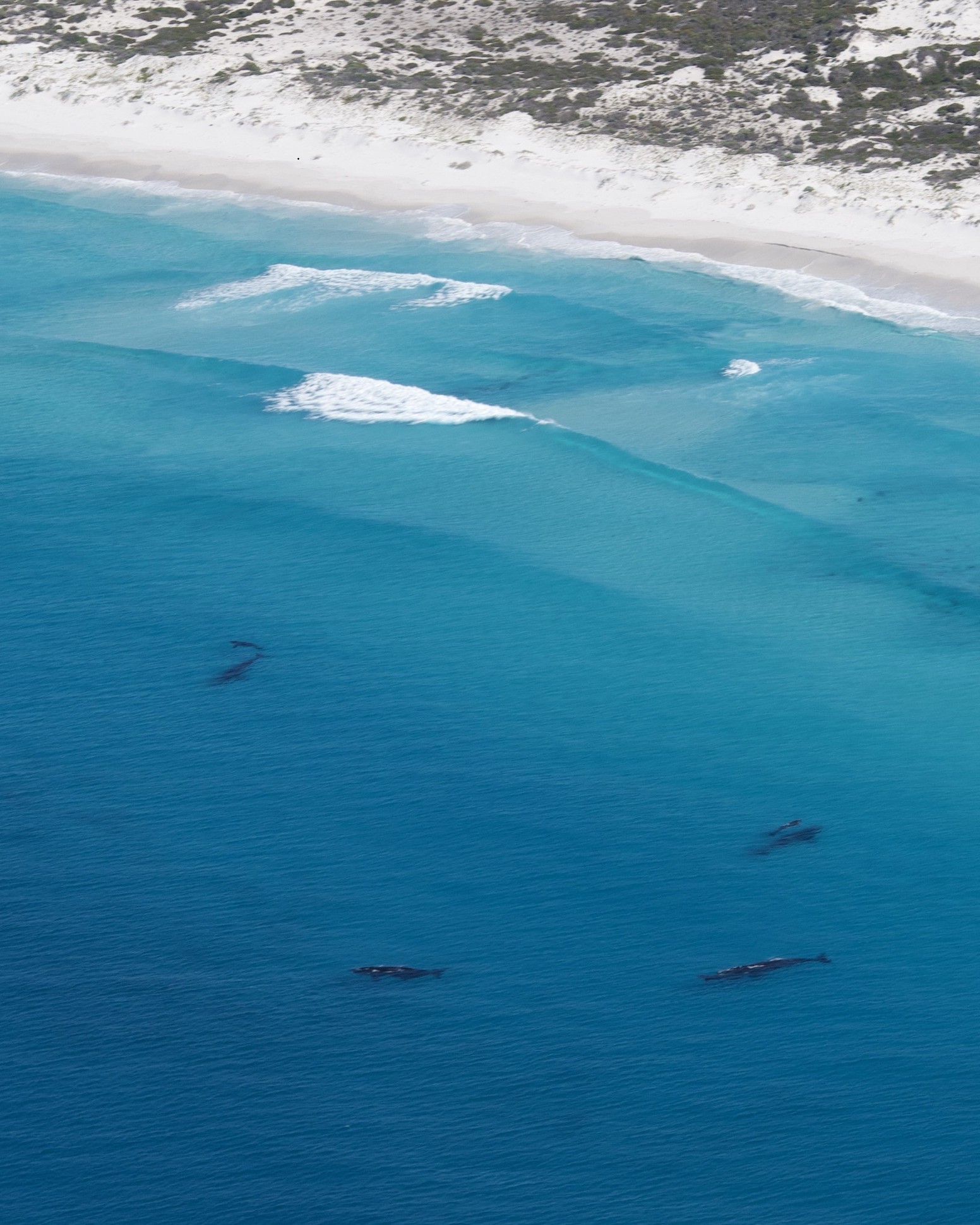
A novel narrative…
IMAS researcher and co-author, Associate Professor Stuart Corney, said the findings reject a common belief that female whales will strictly return to the same site with successive calves, which challenges assumptions about population dynamics and has important implications for research and conservation.
“Instead, as the population grew in numbers, the female whales were more likely to select nursing grounds where there were other whales,” he said.
The researchers found that, rather than the whales strictly returning to a single bay for their entire lives, their use of sites along the coastline seems to be a combination of fidelity to larger regions, possibly up to 1,000 kilometre of coastline stretches, combined with attraction to sites where other calving whales were found.
“Our study shows that habitat use is determined by an interplay between habitat preferences, behavioural mechanisms, and population densities,” Anne said.
“This highlights the importance of considering these dynamic interactions to understand how animal populations respond to environmental change, rather than viewing habitat use as a static reflection of preferred environments.”
The study was published in the Proceedings of the National Academy of Sciences of the United States of America (PNAS) journal .