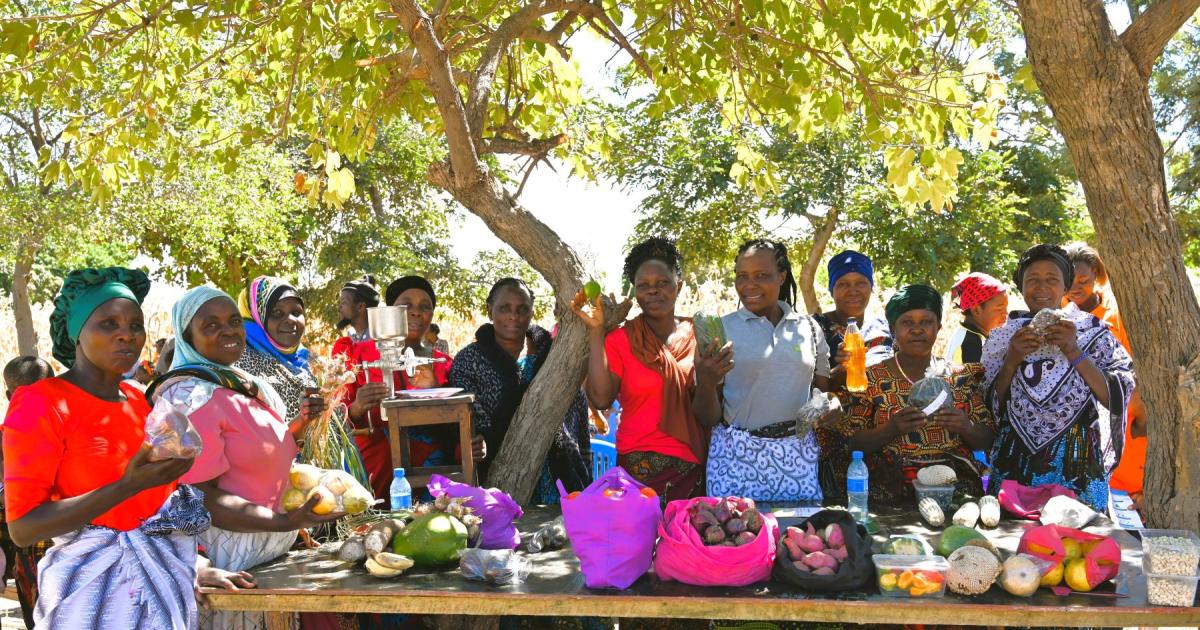
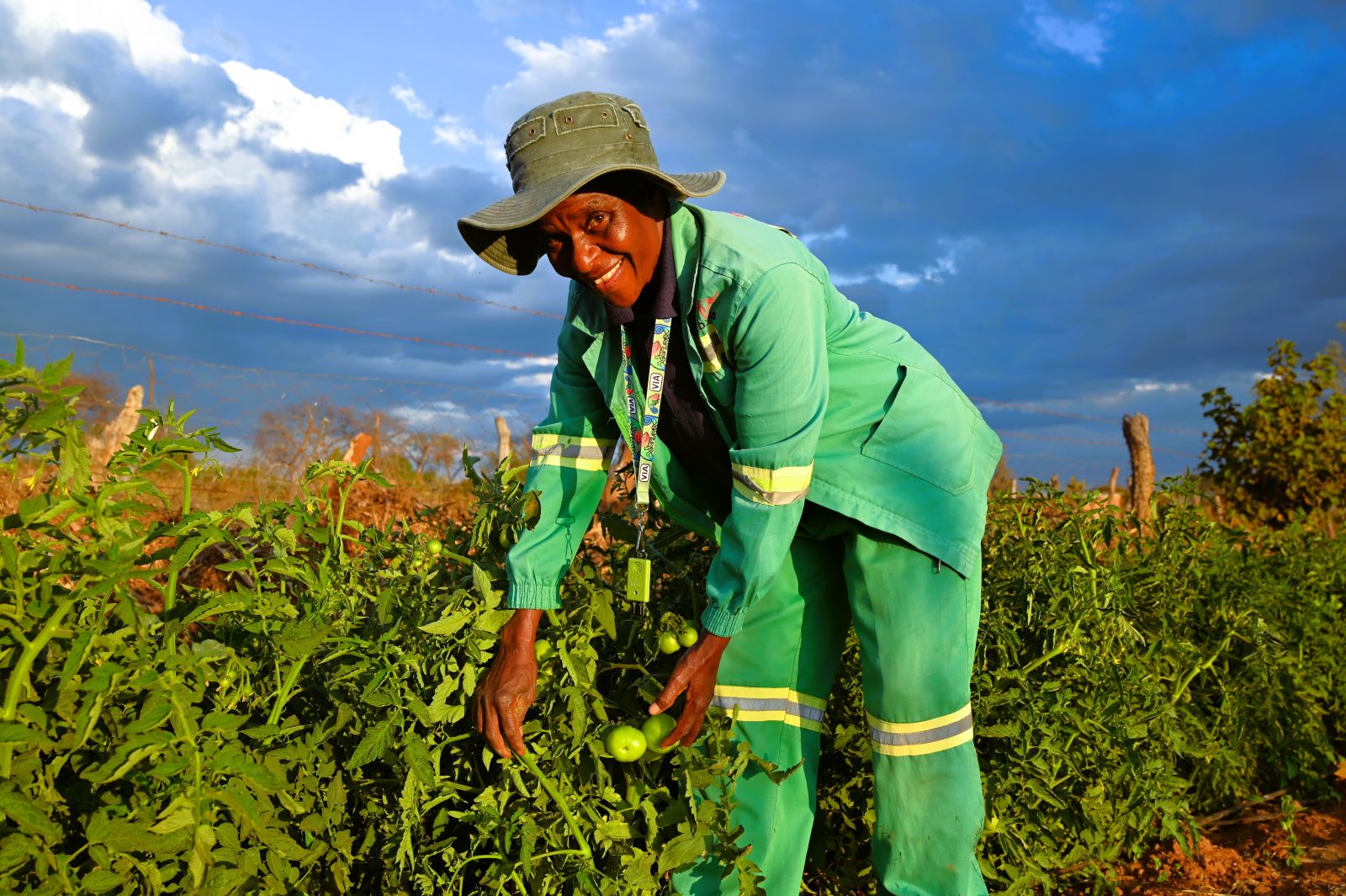
Mrs Nomuhle Mpofu smiles as she talks about her farm business in Zimbabwe. Buyers wanting meat for local butcheries come directly to her farm to buy cattle. When harvests are plentiful, she sells produce to her neighbours. Nothing is wasted.
‘I am making quite a lot of money,’ she said, with unmistakable satisfaction.
Her experience is among the highlights of a A$3.2 million ACIAR investment in circular food systems (CFS) in Mozambique, Tanzania, and Zimbabwe.
Led by the Australian National University (ANU), the project helped smallholder farmers turn agricultural by-products into lower production costs, stronger businesses and new opportunities.
It provided evidence for governments, investors and development partners who were considering how to support wider adoption.
Circular food system innovation
Implemented by ANU, the International Crops Research Institute for the Semi-Arid Tropics (ICRISAT), the Food, Agriculture and Natural Resources Policy Analysis Network (FANRPAN) and Ardhi University, the 2.5-year project supported more than 50 rural businesses across Mozambique, Tanzania and Zimbabwe to use agricultural resources better, reduce costly inputs and develop income-generating enterprises.
The project built on a previous investment in transforming smallholder irrigation systems, asking a simple question. Instead of treating each farming activity separately, what would it look like if the leftovers from one activity could supply another?
For Mrs Thandanani Dube, a farmer champion from Zimbabwe who hosts field days at her farm and shares what she knows to help others, the answer comes easily.
‘Everything you see here, I don’t throw away,’ she said. ‘Water from my fishpond nourishes my vegetables. Livestock manure fertilises the soil. Crop residues feed the animals.’
For farmers facing expensive fertiliser, scarce livestock feed and costly transport, circular practices offer savings they can see.
And the success stories emerging from project countries are compelling.
In Tanzania, champion farmer Mr Innocent Kapungu used locally sourced timber and rice straw to reduce poultry-house construction costs.
In Zimbabwe, two participating businesses reduced synthetic fertiliser use by up to 80% in a single season.
Another Zimbabwean business, Hauke Dairy and Mechanisation Services, has grown from two cows and one bull into a cooperative enterprise serving 78 irrigation scheme members. More than 70% of its feed comes from crop residues grown on irrigation plots. By producing milk locally, Hauke reduces reliance on supplies transported 185 kilometres from Bulawayo. Demand now exceeds supply.
Elsewhere in Zimbabwe, a horticulture and piggery enterprise feeds pigs on cabbage trimmings and returns their manure to the fields. It harvests 30-35 tonnes of cabbage, sells more than 40 pigs annually and employs six people.
Each enterprise innovated differently. But for farmers the formula was the same. Cut input costs, use available resources and connect with buyers.
Locally adapted solutions
The CFS project built on nearly a decade of work through the Transforming Irrigation in Southern Africa Initiative (TISA), which strengthened smallholder irrigation management and productivity. CFS addressed how irrigation schemes could support wider rural economies, linking crops, livestock, water, energy and markets.
Farmers helped shape the answer. Through agricultural innovation platforms which connect actors across the value chain, they worked alongside entrepreneurs, extension officers, researchers, buyers, financiers and local authorities to identify constraints and develop businesses suited to local demand.
The exact approach varied by country. Zimbabwe integrated circular practices into established irrigation schemes and enterprises.
Tanzania developed new group businesses, with the first taking about 15 months to be ready for seed funding.
Mozambique supported business-plan development for 39 enterprises and brought the agricultural finance institution Gapi into its innovation platform, connecting farmers directly with lenders. Of the enterprises selected for intensive development, 54% were women-owned and 28% youth-owned. Women also accounted for approximately two-thirds of the lead farmers.
Access to knowledge and markets can be as important as access to equipment. Mrs Mpofu articulates another opportunity afforded by the project.
‘Since I was born, I have never gone to the trade fair,’ she said. ‘Through my involvement with the project, I attended one for the first time.’
Her excitement underscores the importance of giving farmers opportunities to learn, build networks and engage beyond their immediate communities.
Policy dialogue looks at scaling the benefits
In May 2026, experiences from the three countries informed the Regional Circular Food Systems Policy Dialogue in Bulawayo, Zimbabwe, hosted by FANRPAN in collaboration with ICRISAT-Zimbabwe, the Agriculture Research Council (ARC), and the CFS project consortium.
The gathering brought together 388 participants from 42 countries, attending in person and online. Field visits enabled delegates to observe composting, fodder production and crop-livestock integration in practice.
‘The project offers important insights into how to scale beyond the life of the investment,’ said Dr Neil Lazarow, ACIAR Research Program Manager, Water, challenging partners to consider what it would take to extend these gains.
‘The evidence is in the field, and farmers are already leading and taking this work in new directions, which will be key to scaling,’ said Dr Lazarow. ‘What is needed now is coordinated action that matches their ambition: enabling policies, accessible finance, responsive research and lasting partnerships. When that happens, nothing goes to waste, not resources, knowledge or the potential of rural communities.’
The dialogue delegates adopted a regional policy statement containing 15 resolutions across six policy domains, accompanied by an eight-point Action Note to support this.
Priorities included stronger extension services, appropriate financing for rural enterprises, and integration of circular food systems into agricultural and climate policies.
While individual farmers like Mrs Mpofu and Mrs Dube see gains in the businesses, beyond the farm boundaries lies an even greater ambition. That is, to turn these innovative approaches and collective actions into better access to affordable, nutritious food for many years to come.
Learn more about the project and about World Food Day 2026.