What flashes to mind when you hear the word “whiplash”?
Author
- Linden Ashcroft
Senior Lecturer, Climate Science and Science Communication, The University of Melbourne
Perhaps you picture someone’s head rocking back and forth during a car crash – a jarring and often painful experience. Climate whiplash is no different.
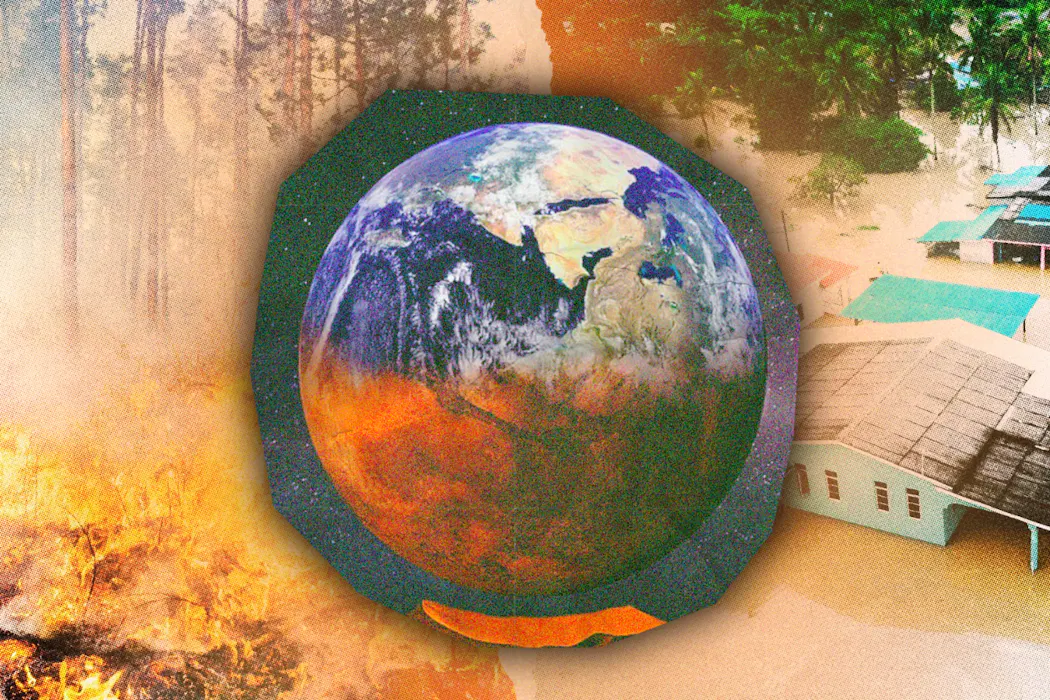
Scientists use the terms ” weather whiplash ” and ” climate whiplash ” to describe dramatic swings between different kinds of extreme weather. And as the world continues to warm , research suggests these whiplash events will only become more common and severe .
Our climate is rapidly warming, dramatically reshaping weather around the globe. In this three-part series, we explore a range of emerging climate phenomena and consider how to respond to their destructive effects.
Not just buzzwords
In general, the term weather whiplash refers to abrupt weather changes that happen on a daily to weekly scale. For example, a downpour may immediately follow a heatwave, or temperatures could be freezing one day and baking hot the next.
At the start of 2026, the Otways region in southern Victoria experienced weather whiplash. In the space of two weeks, a huge bushfire gave way to a record-breaking flood and then an historic heatwave.
Climate whiplash is sometimes used to describe these rapid shifts. However, because climate relates to the long-term average of weather, climate whiplash more accurately describes changes on a monthly to annual scale. Another term scientists use is ” climate volatility “.
The current drought afflicting the United Kingdom is a prime example of climate whiplash. After an unusually wet start to the year, parts of the UK endured their driest July on record, with farmers struggling to keep their crops and pastures alive.
Researchers and emergency responders are increasingly concerned by ” compound disasters “, which include whiplash events. These occur when multiple kinds of extreme weather collide, and can happen at the same place and time or back-to-back. This compounding makes the events much more destructive than any single disaster.
A temperamental country
In Australia, we are all too familiar with both climate and weather whiplash.
From year to year, our rainfall can swing violently between soaking wet and alarmingly dry. In fact, Australia’s precipitation patterns are among the most variable on Earth. This is largely due to temperature seesaws in the nearby Indian and Pacific Oceans that affect weather patterns and moisture availability over Australia.
Parts of Australia are also known for their temperamental temperatures. Melbourne, for example, is famous for cycling through four seasons in one day. This happens most often when hot air from Australia’s arid centre is shoved out of the way by cold air from Antarctica. This air-mass replacement leads to remarkable drops in temperature, otherwise known as a cool change.
Overseas, the United States and continental Europe are other whiplash hotspots, particularly for rapid temperature changes . In these parts of the northern hemisphere, the jet stream that keeps polar air up near the Arctic can wiggle and weaken, allowing freezing temperatures to spill out onto temperate regions.
Are things getting more ‘whiplashy’?
Research reveals whiplash-like weather is increasing in frequency and intensity.
Globally, extreme temperature variability and sudden swings from wet to dry or dry to wet are becoming more frequent and intense.
What’s more, computer simulations reveal these trends will only worsen if we keep heating the planet by adding more greenhouse gases into the atmosphere. A major reason for this is climatic extremes are more dramatic than they were when our planet was cooler. Heatwaves are hotter, heavy rainfall is heavier and droughts are even drier.
Research suggests a warming planet is altering the speed and behaviour of the weather systems that drive these extremes. For example, the polar regions are warming faster than the tropics, particularly in the northern hemisphere. This uneven warming reduces the temperature change between the equator and the poles, which in turn weakens large-scale wind and pressure patterns that are driven by these temperature differences.
Why whiplash matters
Rapidly changing weather places immense strain on our communities, ecosystems and emergency services.
Quick shifts between hot and cold temperatures affect human health and whole economies . Dramatic shifts between wet and dry conditions have been found to damage soil health , increase water contamination and fuel fast-moving bush and wildfires .
The phrases weather and climate whiplash give scientists another way to communicate just how extreme our weather is becoming. They also enable emergency responders and health services to better plan for back-to-back extremes, and communicate with vulnerable communities.
Weather and climate whiplash may sound like buzzwords. But these terms are a visceral expression of a worrying reality: the more we keep burning coal, oil and gas, the more chaotic and dramatic our weather will become.